Custom Windbreaker Manufacturing Guide: Nylon, Lining, Fit & Branding Options
- Share
- publisher
- Vanrd
- Issue Time
- Sep 7,2026
Summary
A practical guide to custom windbreaker manufacturing for apparel brands: choosing nylon, polyester, ripstop or taslan shells, specifying DWR and water resistance honestly, selecting unlined, mesh, taffeta or fleece linings, building oversized, cropped or coach fits, and applying print, embroidery and reflective branding that survives a lightweight shell.
Custom Windbreaker Manufacturing Guide: Nylon, Lining, Fit & Branding Options
A successful custom windbreaker is not defined by one fabric swatch or one attractive sample. It comes from a connected set of decisions: intended use, shell weight, weather protection, lining, fit block, panel construction, trims, branding and bulk quality control. This guide explains how apparel brands can make those decisions before sampling and avoid expensive changes later.
Windbreakers look simple because they contain less bulk than padded outerwear. In production, however, lightweight shells are unusually sensitive. Small changes in needle tension can create seam puckering. A zipper that is too rigid can make the front edge wave. Dense embroidery can pull a thin panel out of shape. The best results begin with a clear product brief and a manufacturer that understands how materials, patterns and decoration affect one another.
1. What Brands Should Decide Before Developing a Windbreaker
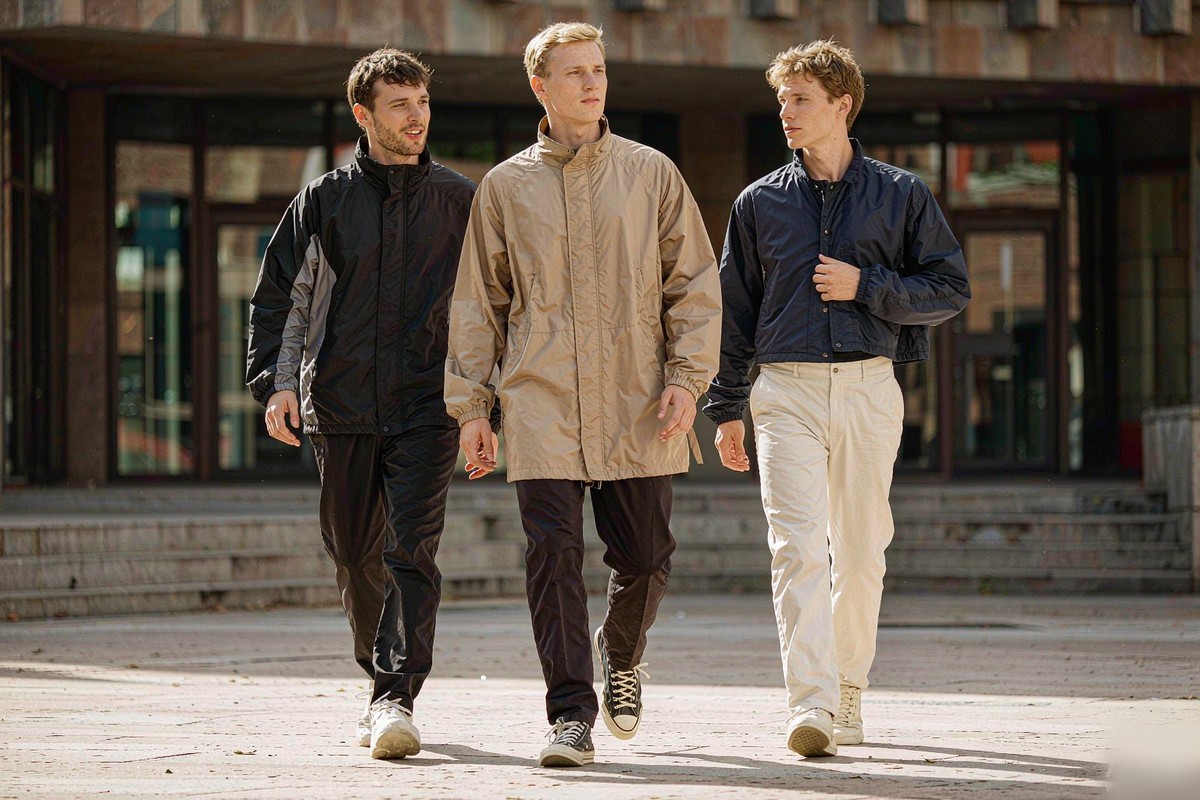
Before choosing nylon or discussing logos, define what the jacket must do. A packable travel shell, a streetwear windbreaker and a team jacket may look similar in a flat sketch, but they require different fabric weights, ventilation, linings, trims and fit allowances.
Target use
Daily streetwear, running, teamwear, travel, outdoor lifestyle or promotional use.
Target climate
Warm and humid, cool and windy, light rain, or a shoulder-season layering piece.
Retail position
Entry-level, premium casual, technical-inspired or performance-led product.
Wear system
Over a T-shirt, over a sweatshirt, or as part of a matching tracksuit set.
A useful brief is specific about behaviour, not just appearance. Instead of writing “lightweight waterproof jacket,” state something measurable and realistic, such as: “a packable, unpadded shell for urban commuting, worn over a T-shirt, with light-rain resistance and a matte hand feel.” That sentence already guides the fabric, lining, fit and construction direction.
Buyer decision rule: first define the use case, then select the fabric. Choosing a shell because it looks good in a photograph often produces the wrong hand feel, noise level, drape or weather performance.
For a broader view of available development routes, visit VANRD’s custom windbreaker manufacturer page or review current styles in the windbreaker jacket collection.
2. Nylon vs Polyester vs Ripstop vs Taslan
The shell controls most of what a customer notices first: surface texture, sound, drape, colour depth and perceived quality. No single fabric is best for every windbreaker. The correct direction depends on the product’s intended use, visual identity and decoration method.
Nylon: Lightweight, Strong and Technical
Nylon is a common choice for premium lightweight shells because it can achieve a smooth hand feel, good tear strength and a crisp silhouette at a low weight. Depending on the yarn and finish, it can appear glossy, softly lustrous, crinkled or fully matte. It works particularly well for packable jackets, retro athletic styling and technical-looking streetwear.
Nylon is also heat-sensitive. Pressing, fusing and heat-transfer settings must be tested on the production fabric. On very light shells, cutting stability and sewing tension require tighter control to prevent shifting and puckering.
Polyester: Stable, Printable and Cost-Controlled
Polyester is generally more dimensionally stable during cutting and sewing, holds colour well and is suitable for many printed applications. It is often a practical direction for teamwear, uniforms, promotional programs and styles using large graphics or sublimation. The trade-off is that hand feel and sheen vary widely, so the final decision should be based on physical swatches rather than fibre name alone.
Ripstop and Taslan: Texture With a Clear Product Story
Ripstop uses reinforcing yarns to create a visible grid. It communicates durability and technical utility, making it effective for outdoor-inspired streetwear and functional uniforms. Taslan uses air-textured yarns to create a softer, more cotton-like and typically more matte surface. It suits casual outdoor, workwear-inspired and vintage directions where a high-gloss shell would feel too sporty.
| Shell direction | Typical character | Best suited to | Confirm before sampling |
|---|---|---|---|
| Lightweight nylon | Crisp, smooth, packable; finish can range from glossy to matte | Premium streetwear, running shells, travel jackets | Heat sensitivity, coating, sewing stability and noise level |
| Polyester woven | Stable, versatile and print-friendly | Teamwear, uniforms, printed programs and controlled-cost runs | Drape, sheen, colour fastness and print compatibility |
| Ripstop | Visible grid with technical and utility character | Outdoor-inspired streetwear and functional collections | Grid scale, tear requirement, coating and seam appearance |
| Taslan | Textured, matte and softer in appearance | Casual outdoor, workwear and vintage-inspired shells | Surface texture, graphic clarity and bulk consistency |
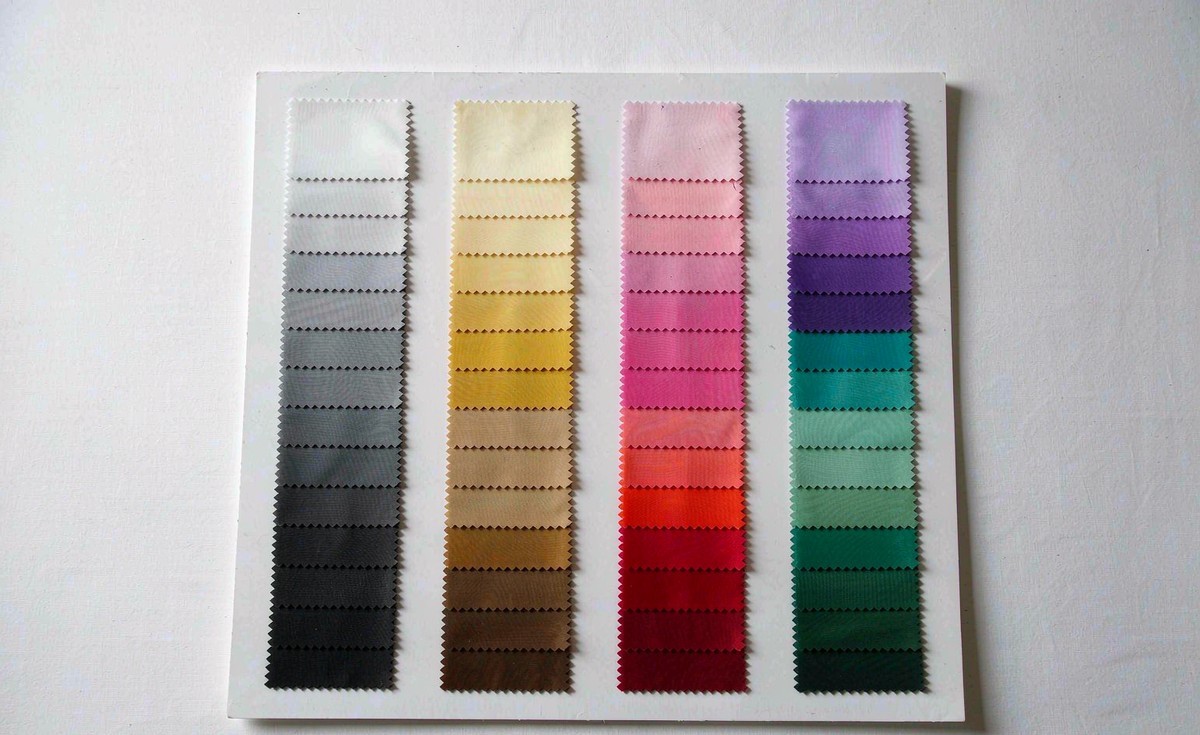
VANRD’s fabric and technique reference provides additional directions for matching shell materials with finishes and decoration.
3. How Fabric Weight Changes the Final Jacket
Two numbers are often confused in windbreaker development. Denier, such as 20D or 40D, describes yarn fineness. GSM describes fabric weight per square metre. Neither number alone defines quality. Weave density, coating, finishing and lining all change how the finished garment behaves.
| Approximate shell range | Likely result | Suitable applications | Development consideration |
|---|---|---|---|
| 55–80 GSM | Very light, compact and fluid | Packable shells, running jackets, warm-climate layers | Needs careful seam, zipper and branding control |
| 80–110 GSM | Balanced structure and wearability | Streetwear, teamwear and general lifestyle windbreakers | Good starting range for many lined or unlined programs |
| 110–140 GSM | More body, opacity and durability | Workwear-inspired, coach and structured casual jackets | Higher fabric consumption and less packability |
These ranges are development guides, not universal specifications. A coated 75 GSM fabric may feel firmer than an uncoated 100 GSM fabric. Always compare the actual swatch for hand feel, opacity, recovery, noise and drape before approving a sample.
4. Wind-Resistant, Water-Resistant or Waterproof?
The terms describe different performance levels and should not be used interchangeably. A tightly woven shell can reduce airflow and provide wind resistance. A DWR finish helps water bead and roll from the surface during light rain. A genuinely waterproof garment requires a complete system that may include a coating or membrane, seam sealing, appropriate zippers and tested construction.
DWR Finish
A durable water-repellent finish is useful for drizzle, commuting and everyday wear. It does not prevent water penetration under prolonged exposure or pressure. For many streetwear and lifestyle products, this is the most commercially sensible balance of cost, lightness and comfort.
PU Coating or Membrane
A PU coating can add meaningful water resistance at moderate cost, although it may reduce breathability and make the shell feel firmer. Laminated membranes are more appropriate when the product requires a verified technical performance story. If waterproofness is central to the selling claim, agree on the target test method and performance level before material sourcing.
Important: a DWR-finished windbreaker should normally be described as water-repellent or water-resistant, not waterproof. Product claims should match the tested shell and complete garment construction.
Breathability Through Construction
A shell that blocks wind can also trap body heat. Back vents, underarm eyelets, mesh-lined yokes and vented panels can improve comfort without opening the entire garment to airflow. For active styles, ventilation should be planned with the pattern rather than added after the first sample.
5. Windbreaker Lining Options
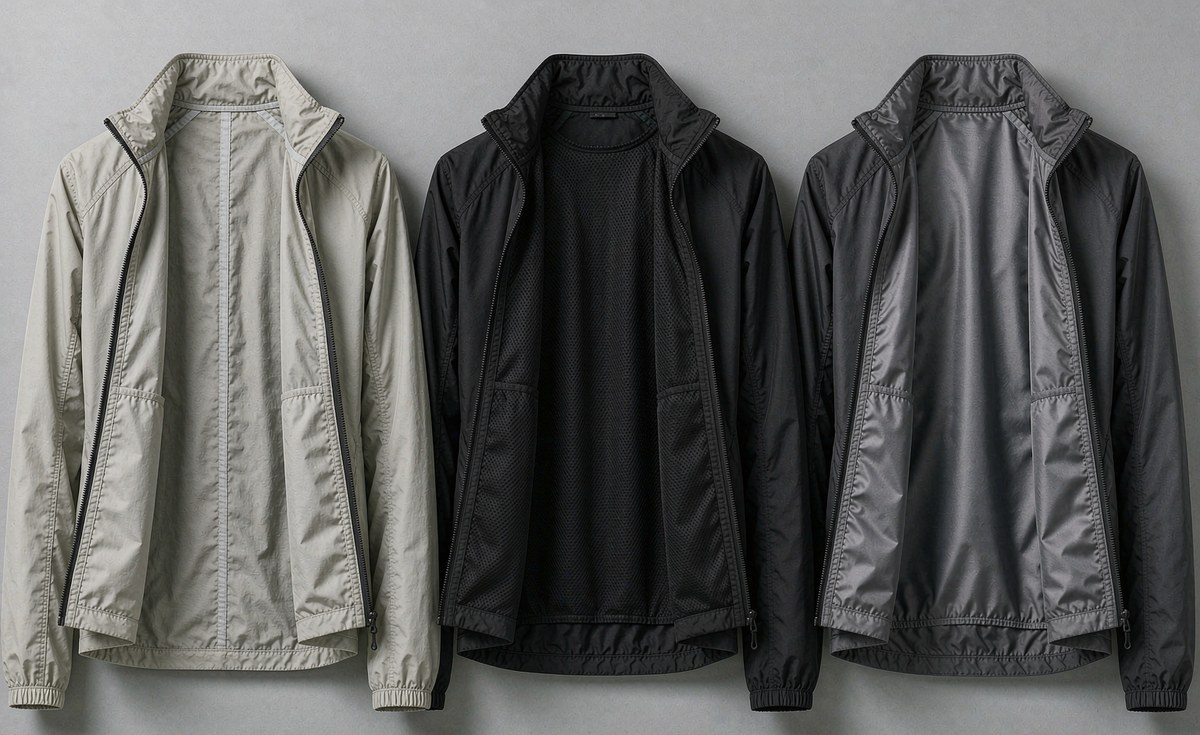
Lining changes comfort, warmth, structure, internal appearance and cost. It can also change the required fit allowance. Select it as part of the initial product brief rather than treating it as a late-stage upgrade.
| Lining option | Main benefit | Recommended for | Cost and construction impact |
|---|---|---|---|
| Unlined | Lowest bulk and maximum packability | Travel, running and minimalist shells | Internal seams remain visible and may require binding, taping or clean-finish construction |
| Mesh | Air circulation and separation from the skin | Sports, teamwear and warmer climates | Adds material and assembly; mesh quality and snag resistance should be checked |
| Taffeta | Smooth slip and a more complete interior | Streetwear, coach jackets and premium casual styles | Adds weight and warmth; sleeve lining must allow comfortable movement |
| Lightweight fleece | Warmth without full insulation | Cool-weather lifestyle and shoulder-season jackets | Requires more body ease and stronger control of multiple layers during sewing |
6. How to Develop the Right Windbreaker Fit
Fit is a commercial decision. It affects the customer segment, fabric consumption, styling, grade rules and return risk. “Regular,” “relaxed” and “oversized” should be supported by measurements and proportions, not used as vague design labels.
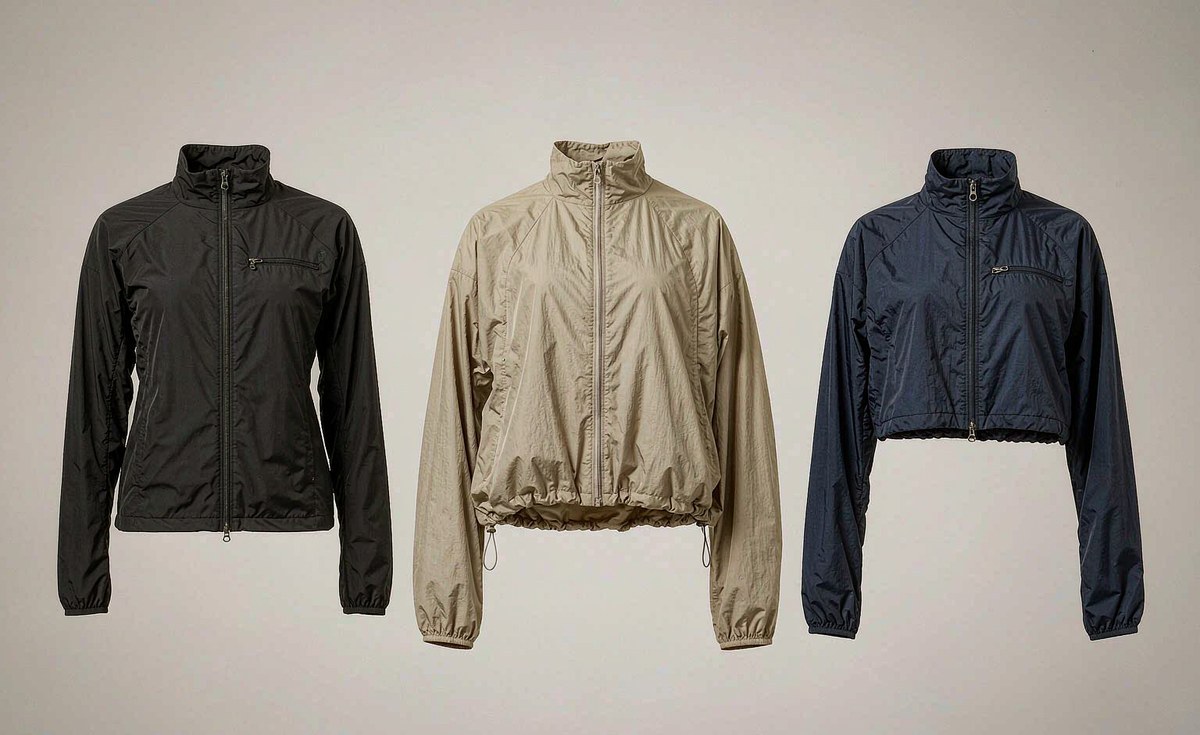
Oversized Does Not Mean One Size Larger
A controlled oversized fit usually combines a wider chest, dropped shoulder, adjusted armhole, fuller sleeve and a body length proportioned to the width. Simply grading a regular jacket upward often creates excessive length and a weak shoulder line rather than the intended boxy silhouette.
Allow for the Intended Layer
A windbreaker worn over a T-shirt needs less chest and armhole ease than one designed over a heavyweight hoodie. State the intended base layer in the tech pack and conduct the fitting with that layer. This is especially important for fleece-lined or cropped silhouettes.
Review these points during fit development:
- Shoulder position and slope
- Chest ease and cross-back movement
- Armhole depth and sleeve volume
- Body length and front-to-back balance
- Hood volume and neckline comfort
- Cuff opening and elastic recovery
- Hem opening and drawcord tension
- Layering allowance across the full size range
Grading should preserve the intended silhouette across the complete range. Cropped length, hood size and sleeve width often need special attention in the largest sizes; a purely mechanical grade can distort the original design.
7. Panels, Zippers, Cuffs, Hems and Hoods
Panel Layout and Colour Blocking
Panels create the visual identity of a windbreaker, but every additional seam adds cutting, matching and sewing work. Place colour blocks where they support the silhouette and where panel alignment can be controlled in bulk. A clean two- or three-colour layout often scales more reliably than a complex design with many small pieces.
Zipper Weight Must Match the Shell
A nylon coil zipper is lightweight and flexible, which helps the front edge lie flat. A moulded zipper offers a stronger visual and tactile presence but may overpower an ultralight shell. Water-resistant zipper tape is worthwhile only when the rest of the garment is designed to a similar weather-performance level.
Elastic Tension and Drawcord Recovery
Inconsistent elastic tension can make two garments with identical measurements look different on the rack. Cuffs, hem casings and drawcord channels should be checked during sewing, not only at final inspection. Confirm recovery after stretching and after the agreed wash test.
Fixed, Detachable or Stowable Hood
A fixed hood is simple and dependable. A detachable hood offers flexibility but adds hardware and failure points. A stowable hood creates a clean collar when packed away, although the collar pattern must contain the hood without becoming bulky. For active use, rear adjustment and a shaped front opening can materially improve stability in wind.
Manufacturing insight: on lightweight outerwear, the most effective QC happens during sewing. Panel alignment, zipper flatness, pocket position and elastic tension are easier to correct before the garment reaches final inspection.
8. Branding Options for Lightweight Shells
Branding must be chosen together with the production shell. Coatings affect ink adhesion, heat-sensitive nylon limits transfer temperature, and dense stitching can distort lightweight panels. Always test the actual artwork on the actual bulk-quality fabric before approval.
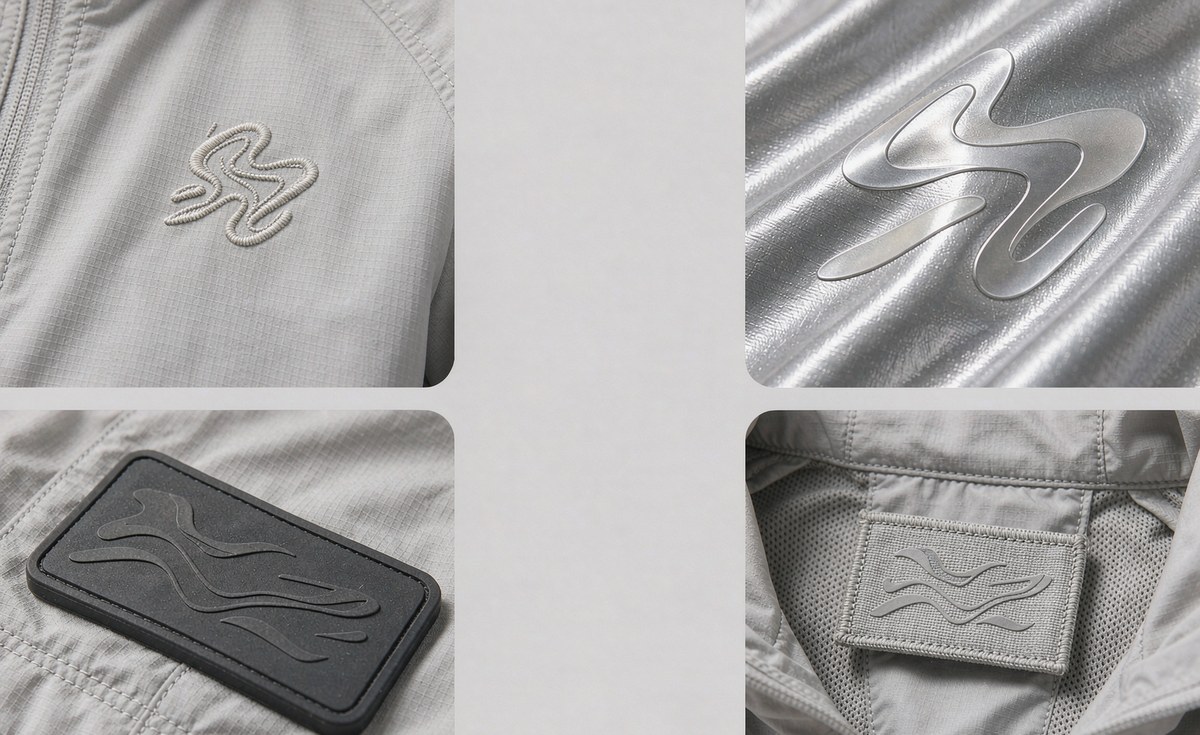
| Branding method | Best use | Main risk on thin shells | How to control it |
|---|---|---|---|
| Heat transfer | Fine logos, reflective details and lightweight branding | Heat marking, poor adhesion or fabric distortion | Test temperature, pressure and dwell time on the production fabric |
| Screen printing | Larger graphics and bold colour areas | Ink incompatibility with coating or cracking on folds | Use a compatible ink system and complete adhesion and wash testing |
| Embroidery | Small premium logos and badges | Puckering, stiffness and cupping | Reduce stitch density and add suitable backing or reinforcement |
| Rubber or silicone patch | Technical, outdoor and three-dimensional branding | Patch weight can pull on the shell | Control size, thickness, attachment method and placement |
| Woven label or badge | Detailed marks and understated premium identity | Edge lift or visible attachment tension | Approve edge finish, stitch line and reinforcement where needed |
Flat, single-layer areas are generally the safest branding zones. Avoid placing a logo across a seam, pocket opening or highly gathered area unless the construction has been deliberately engineered for it.
9. From Tech Pack to Approved Pre-Production Sample
A reliable sample process removes uncertainty before bulk cutting. The goal is not simply to create a visually attractive prototype; it is to confirm a repeatable specification that purchasing, pattern, cutting, sewing, finishing and QC teams can follow.
Include These Details in the Tech Pack
- Front, back and side flat sketches
- Base size measurements and grade rules
- Shell, lining and coating specifications
- Pantone references or approved physical colours
- Zipper, elastic, drawcord and hardware details
- Seam, stitch and internal finishing requirements
- Branding artwork, size and placement coordinates
- Intended use, target market and base layer
If you have reference images but no complete specification, an experienced OEM and ODM development team can translate the concept into fabric, pattern, trim and construction options before sampling.
Windbreaker Sample Approval Checklist
| Approval area | What to inspect |
|---|---|
| Fabric and colour | Hand feel, opacity, shade, coating, noise, recovery and appearance under natural light |
| Fit and movement | Chest ease, cross-back reach, sleeve movement, body length, hood comfort and intended layering |
| Construction | Seam puckering, panel alignment, internal finish, pocket shape and stitch consistency |
| Trims | Zipper flatness, slider performance, cuff tension, drawcord recovery and hardware security |
| Branding | Position, scale, adhesion, puckering, colour and wash durability on the actual shell |
| Performance | Tests agreed for water resistance, colour fastness, dimensional stability or other product claims |
Do not rely on “correct in bulk” for unresolved issues. The pre-production sample should reflect the approved fabric, trims, construction and branding closely enough to act as the production reference.
A Practical Production Flow
Confirm use, target market, quantity, budget direction, shell, lining and trims.
Develop the block, assemble the prototype and test decoration on the selected shell.
Lock measurements, materials, colours, trims, branding and workmanship standards.
Inspect incoming materials, monitor sewing, measure finished garments and complete final checks.
10. MOQ, Cost and Lead-Time Factors
VANRD’s standard minimum order quantity for custom windbreakers is 100 pieces per style per colour. Final feasibility depends on the shell, colour, trim setup, decoration and size range. A clear specification produces a more accurate quote than a reference image alone.
| Cost factor | Why it changes the quote | How brands can control it |
|---|---|---|
| Shell and finish | Fibre, weight, coating, colour development and performance requirements affect sourcing | Share target use and price position before requesting swatches |
| Lining and internal finish | Lining adds material and assembly; unlined styles may require more expensive clean finishing | Select the interior based on use rather than appearance alone |
| Panel count | More pieces increase pattern, cutting, matching and sewing time | Keep colour blocking purposeful and repeatable |
| Zippers and hardware | Branded pullers, water-resistant tape and custom colours may carry setup requirements | Use standard options where they do not reduce product value |
| Branding | Artwork size, colour count, stitch count and testing affect unit cost | Match the technique to the shell and prioritise high-impact placements |
| Testing and inspection | Performance tests and third-party inspection add time and direct cost | Define required standards before sampling and quotation |
Sample development commonly takes around 7–10 days after the main specifications and available materials are confirmed. Bulk production is typically around 25–35 days after pre-production approval and deposit, depending on fabric readiness, order volume, trim sourcing and the complexity of the style. Treat these as planning ranges; your confirmed quotation and production schedule should govern the order.
For more detail on production controls, review VANRD’s factory capability and quality-control overview.
11. Common Windbreaker Manufacturing Mistakes
1. Choosing the shell from photos only. Images do not communicate hand feel, noise, drape, opacity or coating behaviour. Approve a physical swatch.
2. Calling a DWR shell waterproof. A surface finish is not a waterproof garment system. Define and test the performance claim.
3. Creating an oversized fit by sizing up. The shoulder, armhole, sleeve, body width and length must be rebalanced as one block.
4. Using dense embroidery on ultralight fabric. High stitch density can pucker the shell permanently. Reduce density, reinforce the area or choose another method.
5. Ignoring zipper-to-shell compatibility. A heavy or rigid zipper can create a wavy front edge even when the pattern is correct.
6. Approving the fit without the intended base layer. A jacket fitted over a T-shirt may become restrictive over the hoodie it was meant to cover.
7. Skipping decoration testing on bulk-quality fabric. Coating, heat and ink compatibility can change between a generic test swatch and the actual shell.
8. Starting bulk with unresolved sample comments. Every measurement, material, trim, colour and workmanship point should be recorded and approved before cutting.
12. Frequently Asked Questions About Custom Windbreaker Manufacturing
What is the MOQ for a custom windbreaker?
VANRD’s standard MOQ is 100 pieces per style per colour. If a style uses several colours, custom-dyed fabric or specialised trims, each component may have its own setup requirement. Share the proposed colourways, quantity and artwork so feasibility can be checked before sampling.
Is nylon or polyester better for a windbreaker?
Nylon is often preferred for a lightweight, crisp and premium technical hand feel. Polyester is typically more stable, print-friendly and practical for teamwear or cost-controlled programs. The right answer depends on use, finish, branding, budget and desired appearance; compare physical swatches rather than choosing by fibre name alone.
Which lining is best for a custom windbreaker?
Choose mesh for breathability and active use, taffeta for a smooth premium interior, unlined construction for maximum lightness, and lightweight fleece when warmth is required. The lining also affects fit allowance, internal finishing, cost and production time.
Which logo method works best on lightweight nylon?
Heat transfers and small, low-density embroidery are common starting points. Screen printing, rubber patches and woven badges can also work when matched to the shell. The final method should be tested for adhesion, heat marking, puckering and wash durability on the actual production fabric.
Can a DWR windbreaker be described as waterproof?
Not by DWR alone. DWR helps water bead at the surface, while waterproof performance depends on the shell, coating or membrane, seams, zippers and other openings. If waterproofness is a key claim, define the test standard and develop the whole garment around it.
How long do sampling and bulk production take?
Sampling commonly takes about 7–10 days after the specification and available materials are confirmed. Bulk production is generally around 25–35 days after the pre-production sample is approved, although custom fabric, trims, testing and order size can change the schedule.
Conclusion
A strong custom windbreaker begins with a clear use case and a coordinated specification. Shell weight affects structure and packability; lining affects comfort and fit; zippers and elastic affect appearance; and branding must be compatible with the fabric. Approving those points together is the best way to protect quality from sample to bulk.
Before requesting a quote, prepare your reference images or tech pack, target quantity, colourways, intended market, fabric direction and logo artwork. That information helps your manufacturer recommend realistic materials and produce a more accurate development plan.
Developing a Custom Windbreaker?
Send VANRD your tech pack or reference images, target quantity, fabric direction and branding artwork. Our team can review the product and recommend a suitable shell, lining, construction and sampling route.
Discuss Your Windbreaker ProjectRelated VANRD manufacturing resources: