What GSM Is Best for Custom Sweatpants? Fabric Weight Guide
- Share
- publisher
- Vanrd
- Issue Time
- May 1,2026
Summary
Choosing the right fabric weight for custom sweatpants starts with GSM, silhouette, fabric construction and season. Compare practical GSM ranges for fleece and French terry, and learn how weight affects drape, shrinkage, fit, decoration and bulk production.
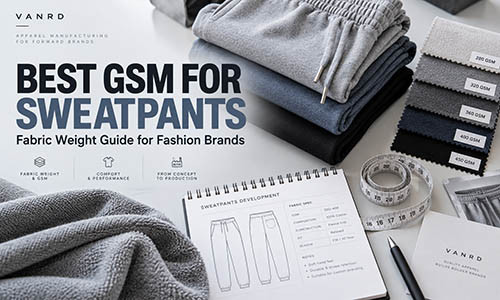
A fabric that looks perfect on a hoodie may behave very differently when it becomes a pair of sweatpants. The waistband carries more weight, the knees move constantly, and the fabric needs to fall cleanly from the hip to the hem. That is why choosing the right fabric weight for custom sweatpants is about much more than picking the thickest fleece available.
If you are developing joggers, baggy sweatpants, or a matching streetwear set, GSM gives you a useful starting point. The important part is matching that number to the fabric construction, silhouette, season, finishing process, and the way the final garment should feel. This guide explains practical GSM ranges and the details private label brands should check before approving samples or bulk fabric.
What GSM is best for sweatpants? For many everyday sweatpants, 280–350 GSM is a useful starting range. Brands developing more structured baggy sweatpants or heavier streetwear fleece often compare fabrics around 350–450 GSM. Lighter options of 240–280 GSM can suit softer joggers or transitional collections.
These are practical development ranges, not fixed industry standards. A 400 GSM French terry and a 400 GSM brushed fleece may feel and drape differently, so fabric swatches and finished samples still matter.
What Does GSM Mean in Sweatpants Fabric?
GSM means grams per square meter. It describes the mass of one square meter of fabric, giving brands and mills a consistent way to discuss fabric weight. For example, 400 GSM fabric weighs more per unit area than 300 GSM fabric. It does not automatically mean the heavier option is softer, more durable, warmer in every construction, or better made.
Yarn selection, knitting construction, fiber composition, brushing, finishing, and fabric density can all change how a sweatpants fabric performs. A compact French terry may feel firm at a similar GSM to a loftier, brushed fleece. Treat the number as a specification to compare alongside hand feel, stretch, recovery, shrinkage, and appearance after washing.
Sweatpants Fabric Weight Chart: Lightweight to Extra Heavyweight
Start with the following GSM ranges when discussing your project with a manufacturer. They are useful for narrowing swatch options before you commit to a finished pattern or sample.
| Fabric weight | Suggested GSM | Common product direction | What to evaluate |
|---|---|---|---|
| Lightweight | 240–280 GSM | Casual joggers, softer drape, transitional-season sweatpants | Opacity, knee shape, waistband support, drape |
| Midweight | 280–350 GSM | Everyday sweatpants, versatile French terry, relaxed joggers | Comfort, stability, recovery, intended fit |
| Heavyweight | 350–450 GSM | Structured baggy sweatpants, fleece sets, substantial streetwear | Seam bulk, shrinkage, warmth, cuff and waist construction |
| Extra heavyweight | 450+ GSM | Specialized statement styles, heavier cold-weather collections | Comfort, movement, sewing feasibility, drying and shipping weight |
GSM categories vary between suppliers and fabric constructions. The ranges above are indicative sourcing references for sweatpants, not guaranteed performance specifications or a universal grading system. Ask for the finished fabric's tested GSM and an agreed tolerance when sourcing for bulk production.
Is 300 GSM Good for Sweatpants?
For many brands, 300 GSM is a sensible fabric to sample first. It can give everyday joggers and relaxed sweatpants a comfortable balance between weight and drape, especially in a suitable French terry construction. However, it may not produce the strong, stacked look some heavyweight streetwear collections require.
Is 400 GSM Too Heavy for Sweatpants?
Not necessarily. A well-developed 400 GSM fabric can work well for baggy sweatpants and more substantial streetwear sets. What matters is whether the wearer can move comfortably, the waistband supports the weight, and the cuffs or open leg hems create the intended silhouette. Compare the same design in two weights before treating 400 GSM as the final answer.
French Terry vs Brushed Fleece: Why Construction Changes the Feel
Fabric weight and fabric type should be discussed together. In particular, French terry and loopback are often overlapping terms: French terry commonly has an unbrushed looped interior. Brushed fleece, by contrast, typically uses a raised or brushed inner surface to create a softer, loftier feel. These are not rigid categories, and exact structures vary by supplier.
French Terry / Loopback
Usually identified by visible loops on the inside and a relatively smooth face. It can feel less bulky and is worth exploring for everyday joggers, transitional collections, and brands seeking a cleaner drape. Heavyweight French terry also exists, so it should not be treated as automatically lightweight.
Brushed Fleece
Has a brushed or raised interior for a soft, cozy feel. It is commonly considered for colder-season products and fuller streetwear sets. Buyers should review surface pilling, thickness at seams, shrinkage, and how the brushing behaves after repeated washing.
Cotton-Rich Knits
Often selected when brands want a cotton-forward feel and a familiar sweatpants aesthetic. Yarn quality and finishing are as important as the nominal GSM. Ask how the fabric behaves after washing and whether the planned fit needs additional allowance.
Cotton-Poly Blends
Can offer a different balance of feel, dimensional behavior, and commercial cost. Results depend on blend ratio and knitting quality; do not assume that all blends have the same durability or shrinkage performance.
If the collection includes custom colors, garment washing, embroidery, or specialized labels, these choices should be discussed alongside the fabric. VANRD's fabric and customization techniques page outlines the types of development details brands can raise before sampling.

How to Choose GSM for Different Sweatpants Styles
The best fabric is the one that supports the pattern. Two sweatpants designs can use the same fleece but look very different because of leg width, rise, inseam, and hem construction. The following ranges are starting points for sampling, not compulsory specifications.
| Sweatpants style | Starting GSM to test | Fit priority |
|---|---|---|
| Regular or tapered joggers | 280–350 GSM | Clean taper, cuff recovery, knee comfort |
| Relaxed everyday sweatpants | 280–380 GSM | Natural drape, balanced waistband, leg shape |
| Baggy / wide-leg streetwear | 330–450 GSM | Enough body to hold volume without stiffness |
| Stacked sweatpants | 350–450 GSM | Controlled folds, inseam length, hem behavior |
| Lightweight lounge-style joggers | 240–320 GSM | Soft hand feel, comfort, easy movement |
For baggy sweatpants, a fabric that is too soft may collapse through the thigh and knee, while a fabric that is too stiff can make the garment feel cumbersome. For tapered joggers, excessive bulk around the ankle can change the look even if the upper leg fits correctly. Stacked sweatpants are especially dependent on the relationship between fabric drape, leg opening, footwear, and extra inseam length.
Brands comparing these silhouettes can also read baggy sweatpants vs joggers to decide which fit better suits their collection before approving a fabric.
Match Fabric Weight to Season and Target Market
Seasonality affects how a customer experiences the garment. Midweight French terry or loopback may work for spring, transitional seasons, and indoor use. Brushed fleece or a more structured, heavier knit may be more suitable for a cold-weather collection. But climate labels alone are not enough: a buyer in the US, UK, or Australia may want very different fabric weights depending on the retail season, climate within the country, and how the product is styled.
For year-round private label programs, it is often useful to test one balanced base fabric first. Seasonal or heavyweight versions can follow once the fit and sizing are established. If your brand wants a coordinated hoodie-and-sweatpants set, confirm whether the same fabric and color standard can be used in both garments, while allowing for different rib, elastic, and fit requirements.
How Fabric Weight Affects Sweatpants Construction
Waistband Elastic and Drawcords
The waistband needs to support the weight of the finished trousers without digging into the wearer. With heavier fleece, brands should review elastic width, recovery, waistband height, drawcord construction, and seam bulk. A specification approved on a lighter fabric should not be transferred blindly to a heavier one.
Leg Openings, Rib Cuffs, and Pockets
Rib cuffs must be strong enough to recover but not so tight that they distort the leg shape. Open hems need a suitable finish to hang cleanly. Pocket openings, side seams, topstitching, and extra panels can feel thick when multiple layers of heavyweight fabric meet. These details should be checked on a complete sample, not just a fabric swatch.
Pattern and Size Grading
Changing from 300 GSM to 430 GSM may affect drape and the visual fit, even where the paper pattern stays the same. A product developer should review the rise, thigh width, knee, inseam, and hem against the intended target fit. Measurements, shrinkage, and size grading should be checked after the relevant finishing process.
Think About Washing, Printing, and Embroidery Before Fabric Approval
A fabric can feel right before finishing and still deliver an unexpected result after it is garment dyed, washed, or decorated. That is why GSM should be part of a broader materials and manufacturing discussion.
- Garment wash or pigment dye: approve a shade and appearance reference, then measure the finished sample. Check shrinkage, surface change, and consistency between production lots.
- Screen print, puff print, or heat transfer: test the design on the actual fabric and after any planned washing. Texture, stretch, and finishing may affect the artwork's appearance and hand feel.
- Embroidery: test logo position, backing, stitch density, and puckering. Thick fleece alone does not guarantee a clean embroidered finish.
- Matching rib and trims: confirm colors and performance of rib, elastic, drawcord, labels, and pocket bags against the main body fabric.
These choices are particularly important for washed baggy sweatpants, decorated fleece sets, and limited-edition streetwear styles. Confirm who is responsible for each finishing process and how the approved sample will be used as the bulk-production reference.

Sampling and QC: How to Confirm the Right GSM Before Bulk Production
A swatch can tell you whether a fabric feels promising. A finished sample tells you whether it works as sweatpants. That difference matters when developing a private label collection. Instead of approving a weight from a specification sheet alone, request representative fabric options and evaluate them in the intended fit.
What to Check on the First Sample
- Appearance and drape: Does the leg fall as intended when worn, seated, and moving?
- Fabric characteristics: Does the measured GSM, composition, surface feel, and stretch match the approved reference?
- Waistband and cuffs: Is the garment comfortable, and does it recover after wear and stretching?
- Measurements: Are waist, rise, thigh, inseam, and hem within the approved spec after finishing?
- Wash and decoration: Does the garment retain acceptable color, surface appearance, print/embroidery quality, and shape?
- Bulk repeatability: Can the supplier source the same construction and finish consistently for the order?
Specify a Finished Fabric Standard, Not Just “Heavyweight”
The fabric specification should record the target GSM, composition, knit construction, finish, color, and agreed test or measurement method. Buyer and supplier should also agree on the acceptable GSM tolerance and any shrinkage, color, or appearance requirements. A tolerance should be established for the actual fabric and production method rather than taken from an arbitrary number on a blog.
VANRD's apparel development and service process explains how designs move through sampling and approvals. The quality control and inspection page offers more context on the checkpoints to discuss before bulk production.
What Should a Brand Send to a Sweatpants Manufacturer?
You do not need to know every technical detail before reaching out. A clear product brief is enough to start a useful conversation, especially when you can show what kind of fit and hand feel your customer expects. Avoid sending only “400 GSM premium sweatpants” without explaining the design.
Example: A Better Sweatpants Fabric Brief
“We are developing relaxed, wide-leg sweatpants for a streetwear collection. We would like to compare approximately 350 and 400 GSM cotton-rich fleece or French terry, with a substantial feel but natural drape. The design has an elastic waistband, open leg hems, side pockets, and a small embroidered logo. Please advise on available fabric swatches, shrinkage testing, sample development, MOQ, and production feasibility.”
This is an illustrative inquiry, not a fixed VANRD material specification or a guaranteed price/lead-time quote.
Where available, attach reference photos, a tech pack or sketch, size chart, color direction, wash and artwork references, target order quantity by color, and your intended delivery market. For product-specific assistance, review VANRD's custom sweatpants manufacturing services and sweatpants product examples.
Common Mistakes When Choosing Sweatpants Fabric Weight
- Choosing the heaviest fabric because it sounds premium. Extra weight may raise costs or reduce comfort without improving the intended fit.
- Ignoring the interior finish. Loopback French terry and brushed fleece can feel very different at a similar GSM.
- Reusing a hoodie pattern decision for trousers. Pants have different strain points and need separate waistband, knee, cuff, and shrinkage checks.
- Approving the fabric before washing or decoration tests. The finished garment—not the untreated swatch—should guide bulk approval.
- Failing to agree on the final specification. Record fabric construction, target GSM, test method, acceptable tolerances, and sample references before production starts.
FAQs About GSM and Custom Sweatpants
What is the best GSM for baggy sweatpants?
A practical starting point is often around 330–450 GSM, depending on how structured or fluid the silhouette should look. Test the chosen fabric with the actual leg width, rise, and open hem or cuff. Weight alone does not create the correct baggy fit.
Is 350 GSM considered heavyweight for sweatpants?
It sits near the boundary between midweight and heavyweight ranges used by many suppliers. Labels vary, so it is more useful to compare the fabric's construction, hand feel, and finished appearance than to rely on a marketing category.
What is the difference between 400 GSM French terry and 400 GSM fleece?
They have the same mass per square meter, but the interior construction and finish can differ. French terry commonly has unbrushed loops inside, while brushed fleece has a raised inner surface. This affects perceived softness, warmth, bulk, and drape.
Can brands use the same fabric for hoodies and sweatpants?
Yes, a matching set may use the same base fabric and color. However, the sweatpants still need their own fit, waistband, elastic, cuff, seam, and after-wash checks. A successful hoodie sample does not automatically approve the matching trousers.
Does GSM change after washing?
It can. Wet processing and shrinkage can change the fabric's dimensions and measured mass per unit area. Ask the supplier to clarify whether the specified GSM refers to finished fabric and how measurements will be checked.
Should I choose 450 GSM or 500 GSM for a streetwear collection?
Choose based on the intended look, climate, comfort, and construction. More weight can create a substantial feel, but may also increase seam thickness, garment weight, drying time, and shipping cost. Sample both if the difference is commercially important.
What do I need to confirm before ordering bulk sweatpants?
Approve the actual fabric, GSM and tolerance, fiber composition, color, finished hand feel, size specification, wash standard, trims, decoration, sample reference, inspection criteria, and quantity by style and color. Confirm project-specific lead time and commercial terms in writing.
Final Thoughts: Start With GSM, Then Approve the Finished Sweatpants
For many brands, 280–350 GSM is a useful place to start for everyday sweatpants, while 350–450 GSM is worth exploring for heavier streetwear silhouettes. But the final choice should be based on how the fabric behaves in the finished garment. The right drape, comfortable waist, clean construction, acceptable shrinkage, and repeatable quality matter more than a single number.
Choosing fabric with these details in mind can reduce unnecessary sample revisions and help brands build a clearer production brief. If you are comparing French terry, brushed fleece, or heavyweight fabrics for a private label line, prepare your references and discuss the full garment specification before committing to bulk materials.
Develop Your Custom Sweatpants With VANRD
Share your design, preferred fabric feel or GSM range, target silhouette, artwork, and planned quantity. VANRD can review your brief and discuss suitable fabric options, sample development, custom branding, and bulk production requirements.
Explore Sweatpants Manufacturing Discuss Your Project