Top 10 Jacket Manufacturers for Streetwear Brands in 2026: What Private Label Buyers Should Compare Before Sampling
- Share
- publisher
- Vanrd
- Issue Time
- May 18,2026
Summary
A practical 2026 guide for streetwear brands comparing jacket manufacturers before sampling. Learn how to evaluate fabric capability, trims, fit, MOQ, sampling workflow, QC, communication, and private label production support.
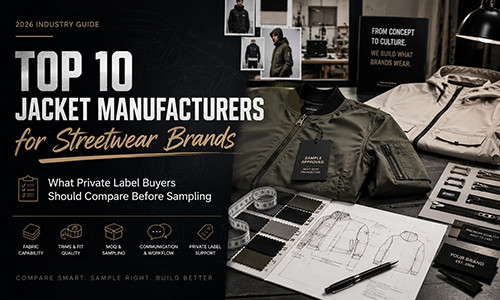
A practical guide for streetwear brands, designers, wholesalers, and private label buyers who need to compare custom jacket manufacturers before sending a tech pack, starting a sample, or planning bulk production.
AI Summary
The best jacket manufacturers for streetwear brands are not simply the cheapest sewing factories. They are development partners that can manage fabric, trims, fit, branding, sampling, bulk consistency, and quality control.
Before sampling, private label buyers should compare category experience, shell fabrics, lining options, hardware, logo techniques, MOQ logic, communication, and inspection workflow. A good supplier helps reduce uncertainty before money, time, and fabric are locked into production.
Quick Answers for Private Label Buyers
Why Streetwear Jacket Manufacturing Is More Complex Than Basic Apparel
Jackets look simple from the outside, but in production they behave more like a small system than a single garment. A T-shirt may depend mostly on fabric weight, fit, cutting, sewing, and print quality. A jacket adds more moving parts: shell fabric, lining, zipper, snaps, rib, pockets, collar shape, sleeve pitch, hem finish, embroidery, patches, labels, and sometimes insulation or quilting.
That is why choosing a custom jacket manufacturer is not the same as choosing a basic cut-and-sew supplier. The wrong factory may be able to make a decent sample photo, but can they repeat the same fit, shade, stitching, trim placement, and packing standard across bulk production? That is where the real test begins.
Jackets Are Built Like Small Systems
A jacket is not just fabric plus stitching. It is a set of connected decisions. If the shell fabric is too stiff, the sleeve may not fall naturally. If the lining is too slippery or too bulky, the body shape may change. If the zipper tape does not match the shell color, the garment may look cheaper than the design intended. If the rib cuff stretches too much, the whole silhouette can feel loose and unfinished.
For streetwear brands, this matters even more because the product is often judged by silhouette and details. A boxy bomber, a vintage varsity jacket, a washed denim trucker, a cropped racing jacket, and a padded puffer do not follow the same production logic.
Streetwear Adds More Pressure
Streetwear buyers usually care about more than basic construction. They may ask for oversized proportions, dropped shoulders, cropped lengths, heavy embroidery, chenille patches, contrast panels, faded washes, custom linings, branded snaps, or special zipper pulls. These details are powerful for branding, but they also create more chances for mistakes.
Think of a jacket program like building a house. The outer shell is the wall, the lining is the interior, the trims are the doors and windows, and the tech pack is the blueprint. If the blueprint is vague, the final house may stand up, but it may not look like what the designer imagined.
What "Top 10 Jacket Manufacturers" Should Really Mean in 2026
When private label buyers search for "top 10 jacket manufacturers," they are usually not looking for a random list of names. They are trying to reduce risk. They want to know who can make their product, who can communicate clearly, who can support sampling, and who can keep bulk production close to the approved sample.
It Should Not Mean a Random Ranking List
Many ranking articles simply list companies and add the same claims: high quality, low MOQ, fast delivery, custom service, global shipping. That may look useful at first glance, but it does not help a buyer make a real sourcing decision. A growing streetwear brand needs to know what to compare before sending money or committing to sample development.
It Should Mean 10 Practical Evaluation Criteria
In this guide, "top 10" means the 10 core capabilities a streetwear brand should compare before choosing a jacket manufacturer. Instead of treating the topic as a beauty contest, we will treat it as a buyer checklist.
1. Jacket Category Experience
The first thing to compare is category experience. A supplier that makes lightweight T-shirts every day may not be ready for structured jackets. Jacket production requires different pattern judgment, sewing methods, equipment, fabric handling, and QC checkpoints.
Why Category Experience Matters
Different jacket types create different problems. A varsity jacket needs rib control, sleeve attachment, snap placement, and often embroidery or chenille patch handling. A denim jacket needs wash control, shrinkage planning, seam strength, and metal trims. A work jacket may need canvas, reinforced pockets, bar-tacks, and durable seams. A puffer jacket requires padding distribution, baffle structure, lining stability, and bulk control.
If your brand is building a streetwear collection, ask whether the supplier has experience with the specific jacket category you need, not just jackets in general.
Buyer Questions to Ask
- Have you produced this jacket type before?
- Can you support varsity, bomber, denim, workwear, puffer, windbreaker, or racing jacket development?
- Can you review our reference images and explain production risks before sampling?
- Can you help adjust fit and construction for US, UK, EU, or Australian streetwear markets?
2. Fabric and Shell Material Capability
Fabric is one of the biggest decisions in jacket manufacturing. It affects structure, price, MOQ, lead time, shrinkage, color, cutting behavior, and the final look of the garment.
Common Jacket Shell Fabrics
For streetwear jackets, common shell materials include twill, denim, canvas, nylon, polyester, satin, corduroy, fleece-backed fabric, and blended woven materials. Each fabric behaves differently. Denim may need washing and shrinkage testing. Nylon may need careful heat control and trim compatibility. Canvas may need stronger needles and seam planning. Satin may show puckering more easily if sewing tension is not controlled.
Why Fabric Selection Changes Everything
Two jackets can share the same sketch but feel completely different depending on fabric. A 12 oz canvas work jacket feels structured and rugged. A nylon windbreaker feels light and sporty. A washed denim jacket feels casual and vintage. A satin bomber feels smoother and more polished. The manufacturer should help you understand how each fabric choice affects sampling, price, MOQ, and bulk consistency.
For brands that need fabric, wash, print, embroidery, and trim options, Vanrd's fabric and technique development support can help connect design ideas with production-ready decisions.
3. Lining, Insulation, and Inner Construction
The inside of a jacket is not secondary. Lining and inner construction affect comfort, warmth, weight, drape, production cost, and how premium the finished product feels.
The Inside of the Jacket Shapes the Outside
Common lining choices include taffeta, mesh, tricot, quilted lining, fleece lining, and lightweight woven lining. For padded jackets, insulation may include synthetic fill or down-style padding depending on the product target. These choices affect bulk, warmth, sewing method, and sample appearance.
Where Projects Often Go Wrong
Problems often appear when buyers focus only on the outer shell. For example, a heavy shell with a weak lining may feel unbalanced. A padded jacket without clear baffle planning may look uneven. A lining that is too tight can restrict movement, while a lining that is too loose can twist or bunch inside the garment.
Before sampling, buyers should confirm whether the jacket needs light lining, warm lining, quilted panels, inner pockets, branded neck labels, care labels, or special finishing at the hem and cuffs.
4. Trims, Hardware, and Branding Details
Trims are often small in size but big in impact. A zipper, snap, rib cuff, patch, label, or drawcord can delay a project if it is not confirmed early.
Zippers, Snaps, Rib, Labels, and Patches
For custom jackets, trims may include front zippers, pocket zippers, metal snaps, rib collar, rib cuffs, rib hem, elastic, eyelets, drawcords, zipper pulls, woven labels, neck labels, care labels, hangtags, patches, and packaging stickers. Each trim has its own color, size, material, finish, MOQ, and lead time.
A good manufacturer does not treat trims as an afterthought. The supplier should help you confirm trim size, color, finish, function, and placement before bulk production.
Private Label Readiness
Private label buyers should check whether the manufacturer can support woven labels, heat transfer labels, care labels, hangtags, barcode stickers, custom polybags, and carton labels. These details may sound basic, but they are important for retail readiness, wholesale orders, and brand presentation.
Vanrd supports private label and OEM/ODM apparel development for streetwear categories through its OEM/ODM clothing manufacturing services, including sampling, fabric direction, branding, and bulk production support.
5. Pattern, Fit, and Size Grading
Streetwear fit is not standard fit. A jacket can have good sewing but still fail commercially if the proportion is wrong.
Streetwear Fit Is Not Standard Fit
Streetwear jackets often use oversized bodies, dropped shoulders, wider sleeves, cropped lengths, relaxed hems, boxy shapes, or vintage-inspired proportions. These fits must be built into the pattern, not guessed during sewing. If the pattern is too narrow, the jacket loses the intended attitude. If it is too wide without balance, it may look sloppy instead of intentional.
Why Size Grading Must Be Confirmed Early
A sample usually starts in one size, but bulk production includes a size range. That means the grading rule matters. Shoulder width, chest, sleeve length, body length, cuff width, hem width, and armhole depth must scale logically. A size M sample can look strong, while size XL or XS may fail if grading is not controlled.
What to Confirm Before Sampling
- Target fit: oversized, relaxed, cropped, boxy, regular, or slim
- Sample size and size range
- Key measurements and tolerance
- Body length, sleeve length, shoulder width, chest, hem, and cuff specs
- Fit reference images or previous approved garments
6. Logo Techniques and Decoration Control
Branding is one of the biggest reasons streetwear buyers choose custom manufacturing. But logo technique must match the fabric, design size, position, and production method.
Embroidery, Screen Print, Puff Print, Applique, and Patches
Common jacket decoration techniques include embroidery, chenille patches, applique, screen print, puff print, heat transfer, rubber patches, woven patches, leather patches, and custom labels. Each technique has different requirements. Embroidery on thick canvas is not the same as embroidery on satin. A large back print on nylon may require testing for adhesion and hand feel. A chenille patch needs clear edge finishing and stable placement.
Artwork Placement Must Be Treated Like Engineering
Logo placement should be measured, not guessed. A chest logo may need distance from center front, shoulder seam, or pocket edge. A back print may need vertical alignment based on the collar and hem. Sleeve embroidery may need a different machine setup than chest embroidery.
Before sampling, provide artwork files, size, color, placement map, technique preference, and reference photos. If you are not sure which method fits your fabric, ask the manufacturer to suggest a test panel.
7. Sampling Workflow Before Bulk Production
A jacket sample is not just a nice photo. It is a production test. It checks whether the design, fabric, trim, fit, construction, and branding can work together before bulk order planning.
What a Good Sampling Process Should Include
A strong sampling workflow usually starts with design review and tech pack review. Then the supplier checks fabric direction, trims, pattern feasibility, decoration method, and estimated production risk. After the first sample, the buyer should review fit, measurements, construction, fabric hand feel, logo placement, and finishing. If revisions are needed, comments should be clear and visual.
For Vanrd, the sampling and bulk path can connect with a structured service process for apparel development, which helps buyers move from inquiry and reference review to sample confirmation, production, inspection, and shipment.
What Buyers Should Prepare
- Tech pack or detailed design brief
- Reference images from front, back, and detail angles
- Size chart and target fit notes
- Artwork files in editable format when possible
- Logo size and placement map
- Fabric direction, color reference, and hand feel target
- Trim requirements for zipper, snaps, rib, labels, and packaging
- Estimated order quantity and target market
8. MOQ, Price, and Timeline Logic
MOQ, price, and timeline are not random numbers. They are the result of fabric availability, trim minimums, construction complexity, decoration method, sample revisions, and production planning.
MOQ Depends on More Than Factory Policy
Some buyers ask, "What is your MOQ?" before giving any product details. That is understandable, but it is not enough. A simple coach jacket using available fabric may have a different MOQ from a custom-dyed varsity jacket with chenille patches and branded snaps. A denim jacket with garment wash may have different requirements from a nylon windbreaker with contrast piping.
Vanrd's website states a standard MOQ of 100 pcs per color/style on its QC page, but final feasibility should still be confirmed by style, fabric, color, trim, and production requirements.
Price Is a Result of Decisions
Unit price depends on shell fabric, lining, trims, logo method, wash process, sewing difficulty, order quantity, packaging, and inspection requirements. A lower price can be useful only when you understand what has been included and what has been removed.
Instead of asking only "How much per piece?", better questions include:
- Which fabric is included in this quotation?
- Are custom trims included or quoted separately?
- Does the price include embroidery, patches, labels, and packaging?
- What sample or bulk approval steps are included?
- What can change the final price after sample confirmation?
9. Quality Control and Bulk Consistency
The real test of a jacket manufacturer is not whether it can make one good sample. The real test is whether bulk production can stay close to the approved sample.
Sample-to-Bulk Consistency Is the Real Test
Bulk issues often appear in small details: sleeve length, chest measurement, fabric shade, zipper smoothness, pocket position, rib tension, embroidery placement, loose threads, lining twist, uneven padding, or carton ratio mistakes. These issues may look minor one by one, but together they affect brand trust.
Vanrd's quality control workflow includes fabric inspection, wash and shrinkage tests, print and embroidery QC, in-line sewing checks, end-of-line pre-checks, piece-by-piece QC, pre-packing audit, and packing and carton checks.
Why QC Should Start Before Sewing
Quality control should not wait until the final carton is packed. By then, many mistakes are expensive to fix. Good QC starts with fabric inspection, trim approval, shrinkage testing, sample comments, measurement tolerance, and pre-production sample confirmation.
| QC Area | What to Check | Why It Matters |
|---|---|---|
| Fabric | Shade, defects, shrinkage, hand feel | Protects final look and fit stability |
| Measurements | Chest, length, sleeve, shoulder, hem, cuff | Controls fit across sizes |
| Trims | Zipper, snaps, rib, labels, hangtags | Prevents functional and branding mistakes |
| Decoration | Logo size, color, placement, adhesion, stitching | Protects brand identity |
| Packing | Size ratio, polybag, barcode, carton label | Reduces shipping and warehouse issues |
10. Communication and Export Readiness
Good communication does not just feel nice. It reduces production risk. In jacket manufacturing, many delays come from unclear approvals, missing files, vague comments, late trim decisions, or unconfirmed packaging details.
Good Communication Reduces Hidden Risk
A reliable manufacturer should confirm decisions in writing, use visual references, summarize sample comments, and explain production risks before they become urgent. If a buyer says, "Make it like the reference," the factory should still confirm fabric, measurements, lining, trims, and logo technique.
Export Readiness Helps B2B Buyers
For private label buyers, a jacket is not finished when sewing ends. The order still needs pressing, trimming, inspection, folding, polybagging, size stickers, barcode labels, carton labels, and shipment preparation. These details are especially important for wholesalers, online brands, and retail-ready private label programs.
How Vanrd Fits This Jacket Manufacturer Evaluation Framework
Vanrd is a B2B streetwear and custom apparel manufacturer based in Dongguan, China. For jacket programs, Vanrd is positioned for private label buyers who need OEM/ODM support, sample development, fabric and trim coordination, logo techniques, bulk production, and quality control.
Vanrd's website covers custom jackets, hoodies, sweatpants, T-shirts, tracksuits, denim apparel, and streetwear collections. For jacket categories, the site includes bomber jackets, denim jackets, varsity jackets, work jackets, windbreaker jackets, puffer jackets, and sherpa fleece jackets. This makes jacket content a natural topical authority direction for Vanrd.
When Vanrd Is a Strong Fit
Vanrd is a strong fit when a buyer needs more than a blank jacket supplier. For example, a growing streetwear brand may need help turning a sketch, reference sample, or tech pack into a production-ready jacket. A designer may need guidance on fabric, trims, logo placement, and fit. A wholesaler may need private label packaging and repeatable bulk standards.
Buyers can also review Vanrd's factory strength and production support when comparing whether a supplier can support sampling, cutting, sewing, embroidery, QC, and bulk coordination.
Common Mistakes When Choosing Jacket Manufacturers
Mistake 1: Choosing Only by Unit Price
A lower unit price may look attractive, but it can hide missing details. Maybe the fabric is lighter than expected. Maybe the zipper is lower grade. Maybe custom labels are not included. Maybe the price does not include special embroidery, washing, or packaging. If two quotations look very different, compare what is actually included.
Mistake 2: Sending Incomplete Sample Requests
If a buyer sends only one photo and asks for a sample, the factory must guess. Guessing leads to revisions. Revisions increase time, cost, and frustration. A better approach is to send a structured brief with measurements, fabric direction, artwork, trims, and target quantity.
Mistake 3: Ignoring Bulk Risk Until After Sample Approval
A beautiful sample does not automatically mean bulk production will be smooth. The buyer and manufacturer still need to confirm bulk fabric, trim sourcing, color shade, size grading, production tolerance, inspection method, and packaging. Sample approval should be the start of controlled production planning, not the end of communication.
Mistake 4: Treating All Jacket Types the Same
A puffer jacket, varsity jacket, denim jacket, and windbreaker all need different production thinking. If a supplier gives the same answer for every style, ask more detailed questions. Strong manufacturers explain the production differences before problems happen.
Final Jacket Manufacturer Comparison Checklist
Before You Contact a Factory
- Confirm the jacket category you want to develop.
- Prepare reference photos from front, back, and details.
- Prepare a tech pack or clear specification sheet.
- Define target fit, size range, and market.
- Prepare artwork files and logo placement notes.
- Confirm target fabric direction and color references.
- List trims such as zipper, snaps, rib, patches, labels, and packaging.
- Share estimated order quantity and launch timeline.
Before You Approve a Sample
- Check all key measurements against the size spec.
- Review shell fabric, lining, trims, and decoration quality.
- Confirm logo size, color, and placement.
- Test zipper, snaps, pockets, cuffs, and hem function.
- Review fit photos or fit comments on body if possible.
- Confirm revision comments in writing.
- Approve final pre-production sample before bulk cutting.
Conclusion
Choosing from the top jacket manufacturers in 2026 should not be about chasing the longest factory list or the lowest unit price. For streetwear brands, the smarter move is to compare how each manufacturer handles category experience, fabric, lining, trims, fit, decoration, sampling, MOQ, QC, communication, and private label readiness.
A jacket is more than an outerwear product. It is often a brand's statement piece. If the shell fabric feels right, the fit lands correctly, the trims look intentional, and bulk production follows the approved sample, the product can strengthen the entire collection. If those details are weak, even a strong design can lose its value.
Before starting your next custom jacket sample, build a clear brief, ask better supplier questions, and choose a manufacturer that can help turn design decisions into production-ready standards.
FAQ
Check whether the manufacturer has experience with your jacket category, fabric type, trims, logo technique, fit requirement, MOQ range, sampling process, and QC workflow. You should also ask how the supplier controls sample-to-bulk consistency.
You should prepare a tech pack, reference images, size chart, artwork files, logo placement map, fabric direction, trim requirements, packaging notes, estimated quantity, and target market. The clearer your request, the fewer unnecessary revisions you may need.
Sampling time depends on fabric availability, trim sourcing, pattern complexity, logo technique, and the number of revisions. Vanrd's OEM/ODM page mentions samples in 7–10 days for its standard workflow, but each jacket project should be confirmed based on final specifications.
MOQ varies because fabrics, trims, dyeing, washing, embroidery, patches, labels, and packaging may each have their own minimums. A simple jacket using available fabric is usually easier to plan than a custom-dyed jacket with special hardware and private label packaging.
Manufacturers control quality through fabric inspection, shrinkage testing, trim approval, sample confirmation, inline sewing checks, measurement checks, decoration inspection, final QC, packing checks, and carton audits. The goal is to keep bulk production aligned with the approved sample.
Ready to Compare Your Jacket Project Before Sampling?
If you are developing a custom jacket program for a streetwear brand, private label collection, wholesale drop, or designer capsule, send Vanrd your tech pack, reference images, target quantity, fabric direction, and branding details. The team can help review feasibility, sampling requirements, and production planning before you move into bulk.
Contact Vanrd for a Jacket Sampling Request