Raw vs Washed Denim Jeans: Which Finish Suits Your Brand?
- Share
- publisher
- Vanrd
- Issue Time
- Oct 12,2026
Summary
Two pairs of jeans can share the same fit yet look completely different. Should your brand choose raw or washed denim? Compare indigo color, hand feel, break-in, shrinkage considerations and wash consistency. This guide helps streetwear and private label brands select the right finish—and know what to confirm before sampling or reordering custom jeans.
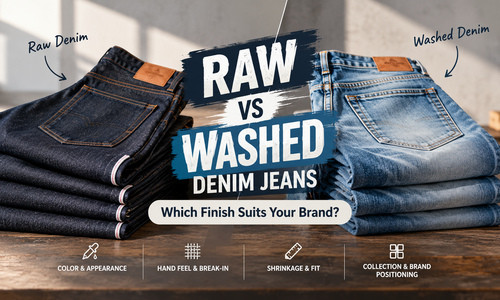
VANRD / Denim Selection Guide for Apparel Brands
Picture two pairs of jeans cut from a similar straight-leg pattern. One arrives in deep indigo, with crisp folds and a firm hand feel. The other has soft blue highlights, broken-in seams and the familiar ease of denim that already looks lived in. Both could become a signature product. But they tell your customer different stories—and they bring different development decisions to your production team.
For a clothing brand, choosing between raw and washed denim is not simply a question of which blue looks better. It affects first-wear comfort, how the color develops, the measurements customers experience, the range of finishes you can launch and how confidently you can repeat a successful order. If you're planning a new denim collection, those decisions belong together.
This guide compares raw vs washed denim jeans from a brand buyer's perspective. We'll cover the appearance, feel and break-in of each finish, explain how to approach shrinkage and fit, and help you decide when a clean raw look or an established washed effect makes more sense for your collection.
Raw vs Washed Denim Jeans: Quick Comparison
The main difference is when—and how much—the jeans are washed and finished before the customer receives them.
Quick answer: Raw denim jeans are generally cut and sewn from denim that has not undergone a garment-washing or fading treatment after construction. They usually begin darker and firmer, with wear patterns developing as the owner uses them. Washed denim jeans undergo an intentional finishing process, from a restrained rinse to a more visible vintage wash, so the brand controls more of the starting shade and hand feel.
There's one important distinction: raw does not mean the denim has never been processed. The fabric may have been sanforized—a mechanical preshrinking treatment—before the jeans are cut. Conversely, a pair described as washed may have received only a gentle rinse. That still counts as a garment finish, even if the jean looks nearly as dark as a raw pair.
It also helps to separate raw from selvedge. Selvedge refers to a fabric edge created by a particular weaving method; it does not tell you whether the finished jeans were rinsed, heavily washed or left raw. A selvedge jean can be either raw or washed.
| Comparison point | Raw denim | Rinse / one-wash denim | More developed washed denim |
|---|---|---|---|
| Initial appearance | Usually dark, even indigo with a crisp look | Often dark with subtle relaxation or softened edges | Can range from clean mid-blue to pale vintage or distressed |
| First-wear hand feel | Often firmer, depending on the fabric | Usually more relaxed | Often softer, depending on finish intensity |
| Fading story | Wearer develops the characteristic fading | Some character develops after the initial rinse | Much of the initial visual story is designed before sale |
| Fit planning | Must consider mill preshrink treatment and later laundering | Some relaxation occurs during the rinse; residual change still needs checking | Measurements must be approved after the intended wash |
| Shade consistency | Control fabric and dye lots; future wear will vary by wearer | Control rinse and dye-lot shade | Control wash recipe, shade range and localized effects |
| Collection fit | Heritage, workwear, raw-denim enthusiast and minimalist capsules | Clean everyday denim with easier first wear | Vintage, relaxed streetwear, fashion-led and established wash programs |
| Key development question | Is the base denim sanforized and what happens after home washing? | What is the approved rinse shade and final garment measurement? | Can the intended wash be reproduced consistently in bulk? |
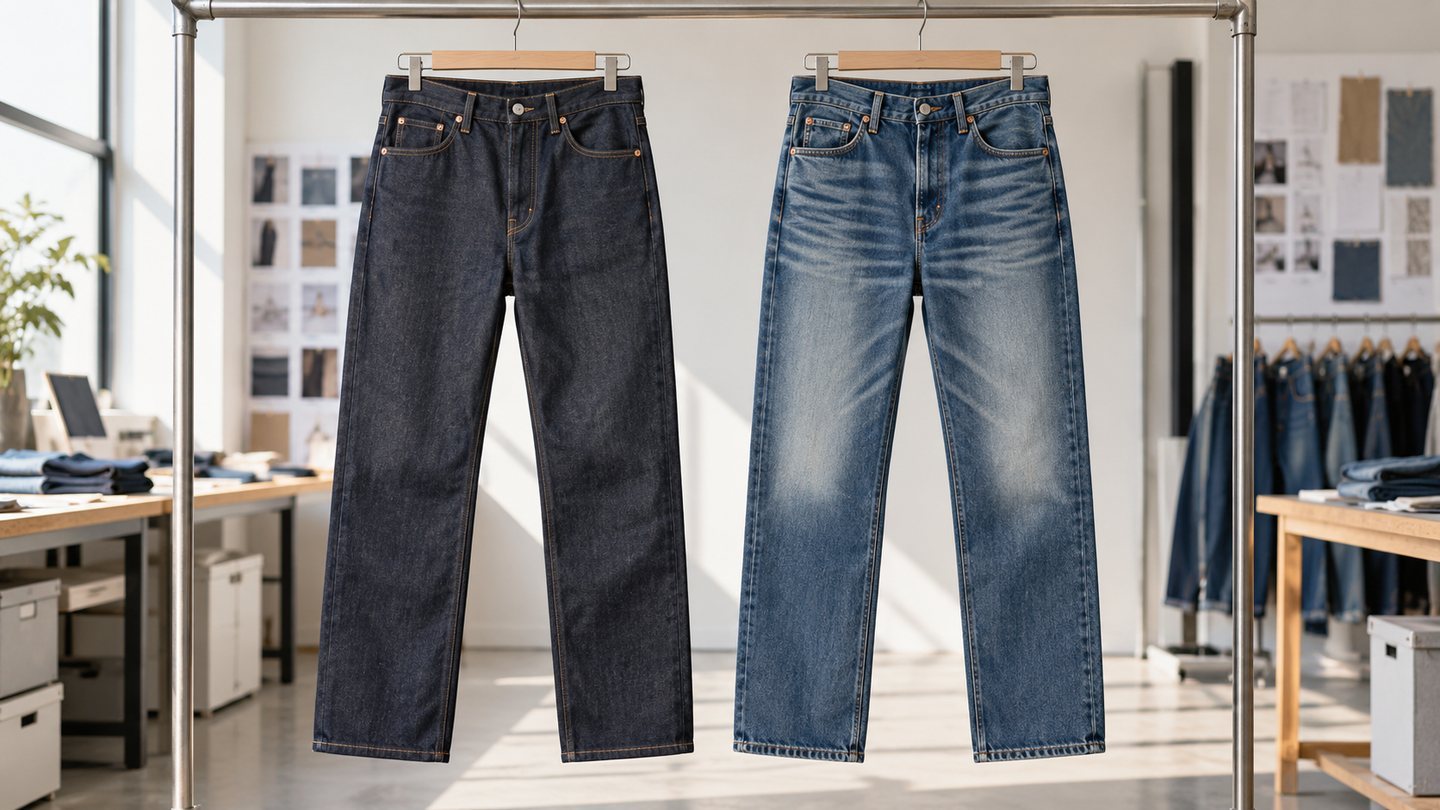
A quick visual comparison is useful, but for purchasing decisions start with the actual fabric reference and finished wash sample. The same cotton composition and advertised denim weight can produce very different results depending on yarn, weave, finish and processing. If you are specifying a new style, VANRD's custom denim jeans manufacturing page gives a broader view of fabric, fit and trim options.
Appearance, Hand Feel and Break-In
Why raw denim has that clean, dark look
Fresh raw indigo denim often has a distinctive visual clarity: deep color, visible twill lines and sharply defined creases. The fabric tends to keep more of its original character because it has not been garment-washed to create a ready-made faded effect. It can give straight-leg, relaxed or workwear-inspired jeans a confident, architectural silhouette.
For a heritage brand, that untouched appearance is part of the appeal. The first-day jean is effectively a blank canvas. Over months of wear, friction at the pockets, thighs, seat and behind the knees can reveal lighter areas. The wearer—not the laundry recipe—helps create the pattern. This is why raw denim has an audience that values the process of wearing a garment as much as its appearance on launch day.
Still, raw is not automatically heavyweight, and heavyweight is not automatically better. You can develop lighter rigid denim or heavier washed denim. Fabric weight, weave density, finishing and pattern shape all influence structure. A brand should choose them to serve the fit rather than treating "raw" as a synonym for premium quality.
Why washed denim feels ready to wear
Washed jeans start at a different point in that story. Instead of asking the customer to create every fade, you decide how much of the worn-in character will already be present at purchase. A dark rinse can preserve a polished look while relaxing the fabric. A medium vintage wash can create softer contrasts around seams. A lighter finish with carefully placed whiskers and fading can give a loose streetwear jean the lived-in character that many customers want immediately.
That doesn't mean every washed jean should look heavily distressed. In fact, a restrained wash may be exactly what a brand needs for its core product: consistent dark blue, comfortable hand feel and less need to explain a lengthy break-in. It's often the middle ground between raw-denim character and easy retail wearability.
What changes as customers wear and care for the jeans?
Raw denim normally develops more noticeable individual wear patterns because its starting appearance is more uniform. Washed denim can also continue to fade, stretch and change with wear. Neither finish freezes the jeans at the point of sale. The rate and appearance of change depend on the dyeing method, fabric construction, abrasion, laundering, fit and daily use.
Indigo can transfer through rubbing, particularly with deeply dyed fabrics. A brand should assess colorfastness and communicate appropriate care rather than claiming that all washed jeans are colorfast or that all raw jeans will stain other garments. The right care label should reflect the finished product and its tested behavior.
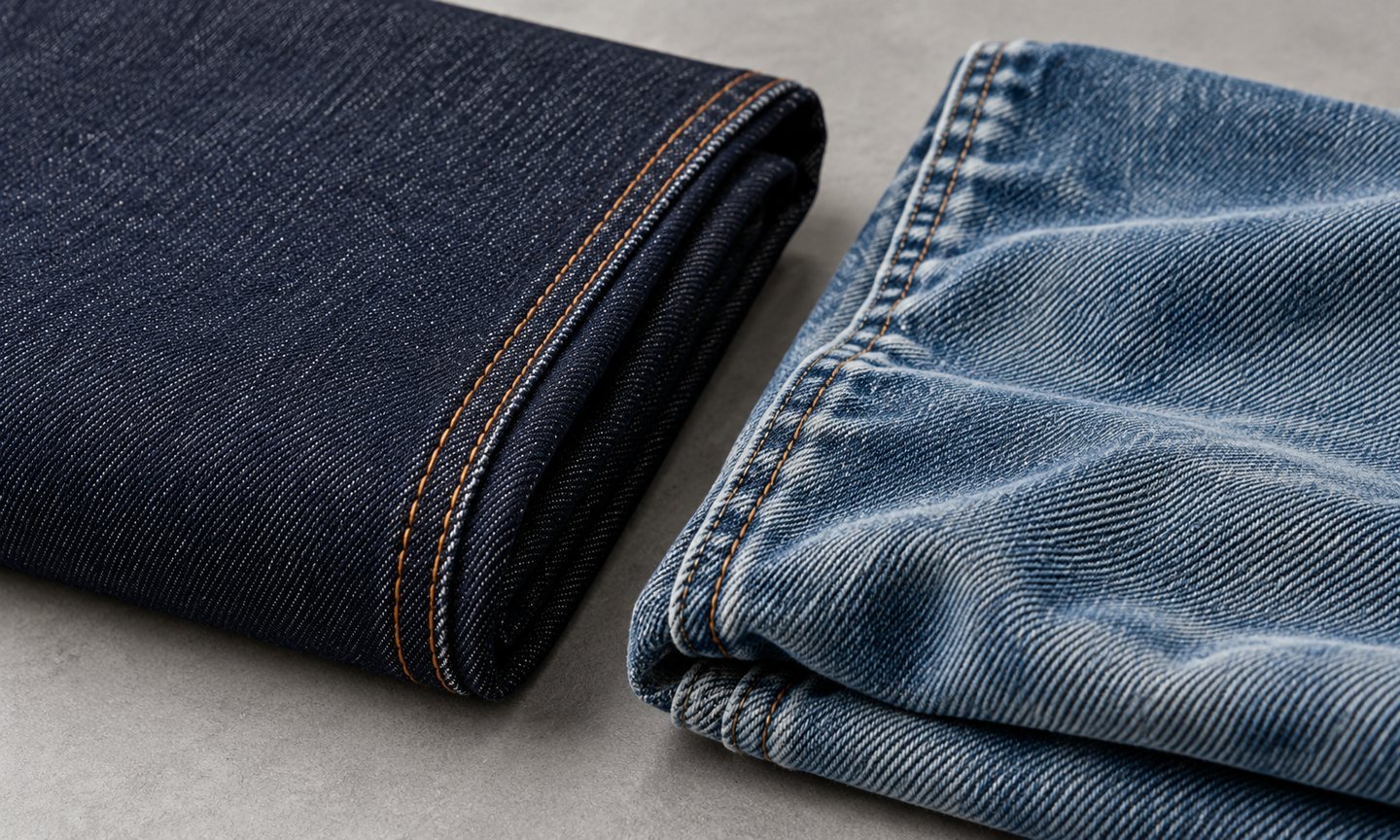
For brand storytelling, here's a simple choice: do you want customers to see the product's history already written into the finish, or do you want them to write much of that history themselves? Both approaches can work. They simply address different expectations of the jeans-buying experience.
Shrinkage and Fit Considerations
Raw denim does not automatically mean extreme shrinkage, and washed denim does not mean shrinkage is eliminated.
This is the area where aesthetic decisions turn into measurable production risks. The same straight-leg pattern may not produce the same finished inseam, waist or leg opening when made in raw denim and when subjected to a developed garment wash. Water, heat, agitation and fabric relaxation can influence dimensions, so fit approval has to match the product you actually intend to sell.
Sanforized raw denim versus unsanforized raw denim
Sanforization is a mechanical treatment intended to reduce later fabric shrinkage before cutting and sewing. A sanforized raw jean can remain raw because the finished garment has not received the kind of laundering or visual wash that would change its presentation. Residual shrinkage may still occur, and the manufacturer should confirm it with the selected fabric and care conditions.
Unsanforized raw denim, sometimes called loomstate denim in this context, has not received that compressive preshrinking step. It may change substantially when first soaked or washed. How much? There is no responsible universal number that covers every denim construction, garment pattern and laundering procedure. For a private label product, ask the mill or supplier for the actual dimensional-change information, then verify it on garment samples.
The difference matters to customer experience. A brand can deliberately sell a shrink-to-fit concept to an informed audience, but it should not quietly place an unsanforized jean into a mainstream size chart and hope buyers understand what happens after washing. Detailed care and sizing communication are part of the product—not an afterthought.
What the garment wash changes
For washed denim, the relevant measurement is the size after the specified finishing route. A garment that looks correct before washing may finish shorter, tighter or differently balanced after the laundry process. This is particularly important when the style includes a fitted waistband, carefully positioned back pockets, a dramatic wide leg or a precisely designed stacked hem.
Think of a wash as another development operation, not a cosmetic filter applied to the last photograph. A style's pattern may need allowance based on the measured result of the selected fabric and wash recipe. The most useful approval sample is therefore the sample representing the intended final retail condition.
Compare the approved measurements in the intended finished state: waist, hip, front and back rise, thigh, knee, leg opening and inseam. Record the garment-wash conditions and repeat the agreed home-laundering evaluation. Avoid publishing a fixed shrinkage percentage unless it comes from testing the actual fabric and garment.
For technical reference, AATCC TM135 addresses fabric dimensional change after home laundering, while AATCC TM150 addresses dimensional changes in finished garments. These are testing frameworks, not a substitute for agreeing on project-specific measurement tolerances.
Levi's distinguishes preshrunk jeans from its unsanforized Shrink-to-Fit program, illustrating why shoppers need different sizing advice for different denim constructions. Your brand should be just as clear about what customers will receive and how it is expected to change.
Which Finish Fits Each Collection?
There is no single finish that wins every market. The better choice is the one that supports your price positioning, customer expectations, silhouette and future product plan. Here are the strongest starting points.
1. Heritage and premium raw-denim collections: start with raw
If your brand is built around indigo depth, structured five-pocket jeans, evolving fades and denim enthusiast culture, raw denim offers a clear product story. A stable sanforized option may make that story easier to introduce to a wider audience; an unsanforized product can suit a more specialized customer if the sizing and care guidance are exceptionally clear.
Focus development on fabric origin and composition, hand feel, leg shape, stitch contrast and honest size guidance. A premium claim needs construction and material substance behind it, not just a dark indigo photograph.
2. Clean core retail and everyday jeans: consider a dark rinse
Not every buyer wants a break-in ritual. For classic straight-leg jeans sold across several sizes and retail channels, a carefully developed dark rinse can be an attractive middle ground. It maintains the versatile appearance of deep denim but can deliver an easier initial hand feel and a more predictable finished measurement—once tested and controlled.
That makes a rinse especially interesting for brands planning repeat programs. You can build a dependable base fit and explore different washes later without changing the entire product architecture.
3. Relaxed streetwear and vintage-inspired drops: washed denim is a strong fit
Washed jeans have an immediate visual language. A medium fade, softened seam edge or carefully controlled whisker can complement baggy, wide-leg and oversized streetwear silhouettes. When the intended product is about a familiar lived-in mood on day one, waiting for months of natural fade development would undermine the design.
Choose the wash by reviewing full finished samples, not only a small faded fabric square. Placement matters. A knee highlight that works on a straight leg may fall awkwardly on an oversized or stacked fit.
4. Fashion-led capsules with light washes or distressing: develop the finish first
For pale blue, black vintage, localized abrasion or distressed denim, the wash is a defining design element. Set a clear visual target and approve acceptable variation before bulk production. Very aggressive processing may affect fabric strength or hardware appearance, so the wash should be evaluated alongside the jeans' durability requirements.
Different garment washes can offer very different visuals. If you need the broader technique options, VANRD covers denim wash and customization choices on its dedicated manufacturing page.
| Brand goal | Best first option to sample | What to verify before approval |
|---|---|---|
| Authentic, evolving fades | Raw denim | Sanforization, initial hand feel, home-wash change |
| Dark everyday denim with easy initial wear | One wash / rinse | Finished shade, hand feel and measurements |
| Relaxed vintage streetwear | Medium garment wash | Fade placement, pocket and seam appearance, fit |
| Light, distressed fashion denim | Developed wash / selective abrasion | Fabric strength, repeatable effect, acceptable shade range |
| Long-term core denim line | Raw or controlled rinse, depending on customer | Fabric continuity, shade standard and reorder records |
For a new collection, one well-developed fit can do more for the brand than three loosely specified styles. If your customers respond to the fit, you can explore a raw finish and one controlled washed version as separate products—provided you approve the finished measurements for each. VANRD's streetwear pants comparison guide also explores how denim fits into a broader bottoms collection.
Production and Reorder Considerations
Once you've chosen the direction, the next challenge is not whether the first sample looks good. It's whether the result can be specified, inspected and repeated. Raw and washed denim create different points of control, and both deserve attention before a bulk order.
For raw denim: control the base fabric and customer information
Start with a named fabric specification, not simply "14 oz raw blue." Include composition, weight, weave, mill finishing, shade reference, width where relevant and any performance requirements. Confirm whether the cloth is sanforized or unsanforized. Ask what home-laundering change can be expected under the agreed care conditions. Because individual fading is part of the appeal, your product copy should not promise that every buyer's jeans will age to the same pattern.
Shade continuity matters on reorders. If the dye lot or denim base changes, the finished garment can look different even when the pattern and trim remain the same. Preserve an approved material reference and record what was actually purchased for the first successful run.
For washed denim: approve a range, not just one perfect photo
Washed jeans require more control of the finishing result. Define the reference shade and any allowed light-to-dark range, the location and intensity of faded areas, the desired hand feel, and whether visible seam abrasion is intentional. If there is distressing, identify its positions using clear measurements or a marked technical drawing rather than instructions like "add some fading to the thighs."
A small sample can be beautiful and still be difficult to repeat at scale. The production brief should connect the fabric lot, garment construction and wash process to the approved outcome. Finished measurements need to be reviewed after the target wash. If a particular effect changes during scaling, both the visual standard and the production route may need further approval.
Branding and hardware should survive the intended finish
Back patches, embroidery, rivets, buttons, zippers, pocket labels and stitching colors all influence the final expression of the jeans. But washing can also affect them. A leather-like patch may change tone, embroidery may respond differently to abrasion, and plated hardware can require careful selection for the planned process.
When developing private label jeans, approve these items on a finished garment that has been through the intended process. VANRD outlines the available denim construction and branding choices in its denim customization FAQ.
Build a simple approval record for future orders
Before repeating a successful style, the team should be able to retrieve a short set of records: the approved fabric identification, final measurements and grading, wash reference and allowable shade variation, trim and logo specification, and the signed-off sample. If a customer reorders six months later, those records are more valuable than the marketing phrase "same wash as before."
For inspection planning, compare the order against the accepted finish and project-specific tolerances, with attention to waist and inseam dimensions, seam twist where relevant, wash shading, distressing placement, loose threads and hardware function. VANRD's garment quality control guide discusses broader inspection checkpoints without turning this finish comparison into a full factory-process tutorial.
Ask for environmental evidence, not a blanket "eco-wash" promise
Finishing methods can differ significantly in water, chemical, energy and processing demands, but no honest brand should assume that "raw" automatically has the lowest total environmental impact or that "laser wash" always has a fixed savings percentage. The whole product and the actual finishing route matter. If sustainability is part of your claim, request process-specific information from the supplier or laundry and verify what the evidence actually covers.
For example, Levi Strauss & Co.'s Water<Less program shows that finishing methods can be redesigned to use less water. That is evidence about a specific initiative, not proof that every washed-denim supplier uses the same method or achieves the same result.
Send a reference jean or clear images, desired finish, fabric composition or weight direction, target silhouette, waist/rise/inseam measurements, trim and logo details, colorways, estimated quantity and launch timing. For washed denim, include the preferred shade and fading placement. For raw denim, confirm the shrink-control strategy and care expectations.
Conclusion: Which Denim Finish Suits Your Brand?
Choose raw denim jeans when the appeal of your collection comes from deep indigo, firm structure and a fabric that gains personal character over time. Choose washed denim jeans when you want the customer to receive a specific softness, shade or vintage effect from the first wear. If you need the dark look with a gentler start, a controlled rinse may offer a useful middle path.
The most successful choice is not simply a name on a fabric card. It is an approved combination of finish, fit, care expectations and a repeatable product standard that makes sense for your customer and your brand.
Planning a Custom Denim Jeans Line?
Share your target fit, raw or washed denim reference, branding ideas and estimated quantity. VANRD can help review the fabric and finish direction for your custom jeans project and identify the details to confirm before sampling.
Discuss Your Denim Jeans ProjectFrequently Asked Questions
1. Can we launch the same jeans in both raw and washed finishes?
Yes, you can develop both finishes around a shared design direction, but you should not assume the same cut will produce identical final dimensions. Each finish needs its own reviewed sample and measurement confirmation, especially if the washed version uses substantial garment processing. Once approved, you can present them as two distinct ways to wear the same collection concept.
2. Is raw denim always made from 100% cotton?
No. Raw describes the lack of a garment wash or fading finish, not a mandatory fiber composition. Many classic raw-denim styles use 100% cotton rigid denim, but other blends can also be supplied without garment washing. Brands should specify both the fabric composition and the finish, particularly if stretch recovery or fit consistency is important.
3. Does a rinse wash remove the risk of shrinkage?
No. A rinse may relax the fabric and remove some of the dimensional change before sale, but it does not guarantee zero further shrinkage. Residual movement depends on the fabric, previous mill treatment and later care. Approve measurements after the intended finishing process and verify home-laundering behavior under the relevant testing conditions.
4. Which denim finish is easier to repeat for future collections?
A controlled raw or rinse program may involve fewer visual variables than a strongly faded or distressed garment wash, but consistency is not automatic. Raw jeans still depend on stable material and dye lots; washed jeans need a controlled finish reference and acceptable shade range. Reorder reliability comes from documented specifications and approved standards, not from the finish label alone.
5. What affects the cost of raw versus washed denim jeans?
Fabric quality, weight, order quantity, construction, hardware, labels and packaging affect both. Washed programs may add wash development, finishing operations, extra handling or inspection costs, especially for complex fading and distressing. Raw programs may involve specialized fabric sourcing or other premium components. Ask for a quotation based on the complete specification rather than assuming one finish is always cheaper.
Technical references: Levi's shrinkage guidance · Lee raw-denim care guidance · AATCC TM150. This article provides general product-development guidance; exact performance must be confirmed for the chosen fabric and production specification.