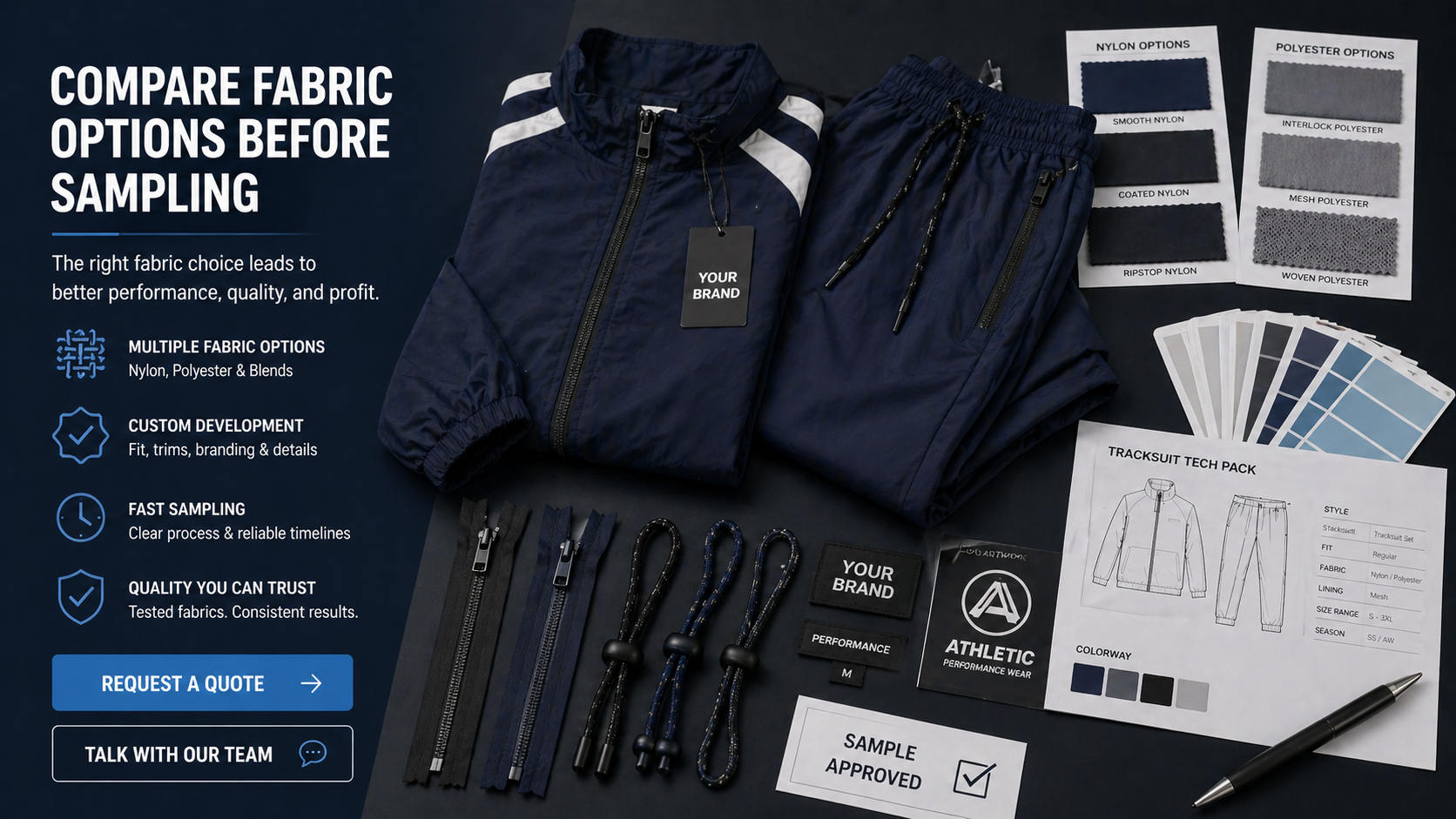
Nylon vs Polyester Tracksuits: Which Fabric Is Better for Custom Sportswear Programs?
- Share
- publisher
- Vanrd
- Issue Time
- Apr 8,2026
Summary
A practical B2B comparison guide for brands choosing between nylon and polyester tracksuits. Learn how fabric hand feel, durability, cost, lining, branding, sample development, and production planning affect custom sportswear programs.
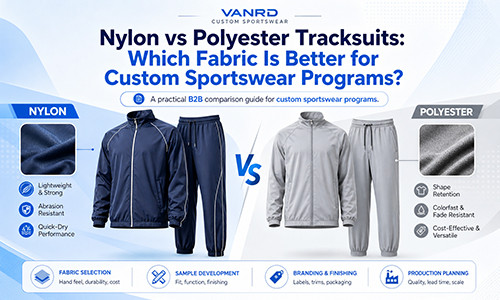
Nylon and polyester can both be suitable for custom tracksuits, but they serve different product goals. Nylon is often selected for a smoother, more technical hand feel, while polyester is often chosen for broader sourcing flexibility, easier color options, and cost control.
For private label sportswear programs, the better fabric depends on target use, price point, surface texture, lining, branding method, and production quantity. Buyers should compare fabric samples before confirming a tracksuit development direction.
Quick Answers
Is nylon or polyester better for tracksuits?
Neither fabric is automatically better. Nylon is often better for a smoother and more technical look, while polyester is often more practical for scalable sportswear programs, cost planning, and color consistency.
What is the main difference between nylon and polyester tracksuits?
The main difference is fabric behavior. Nylon often feels smoother, softer, or more technical, while polyester usually offers strong sourcing flexibility, stable color options, and practical performance for custom sportswear.
Are nylon tracksuits more expensive than polyester tracksuits?
Nylon tracksuits can be more expensive in some programs, but the final cost depends on fabric type, finish, lining, trims, logo method, order quantity, and fabric availability. Buyers should not compare cost by fiber name alone.
Which fabric is better for private label sportswear?
Polyester is often easier for larger sportswear programs, while nylon may work better for brands seeking a premium technical or streetwear-inspired direction. The better option depends on the collection goal and target buyer.
Can both nylon and polyester tracksuits be customized?
Yes. Both fabrics can support custom colors, panel designs, zippers, drawcords, labels, printing, embroidery, patches, and packaging. The branding method should be tested based on the fabric surface and finish.
What should brands check before choosing a tracksuit fabric?
Brands should check hand feel, weight, surface finish, stretch, lining, breathability, color options, logo compatibility, shrinkage behavior, seam stability, and cost feasibility before sampling.
Why Fabric Choice Matters in Custom Tracksuit Programs
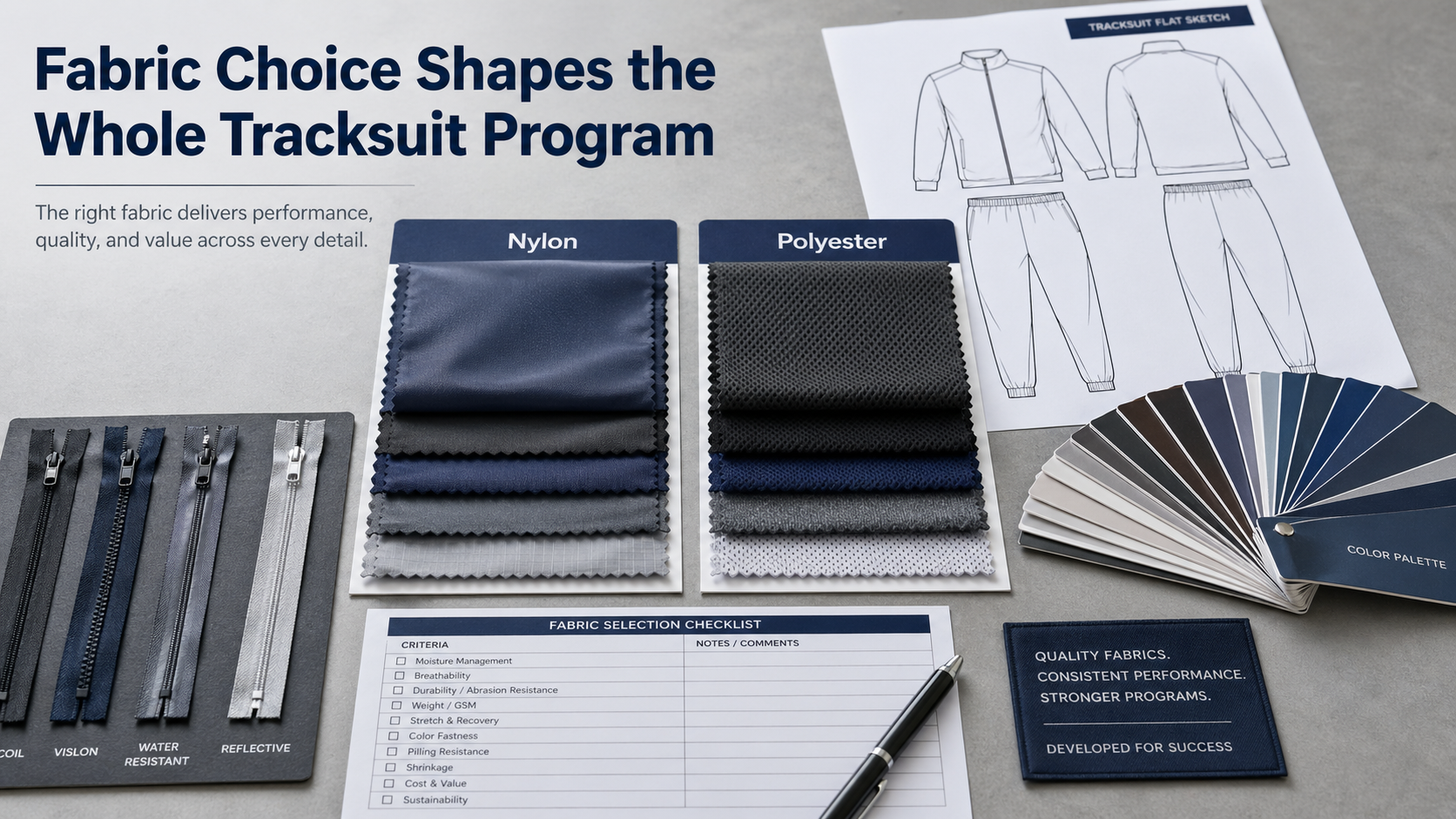
Fabric choice affects how a tracksuit looks, feels, performs, costs, and scales in production. For private label sportswear programs, nylon and polyester are not just material names. They are development directions that influence sampling, trim selection, branding methods, quality control, and final buyer perception.
A nylon tracksuit may support a more technical, smooth, or premium streetwear-inspired feel. A polyester tracksuit may be more suitable when the buyer needs stable sourcing, broader color options, and practical cost planning across repeated orders.
The right fabric should match the brand's product goal. A tracksuit for a teamwear program, a gymwear capsule, a streetwear drop, or a private label sportswear line may require different fabric behavior. Before sampling, buyers should compare the actual fabric swatches instead of deciding only by the terms "nylon" or "polyester."
Vanrd supports private label and OEM/ODM development for custom apparel programs. Buyers can review Vanrd's OEM/ODM Services to understand how custom development is usually planned from fabric direction to production preparation.
Nylon vs Polyester Tracksuits: Direct Comparison
Nylon is usually chosen when the brand wants a smoother, more technical, or premium hand feel. Polyester is often chosen when the brand needs sourcing flexibility, color consistency, and practical cost control for custom sportswear programs.
Comparison Point | Nylon Tracksuits | Polyester Tracksuits |
Hand feel | Often smoother, softer, or more technical | Often more stable, practical, and familiar in sportswear |
Visual effect | Can look more premium, crisp, or windbreaker-inspired | Can support a wide range of athletic and casual looks |
Cost planning | Can vary more depending on fabric type and finish | Often easier for cost-sensitive or scalable programs |
Color options | Depends on fabric availability and dyeing direction | Often broader and easier to source in many sportswear fabrics |
| Branding compatibility | Needs testing for printing, heat transfer, and embroidery | Often flexible, but still depends on surface and finish |
Common use | Technical tracksuits, streetwear capsules, windbreaker sets | Teamwear, activewear, athleisure, bulk sportswear programs |
| Development risk | Fabric feel and coating must be confirmed early | Quality depends on fabric grade, weight, and construction |
| Buyer fit | Brands seeking a distinct material feel | Brands planning repeatable and scalable sportswear programs |
This comparison should be used as a starting point, not as a fixed rule. Actual fabric quality depends on yarn, weave, finish, coating, weight, supplier availability, and garment construction.
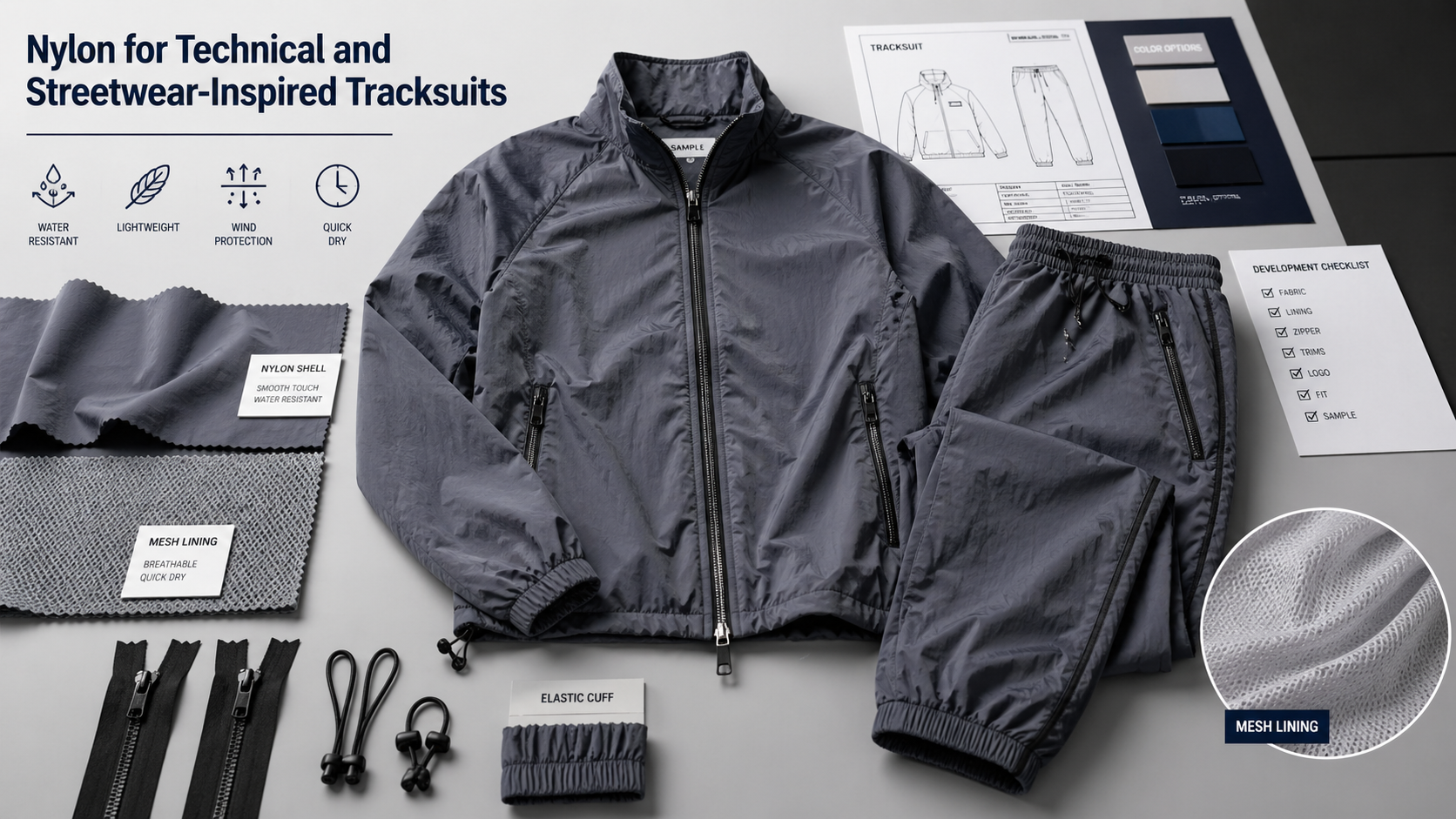
When Nylon Tracksuits Are Usually More Suitable
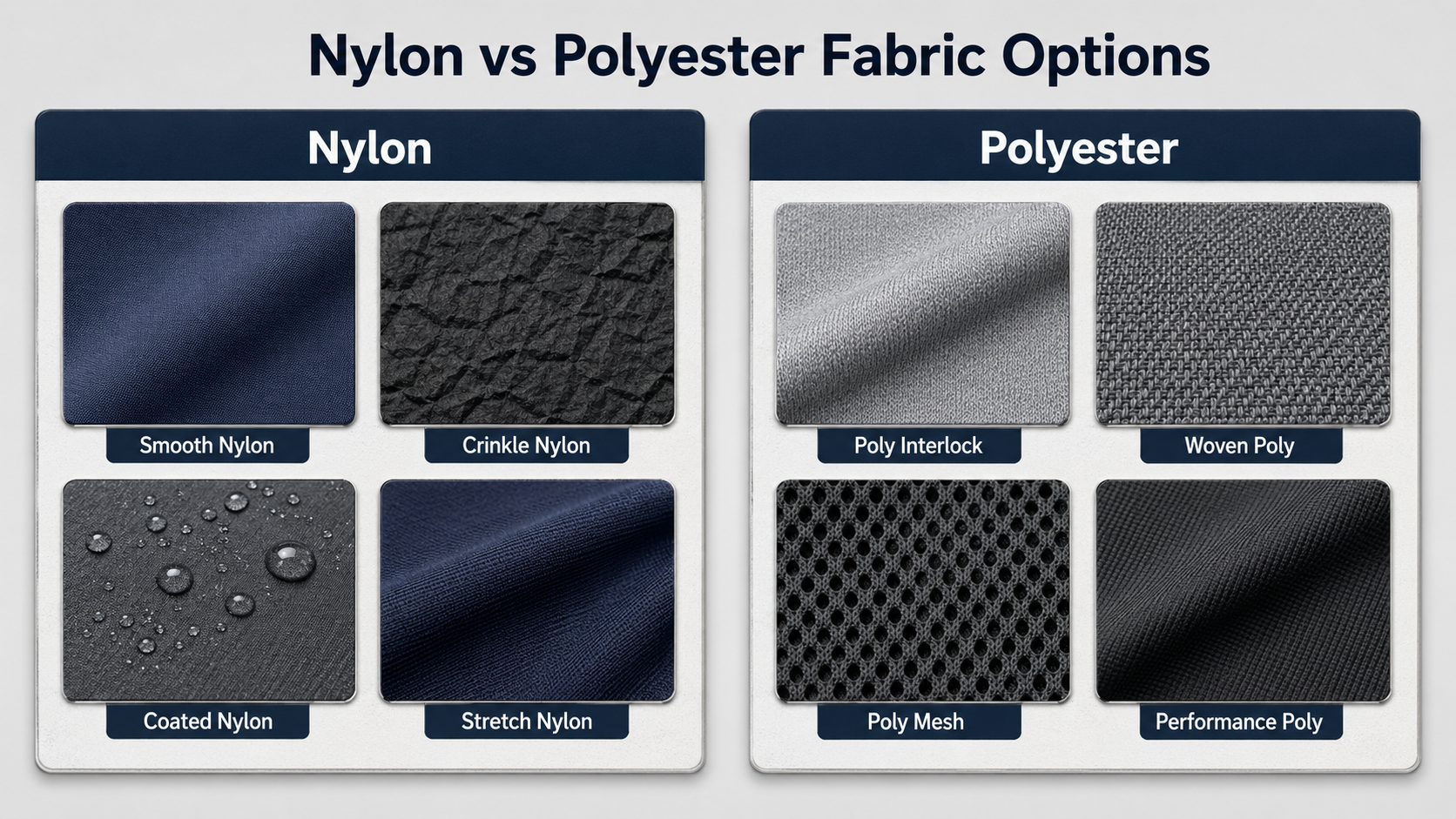
Nylon tracksuits are often suitable when the brand wants a more technical, lightweight, smooth, or streetwear-inspired product. Nylon can create a different hand feel from standard polyester sportswear and may help a private label collection feel more distinctive.
Good Use Cases for Nylon Tracksuits
Nylon may be suitable for:
Lightweight tracksuit sets
Windbreaker-style sportswear
Streetwear-inspired tracksuit capsules
Premium private label drops
Travel-friendly outerwear sets
Technical casualwear programs
Smooth shell tracksuit jackets and pants
Designs with paneling, zippers, and functional trims
What Buyers Should Check With Nylon
Private label buyers should check fabric weight, surface finish, coating, hand feel, lining, fabric noise, seam puckering, logo compatibility, and color availability. Nylon can look strong in photos, but the sample must be reviewed by touch, movement, and construction quality.
For example, a nylon shell may look premium but feel too stiff for the intended fit. Another nylon fabric may feel soft but lack the structure needed for a tracksuit jacket. This is why fabric swatch confirmation is important before sample development.
When Polyester Tracksuits Are Usually More Suitable
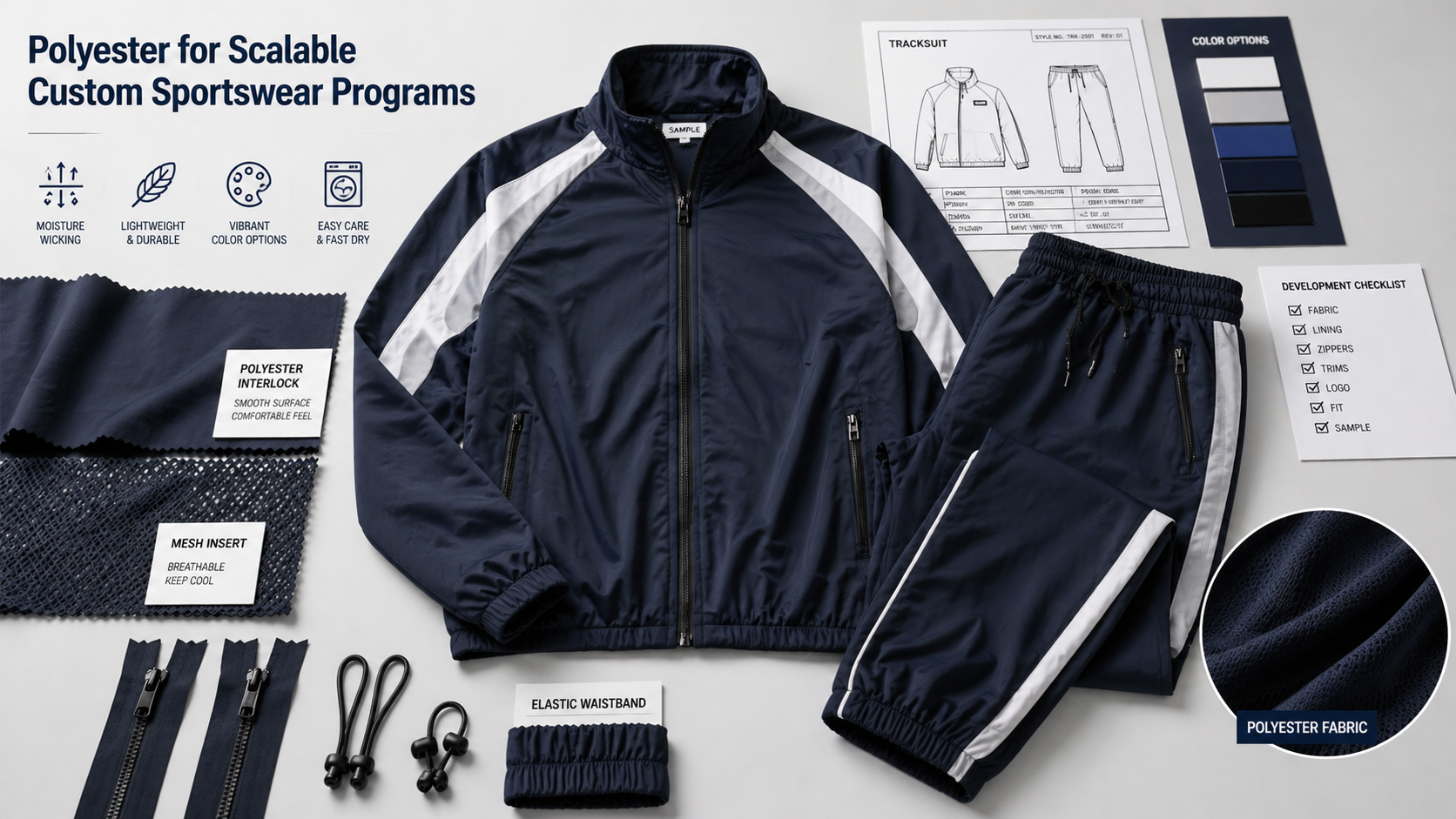
Polyester tracksuits are often suitable when the brand needs practical performance, stable sourcing, broader color options, and better cost control. Polyester is widely used in sportswear because it can support many fabric structures, including woven, knit, mesh, interlock, and performance finishes.
Good Use Cases for Polyester Tracksuits
Polyester may be suitable for:
Teamwear tracksuits
Training sets
Athleisure programs
School or club sportswear
Bulk private label sportswear
Cost-sensitive tracksuit programs
Repeat-order product lines
Color-blocked sportswear collections
What Buyers Should Check With Polyester
Buyers should still check the exact fabric quality. Polyester is a broad category, and a low-grade fabric may not meet the brand's expected hand feel or durability. Important checks include fabric weight, stretch, pilling resistance, breathability, colorfastness, print compatibility, and seam recovery.
Polyester is practical, but it should not be treated as a generic low-cost solution. The final result depends on the selected fabric and construction standard.
Common Confusion: Nylon vs Polyester Is Not the Same as Quality Level
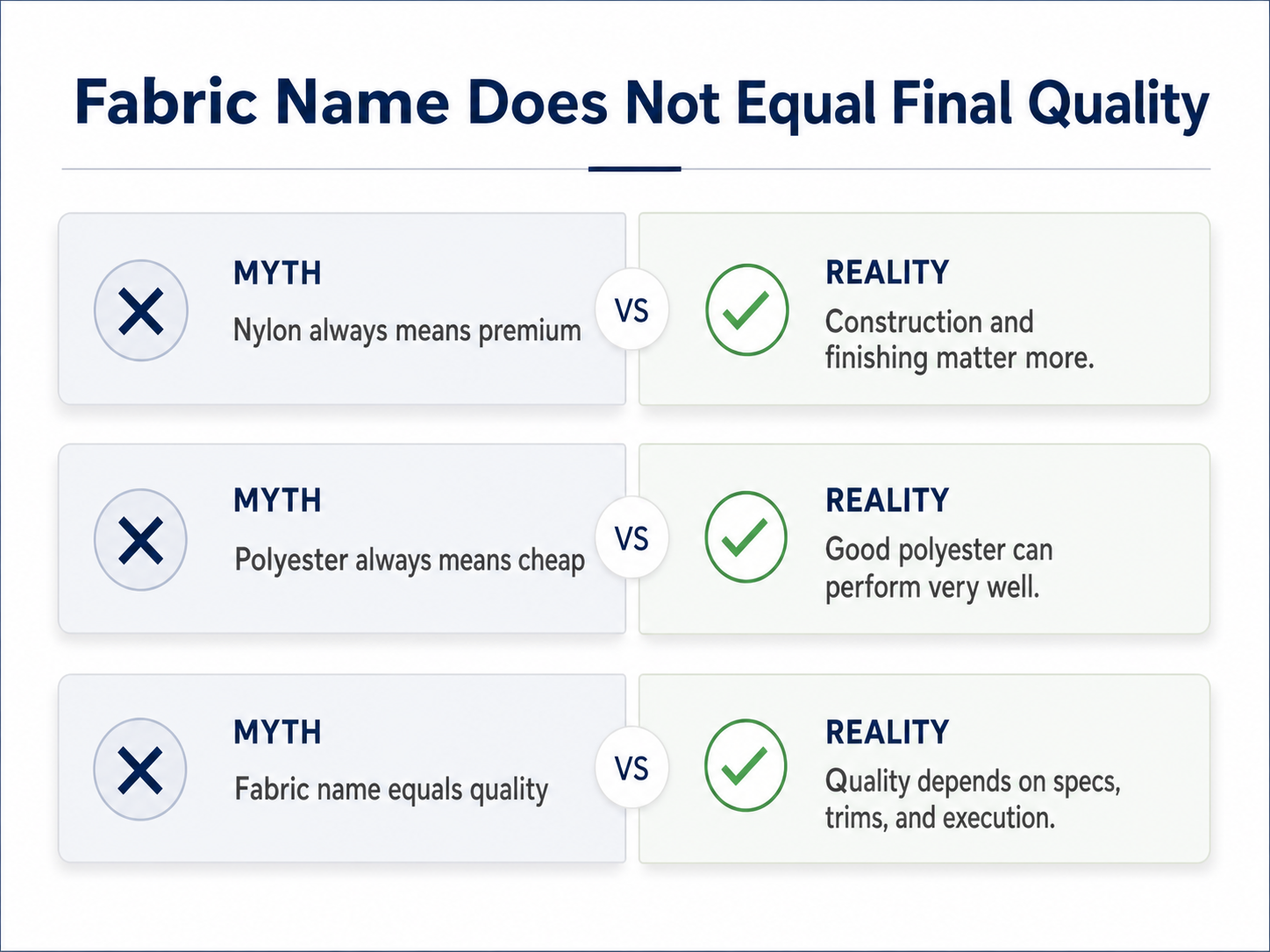
A common misunderstanding is that nylon automatically means premium and polyester automatically means cheap. This is not accurate in manufacturing.
Quality depends on the fabric grade, yarn, weave, weight, finishing, coating, dyeing, construction, trims, and quality control standard. A well-selected polyester fabric can perform better than a poorly selected nylon fabric. A high-grade nylon fabric can create a very strong product direction, but it still needs proper patterning, lining, trims, and logo testing.
The buyer should not ask only, "Is nylon better than polyester?" A better question is, "Which fabric better fits my target product, price level, performance needs, and production plan?"
Vanrd's Fabrics & Techniques page can help buyers understand how material, finish, trims, printing, embroidery, and other customization choices connect to product development.
How to Choose Between Nylon and Polyester Before Sampling
The best way to choose between nylon and polyester is to connect the fabric decision to the product's target use, price level, fit, branding method, and production plan.
Step 1: Define the Product Use Case
Start by defining where the tracksuit will be used. A training set, streetwear set, teamwear product, travel set, and windbreaker-style capsule may require different fabric behavior.
Ask these questions:
1.Is the product mainly for sportswear, streetwear, teamwear, or casualwear?
2.Should the fabric feel smooth, structured, soft, breathable, or technical?
3.Will the tracksuit be worn for movement, styling, layering, or promotional use?
4.Does the buyer expect a lightweight shell or a more substantial fabric?
Step 2: Confirm the Target Price Range
Fabric choice affects cost, but the final price also depends on lining, trims, branding, pattern complexity, order quantity, and packaging. A simple polyester tracksuit with standard trims may be easier to control than a custom nylon tracksuit with special coating, lining, custom zippers, and detailed branding.
Step 3: Compare Real Fabric Swatches
Do not approve a fabric direction only from a photo. Buyers should compare real swatches for hand feel, thickness, stretch, shine, drape, and color. If possible, check how the fabric behaves when folded, pulled, and stitched.
Step 4: Check Branding Compatibility
Logo methods should match the fabric surface. Screen printing, heat transfer, embroidery, woven labels, rubber patches, reflective details, and applique may behave differently on nylon and polyester.
Step 5: Review Sample Construction
After the first sample, check seams, zipper balance, pocket stability, waistband recovery, lining comfort, and measurement accuracy. The fabric decision is only successful when the garment construction also supports the intended product.
For buyers preparing a development request, Vanrd's Service Process explains how sampling, approval, production planning, and communication are usually connected.
What to Prepare Before Asking a Manufacturer for Fabric Advice
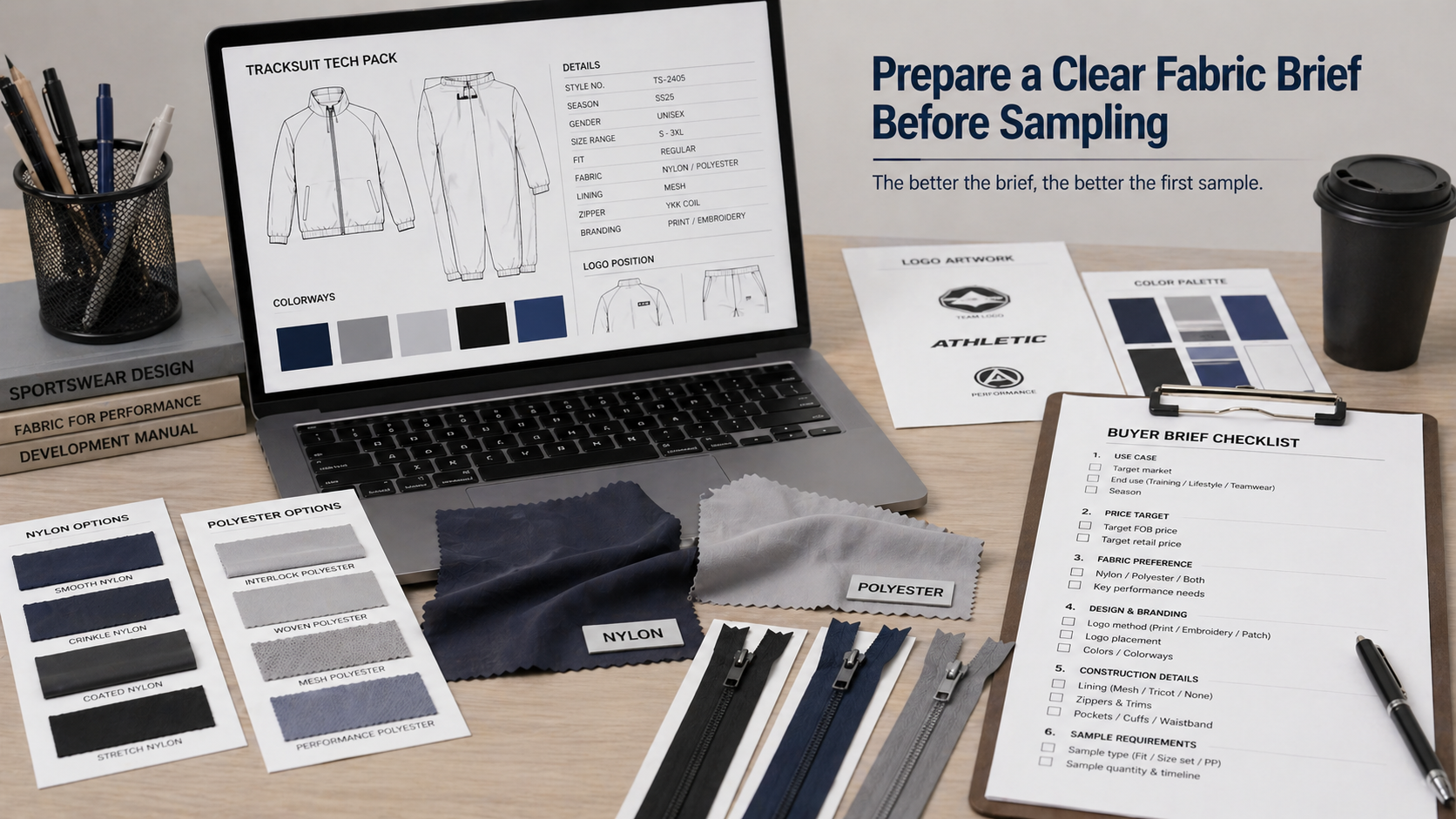
A manufacturer can give better fabric advice when the buyer provides enough project context. Instead of asking only for "nylon tracksuit" or "polyester tracksuit," the buyer should explain the expected product direction.
Useful Information to Send
Before requesting fabric recommendations, prepare:
1.Product reference images
2.Target fabric hand feel
3.Intended use case
4.Price expectation or market position
5.Size chart or fit direction
6.Color requirements
7.Branding method
8.Lining preference
9.Zipper and trim expectations
10.Estimated order planning stage
11.Required sample deadline if relevant
This information allows the manufacturer to recommend fabric options that match the actual product goal, not just the keyword.
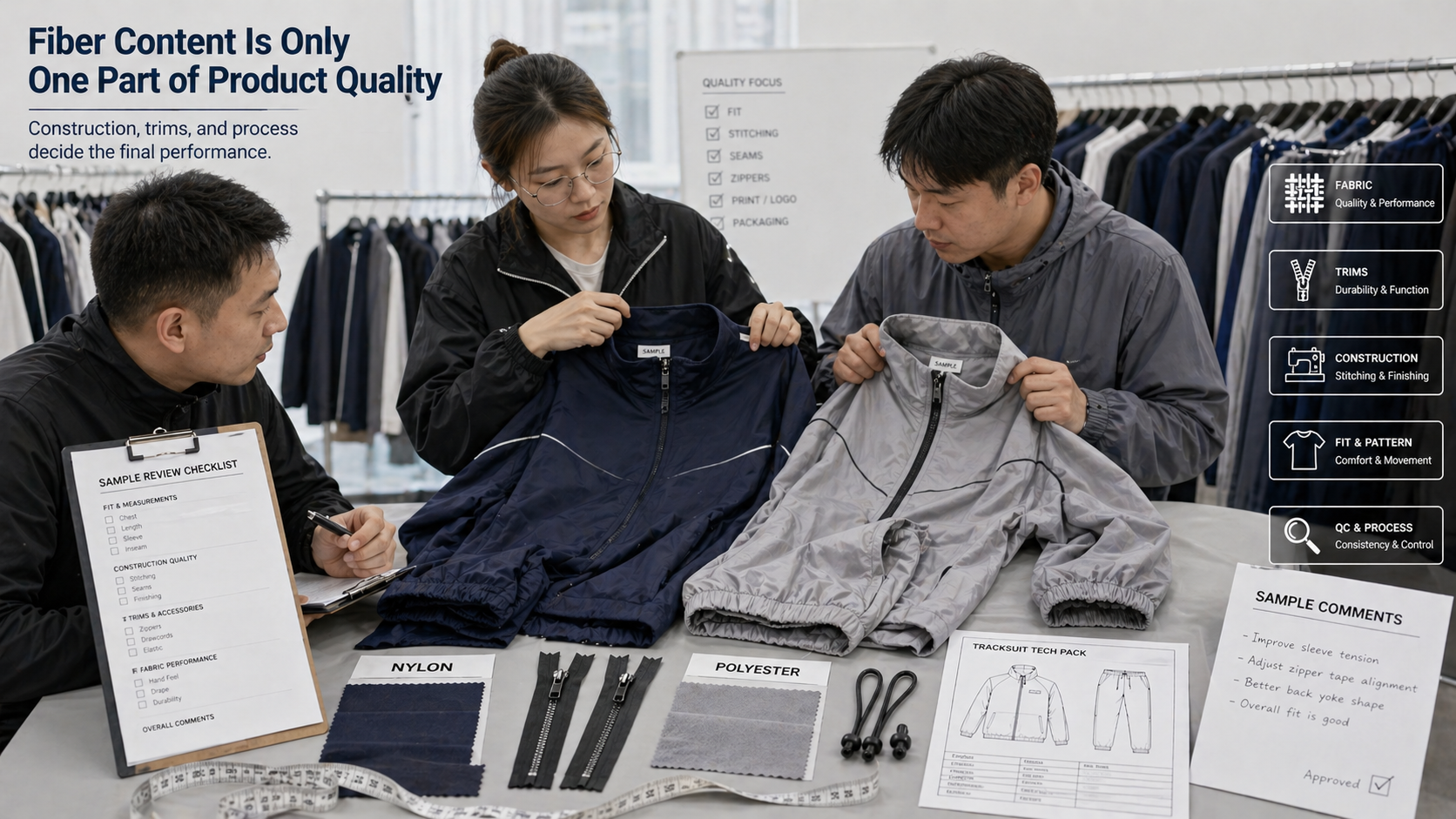
Factory Reality: The Final Result Depends on More Than Fiber Content
In factory development, fiber content is only one part of the tracksuit decision. Two polyester fabrics can feel very different. Two nylon fabrics can also behave differently in sewing, lining, logo application, and bulk production.
The final product depends on:
Fabric construction
Fabric weight
Finish or coating
Dyeing and color standard
Lining selection
Pattern and fit
Stitching method
Trim quality
Logo application
Quality control standard
Bulk production consistency
This is why the sample review stage is important. A fabric may be correct in theory but still need changes after the first sample. For example, the fabric may pucker near zipper seams, feel too noisy during movement, or react poorly to a selected logo technique.
Vanrd is based in Dongguan, Humen, and works with brands that need custom development support for private label apparel programs. Buyers can learn more about Vanrd's production background through Factory Strength.
Risk Watchpoints Before Bulk Production
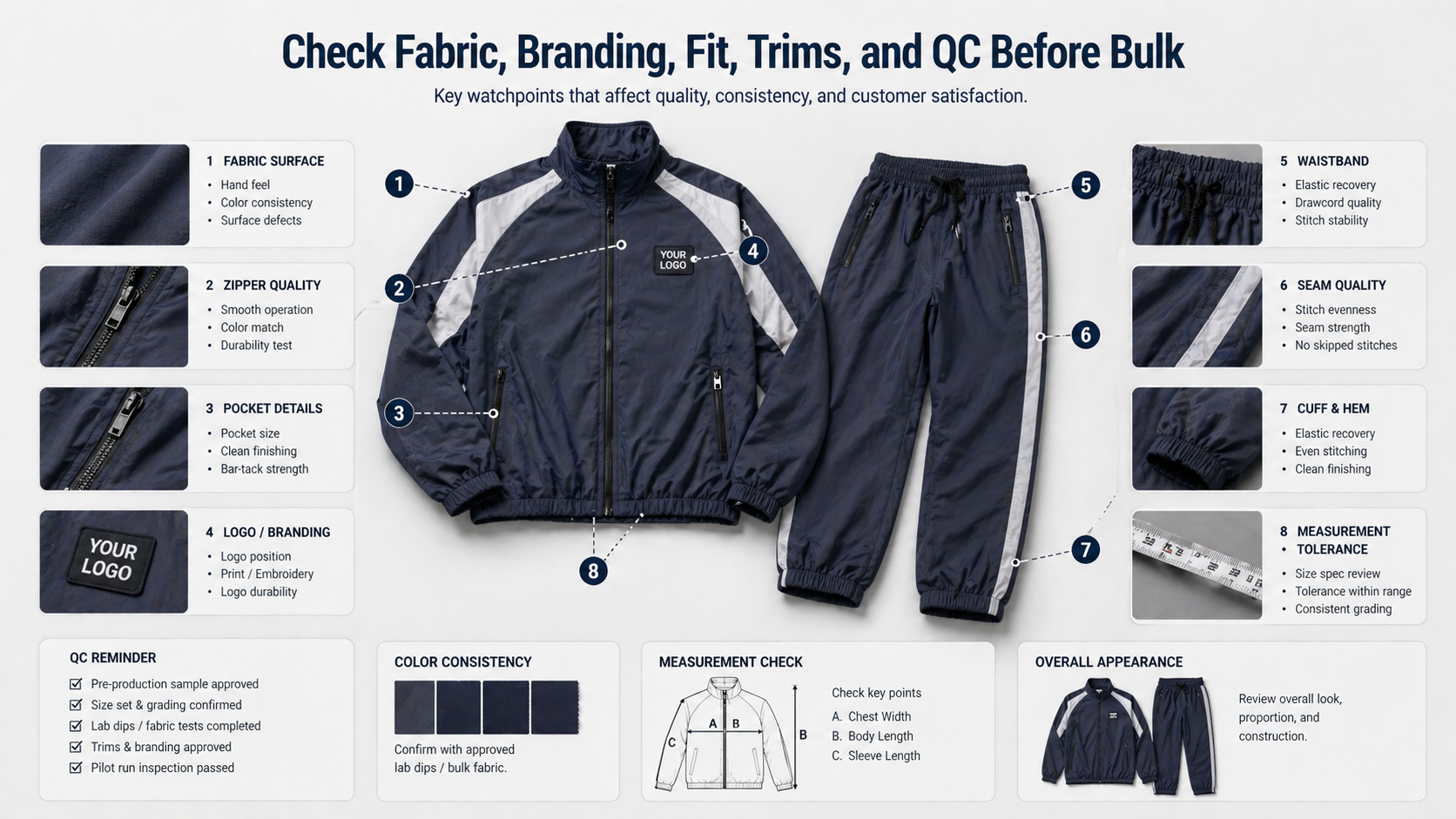
A tracksuit fabric may look acceptable at the sampling stage but still create problems if key points are not confirmed before bulk production. Buyers should review risk points before final approval.
Fabric Risk
The approved fabric should match the desired weight, hand feel, stretch, color, and finish. If a replacement fabric is used later, the buyer should confirm whether it changes the sample result.
Branding Risk
Printing, embroidery, patches, and heat transfer should be tested on the actual fabric or confirmed through a reliable sample. Nylon and polyester surfaces can respond differently to heat, tension, and backing.
Fit Risk
The same pattern may behave differently depending on fabric drape and stretch. Buyers should review fit on the body, not only in flat photos.
Trim Risk
Zippers, drawcords, elastic, snaps, and labels should match the garment weight and target price. A weak zipper or loose waistband can reduce the perceived quality of the full tracksuit.
QC Risk
Measurement tolerance, seam smoothness, pocket symmetry, color consistency, logo placement, and finishing should be checked before bulk production approval. Buyers can review Vanrd's Q&C page to understand how quality control thinking supports custom production.
Common Mistakes When Comparing Nylon and Polyester Tracksuits
Many fabric selection problems come from comparing nylon and polyester too generally. Buyers should avoid these mistakes before sampling.
Mistake 1: Choosing Fabric Only by Name
"Nylon" and "polyester" are broad categories. Buyers should compare actual fabric samples instead of choosing by fiber name alone.
Mistake 2: Ignoring the Target Use Case
A fabric that works for streetwear may not be right for teamwear. A fabric that works for a lightweight shell set may not work for a structured sportswear program.
Mistake 3: Comparing Cost Without Construction Details
Cost is affected by lining, trims, logo method, pocket construction, paneling, quantity, packaging, and sample revisions. Fabric type is only one factor.
Mistake 4: Approving Fabric Before Testing Branding
Logo methods should be checked early. Heat transfer, embroidery, patches, and printing can behave differently depending on fabric finish.
Mistake 5: Forgetting Bulk Consistency
A sample may look correct, but bulk production still requires confirmed fabric sourcing, color standard, measurement tolerance, and inspection requirements.
Next Steps for Private Label Sportswear Brands
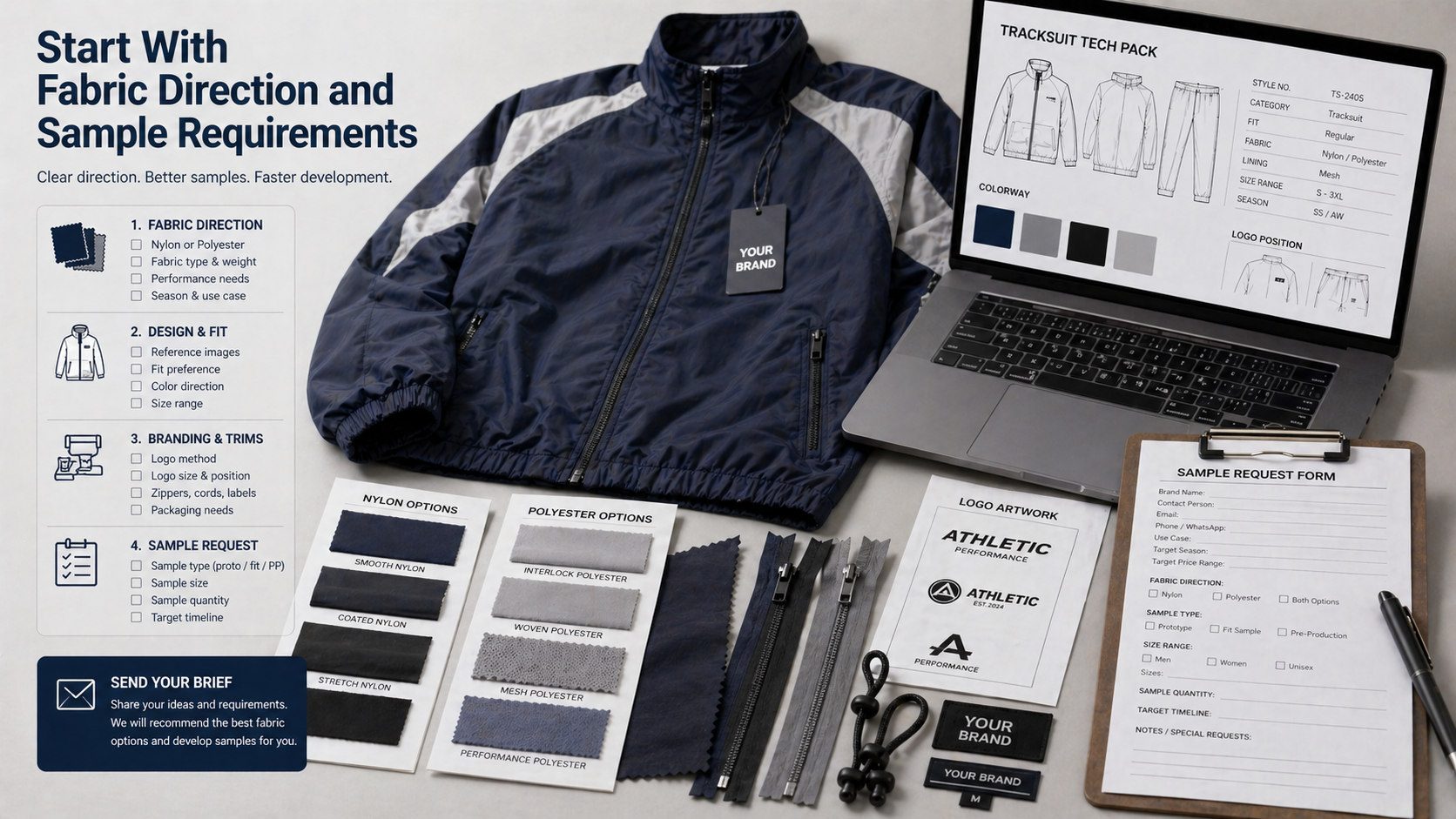
Before choosing nylon or polyester for a custom tracksuit program, prepare your product direction and compare real fabric options. The right decision should connect fabric behavior, target market, fit, branding, trims, and production planning.
A practical next step is to send your reference images, tech pack, fabric direction, target use case, branding files, and estimated order plan to the manufacturer. If you are not sure whether nylon or polyester is more suitable, explain the result you want instead of only naming the fabric.
Private label buyers can contact Vanrd through the Contact Us page to discuss nylon tracksuits, polyester tracksuits, fabric selection, sampling requirements, and production feasibility.
FAQ
Is nylon better than polyester for tracksuits?
Nylon is not automatically better than polyester. Nylon is often suitable for smooth, technical, or streetwear-inspired tracksuits, while polyester is often suitable for scalable sportswear programs, teamwear, and cost-controlled private label production.
Are polyester tracksuits low quality?
No. Polyester is a broad fabric category. A well-selected polyester fabric can perform well in custom sportswear, especially when fabric weight, stretch, colorfastness, construction, and finishing are properly confirmed.
Which fabric is better for custom sportswear tracksuits?
Polyester is often practical for custom sportswear programs because it offers many fabric structures and sourcing options. Nylon may be better when the brand wants a distinctive shell fabric, technical feel, or premium streetwear direction.
Can nylon tracksuits be used for teamwear?
Nylon tracksuits can be used for teamwear if the fabric, lining, fit, and cost structure match the program. However, polyester is often more common for teamwear because it can be easier to source and scale.
What should I send before asking for a nylon or polyester tracksuit sample?
Send a tech pack, reference images, size chart, fabric preference, color standard, logo artwork, trim details, lining preference, target use case, and expected order plan. These details help the manufacturer recommend a suitable fabric direction.
Does fabric choice affect tracksuit lead time?
Yes. Lead time can be affected by fabric availability, color development, trim sourcing, logo testing, sample revisions, and bulk production planning. Custom fabric or special finishes may require more confirmation than standard available fabrics.
Can I use different fabrics for the jacket and pants?
Yes, but the difference should be intentional. Some programs may use a different lining, panel fabric, or contrast material. The buyer should confirm whether the two fabrics match in weight, color, texture, movement, and care requirements.
Final CTA
Need help choosing between nylon and polyester for your custom tracksuit program?
Send Vanrd your tech pack, reference images, fabric direction, logo artwork, target use case, and order planning details. Our team can review your project requirements and help you compare suitable fabric options before sampling.
Contact Vanrd to start your custom tracksuit fabric and sampling discussion: Contact Us.