Nylon Tracksuits for Private Label Brands: What to Check Before Sampling
- Share
- publisher
- Vanrd
- Issue Time
- Apr 6,2026
Summary
A practical B2B guide for private label brands planning nylon tracksuit samples. Learn what to check before sampling, including fabric selection, fit, lining, trims, construction details, branding methods, tech pack readiness, quality risks, and supplier communication.
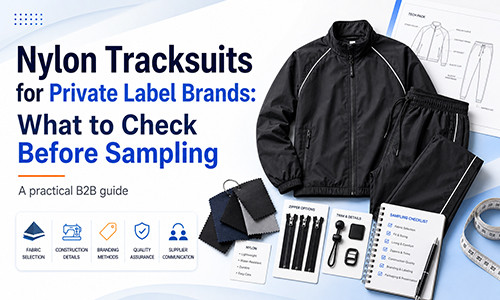
Nylon tracksuits can work well for private label brands when the fabric, fit, lining, trims, and construction details are confirmed before sampling. The main risk is not the word "nylon" itself, but unclear specifications around weight, hand feel, stretch, coating, lining, and performance expectations.
Before starting a custom nylon tracksuit sample, buyers should prepare a tech pack, reference sample, fabric direction, size chart, branding details, and intended use case. A clear sampling brief helps the manufacturer reduce revisions and quote the project more accurately.
Quick Answers
What should private label brands check before sampling nylon tracksuits?
Private label brands should check fabric type, fabric weight, hand feel, lining, fit, zipper quality, waistband construction, pocket design, logo method, measurement tolerance, and intended use case before sampling.
Is nylon good for tracksuits?
Nylon can be suitable for tracksuits when the brand wants a lightweight, smooth, slightly technical, or performance-inspired look. The final result depends on the fabric structure, coating, lining, stretch, and garment construction.
What is the difference between nylon tracksuits and polyester tracksuits?
Nylon tracksuits often feel smoother and more technical, while polyester tracksuits can be more cost-flexible and easier to source in many sportswear programs. The better choice depends on the target price, design direction, durability needs, and fabric availability.
What files should I send before making a nylon tracksuit sample?
A buyer should send a tech pack, size chart, reference images, color references, logo artwork, fabric direction, trim requirements, label placement, and any comments about fit or sample expectations.
How long does nylon tracksuit sampling take?
Sampling time depends on fabric availability, pattern complexity, trim sourcing, logo technique, lining structure, and revision requirements. A complete brief usually helps the supplier confirm the timeline more clearly.
Can nylon tracksuits be customized for private label collections?
Yes. Nylon tracksuits can be customized through fabric finish, color, fit, panel design, lining, zipper style, drawcords, labels, embroidery, printing, patches, and packaging details.
Why Nylon Tracksuit Sampling Needs Clear Preparation
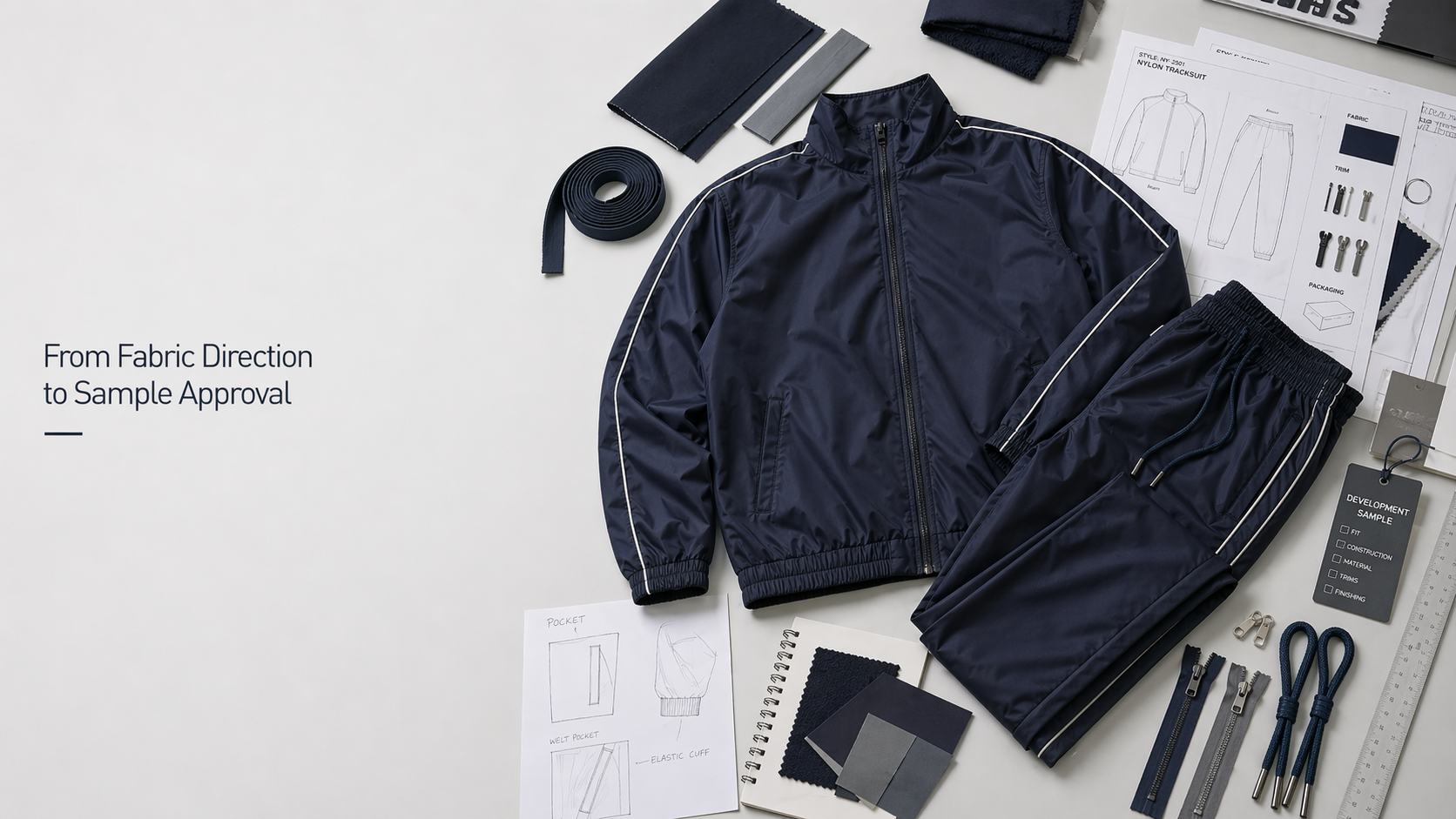
Nylon tracksuit sampling is not just about choosing a fabric and asking for a sample. For private label brands, the sample is the first physical test of fabric behavior, fit balance, trim quality, construction logic, and brand positioning.
A nylon tracksuit may look simple from the outside, but the final result depends on many production decisions. The shell fabric may be crisp or soft. The lining may change the comfort level. The zipper, waistband, cuff, and pocket construction can affect both appearance and wearability. Branding details can also influence cost, production difficulty, and sample revision time.
For brands planning a private label program, the sampling stage should answer one main question: can this product direction be developed into a stable bulk production standard? If the sample is built from unclear instructions, the buyer may receive a garment that looks close to the idea but fails in fit, fabric hand feel, or construction details.
At Vanrd, nylon tracksuit projects are usually discussed from a B2B development angle: fabric first, fit second, details third, and production feasibility throughout the process. Buyers who need OEM or private label development support can review Vanrd's OEM/ODM Services to understand how customization is normally planned.
What "Nylon Tracksuit" Means in Manufacturing Terms
A nylon tracksuit usually refers to a two-piece sportswear or streetwear set made with nylon or nylon-blend shell fabric. In manufacturing, the term is not specific enough by itself because nylon fabrics can vary widely in texture, weight, finish, stretch, coating, and structure.
A buyer should avoid sending only a phrase like "tracksuit nylon" without further details. A manufacturer will still need to confirm the exact fabric direction before sampling.
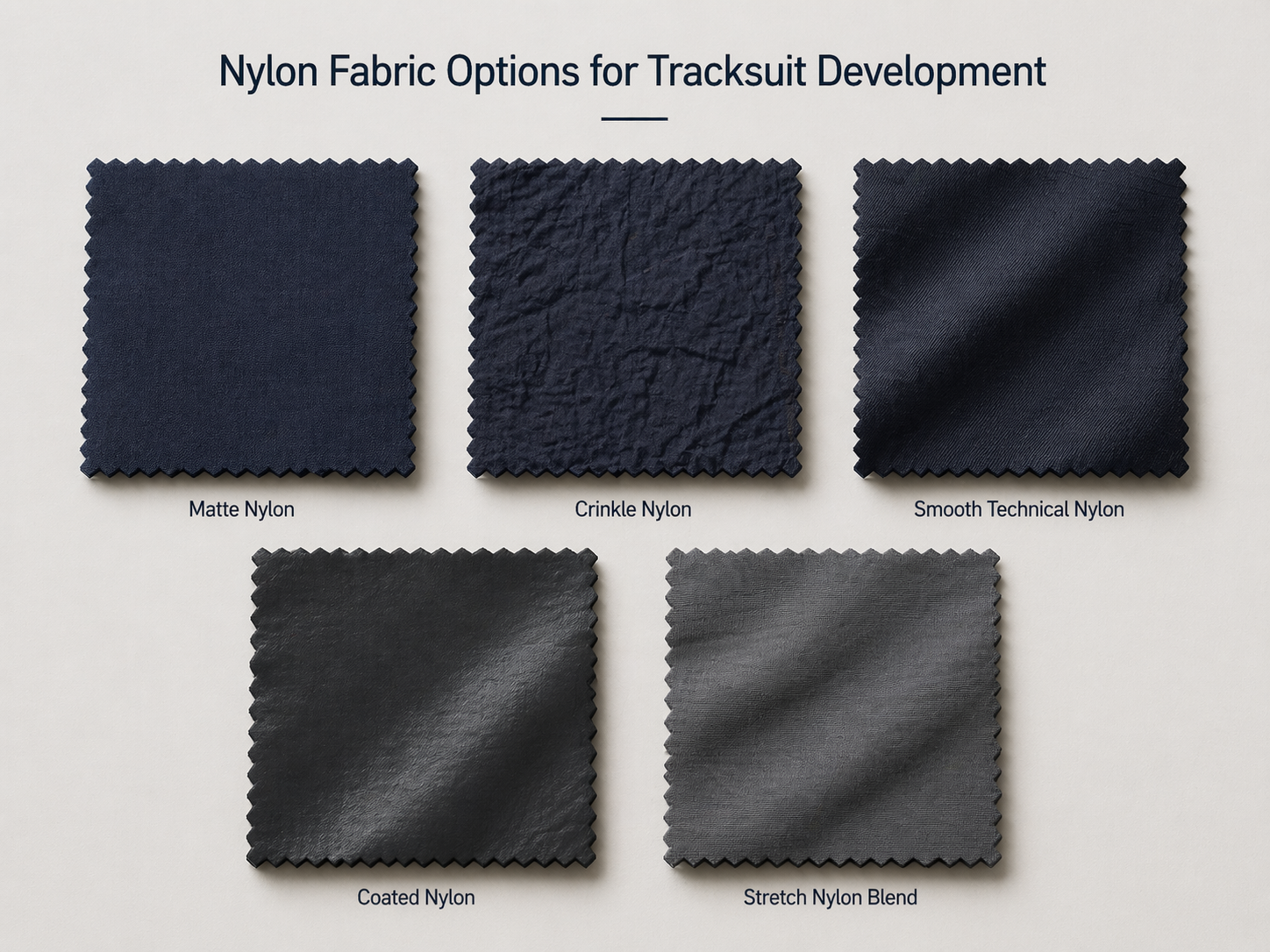
Key Fabric Variables to Confirm
Private label buyers should clarify the following fabric points before sampling:
Shell fabric composition
Fabric weight or target thickness
Woven or stretch-woven structure
Matte, semi-shiny, or shiny surface
Soft, crisp, smooth, or structured hand feel
Water-resistant or non-coated finish
Breathability expectation
Lining requirement
Color standard or Pantone reference
Shrinkage and fabric stability expectations
These details help the manufacturer understand whether the project is closer to a lightweight streetwear tracksuit, a performance-inspired sportswear set, a windbreaker-style set, or a premium private label capsule.
For fabric selection, finishing, trims, printing, embroidery, and other development options, buyers can refer to Vanrd's Fabrics & Techniques page.
Step 1: Define the Product Direction Before Asking for a Sample
A nylon tracksuit sample should start with a clear product direction. Without this step, the supplier may choose a fabric or construction method that does not match the brand's target customer, price point, or collection concept.
Decide the Intended Use Case
Before sampling, the brand should define whether the tracksuit is mainly for:
1.Streetwear collections
2.Sportswear programs
3.Teamwear or merch drops
4.Lightweight travel sets
5.Windbreaker-style capsules
6.Athleisure private label programs
7.Outdoor-inspired casual wear
Each use case leads to different decisions. A streetwear nylon tracksuit may need a relaxed fit, bold paneling, custom labels, and heavier visual identity. A sportswear program may need better mobility, breathable lining, functional pockets, and more controlled sizing. A merch buyer may care more about consistent branding, manageable cost, and repeatable production.
Clarify the Design Level
Some nylon tracksuits are simple two-piece sets. Others include cut-and-sew paneling, contrast piping, mesh lining, elastic cuffs, zip pockets, reflective details, embroidery, applique, or printed artwork.
More design details often mean more sampling checks. For example, contrast panels require accurate pattern matching. Reflective trims require placement testing. Embroidery on nylon may require backing and tension control. Zipper pockets require pocket bag planning and seam stability.
Step 2: Prepare the Right Files Before Sampling
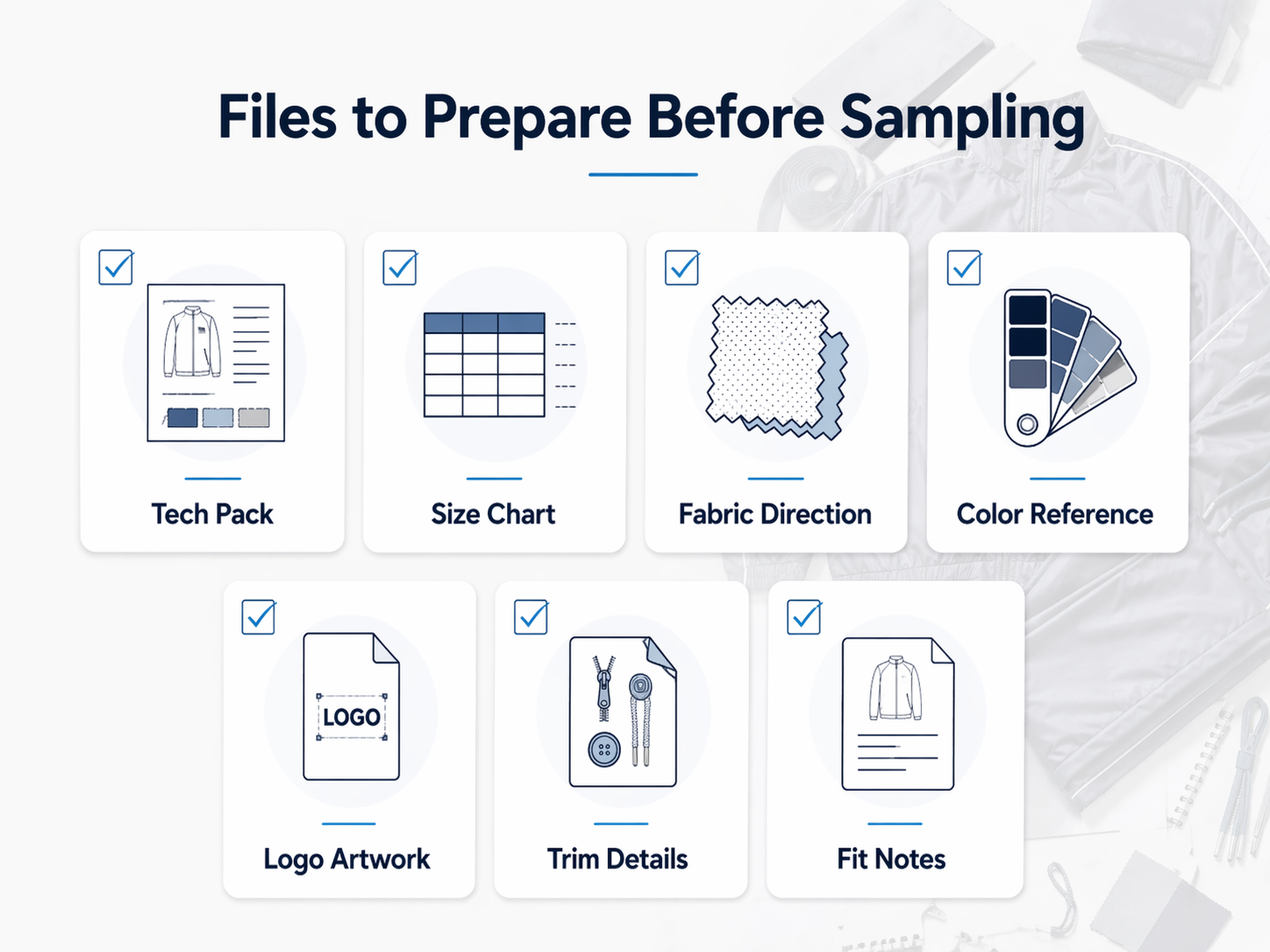
A complete sample request helps the manufacturer understand the project faster and reduces unnecessary back-and-forth communication. The goal is not to make every detail perfect before the first conversation, but to provide enough direction for a realistic sample plan.
What to Include in the Tech Pack
A useful nylon tracksuit tech pack should include:
1.Front and back flat sketches
2.Jacket and pants measurements
3.Size chart or target fit reference
4.Fabric direction
5.Color references
6.Zipper and trim requirements
7.Pocket construction details
8.Waistband and cuff construction
9.Logo artwork
10.Label and hangtag placement
11.Print, embroidery, or patch details
12.Stitching and seam comments
13.Reference photos or physical sample notes
If a brand does not have a full tech pack, it should still prepare reference images, measurement expectations, branding files, and notes about what must be changed from the reference style.
Vanrd's Service Process can help buyers understand how sampling, development communication, approval, and production planning are usually connected.
Step 3: Check Fabric, Lining, and Comfort Before Approving the Sample
Fabric is one of the biggest decision points in nylon tracksuit development. A sample may look good in photos but still fail if the fabric feels too stiff, too thin, too noisy, too shiny, or too different from the brand's positioning.
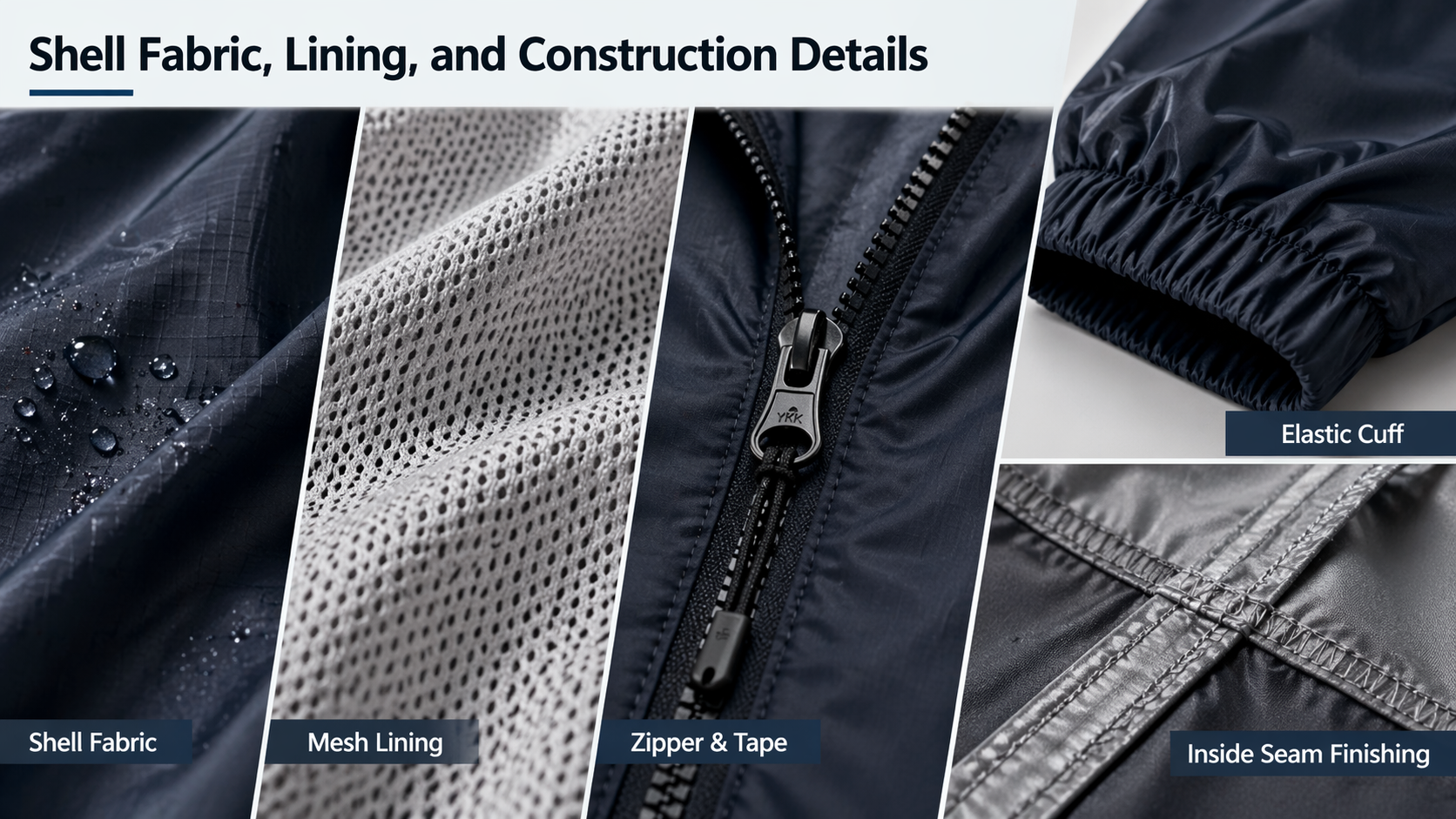
Shell Fabric
The shell fabric controls the first impression. Buyers should check the hand feel, surface texture, thickness, drape, color depth, and wrinkle behavior. Some nylon fabrics have a crisp technical feel, while others are softer and more suitable for relaxed streetwear.
Lining
The lining changes comfort and structure. Mesh lining can improve breathability in many sportswear-inspired designs. A smooth woven lining can make the garment easier to wear over other layers. No lining may reduce complexity, but it can also expose inside seams and affect comfort depending on the fabric.
Noise and Movement
Some nylon fabrics create a noticeable sound when moving. This may be acceptable for certain technical or windbreaker-inspired products, but it may not fit every private label collection. Buyers should evaluate fabric sound and movement during sample review, not only from flat photos.
Step 4: Review Fit and Pattern Balance for Both Jacket and Pants
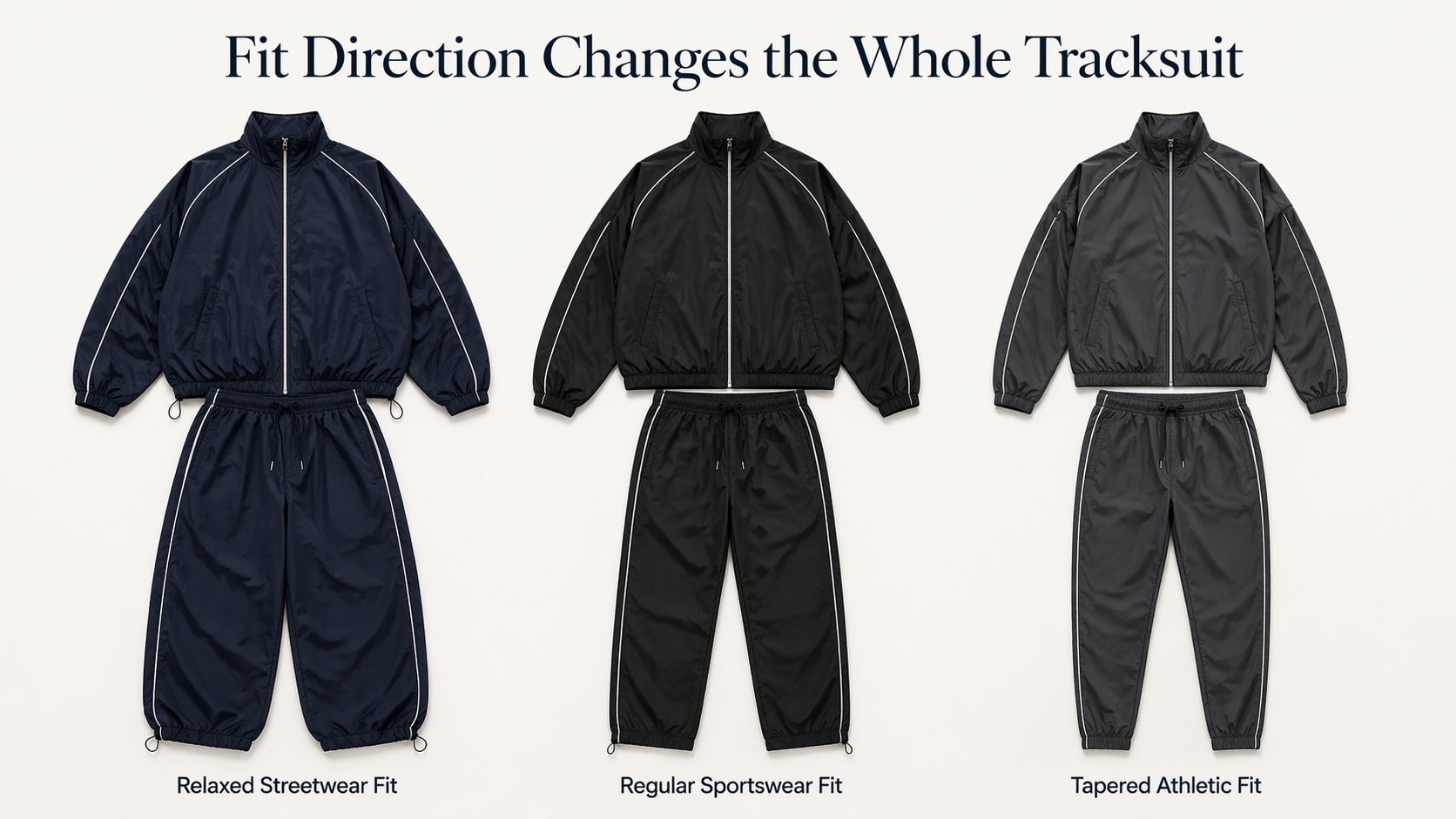
A tracksuit is a set, so the jacket and pants must feel balanced together. A strong jacket with weak pants can make the whole sample look incomplete. A loose jacket with narrow pants may work for some streetwear directions, but it should be intentional.
Jacket Fit Points
The buyer should check shoulder width, chest ease, sleeve length, sleeve volume, hem shape, collar height, zipper length, pocket placement, and cuff tension. For nylon tracksuit jackets, small changes in volume can strongly affect the silhouette because the fabric may not drape like cotton fleece.
Pants Fit Points
The pants should be checked for waist comfort, rise, thigh width, knee shape, inseam length, ankle opening, waistband recovery, and pocket position. If elastic cuffs are used, the buyer should confirm whether the opening feels too tight, too loose, or visually unbalanced.
Set Proportion
The jacket and pants should be reviewed together on a body or dress form. A flat lay can show construction, but it cannot fully show proportion. For private label sampling, fit comments should be specific: for example, "increase thigh width," "reduce sleeve volume," or "raise pocket position," instead of general comments like "make it better."
Step 5: Confirm Trims, Pockets, Waistband, and Closure Details
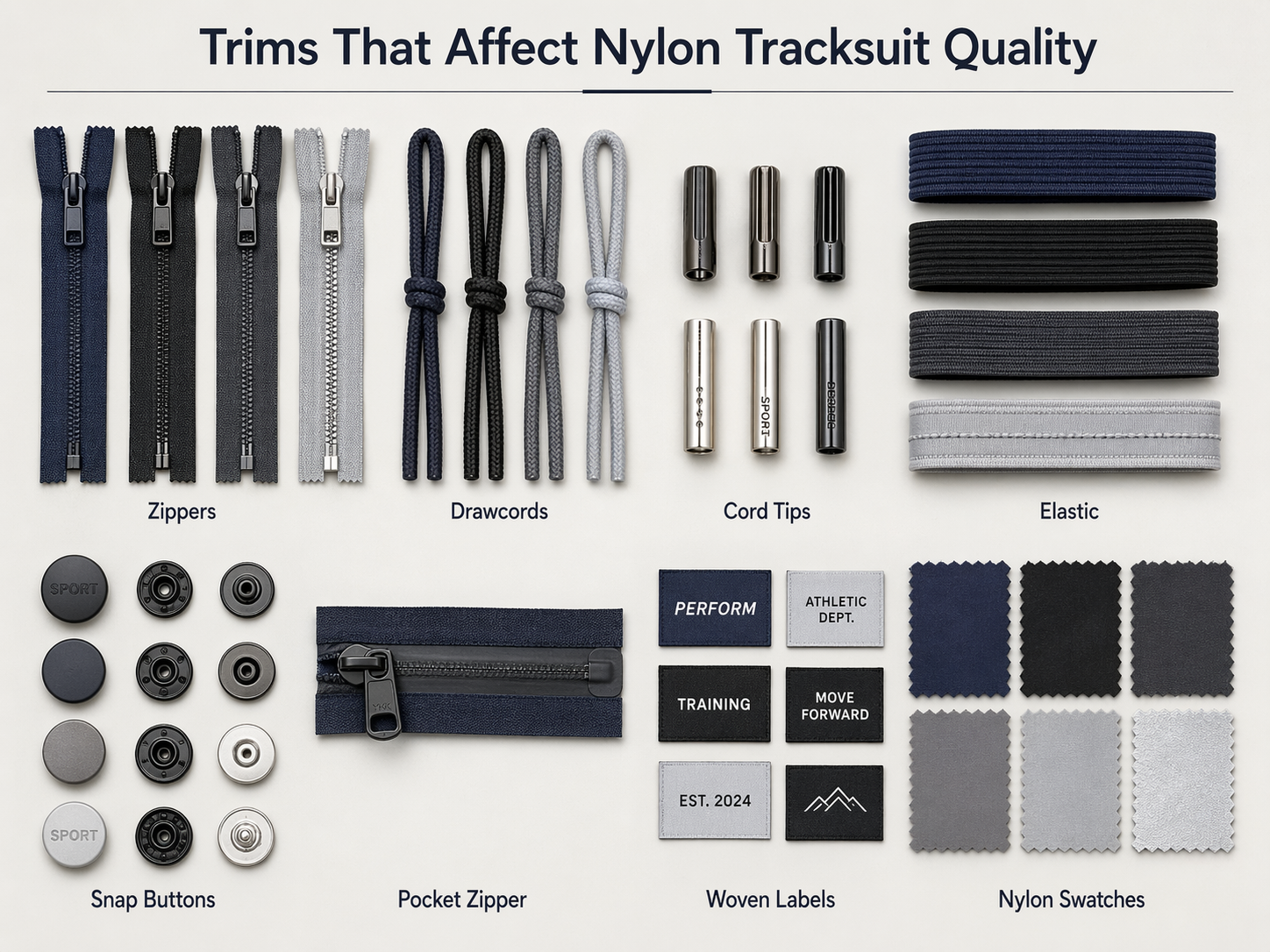
Trims can change the perceived quality and function of a nylon tracksuit. Even when the fabric is correct, weak zippers, loose elastic, poor drawcords, or unstable pocket construction can make the sample feel less reliable.
Zippers
Zippers should be checked for smooth opening, puller style, tape color, size, and compatibility with the garment weight. A lightweight nylon jacket may not need the same zipper type as a heavier outerwear-inspired tracksuit.
Waistband and Cuffs
Elastic recovery is important for pants and cuffs. Buyers should check whether the waistband holds shape after stretching and whether the cuff tension matches the intended fit. For streetwear sets, the waistband may also include drawcords, metal tips, eyelets, or branded details.
Pockets
Pocket design should be practical and stable. Zip pockets, welt pockets, patch pockets, and seam pockets all require different construction planning. For nylon fabric, pocket placement and reinforcement matter because the fabric may show puckering or tension if the construction is not controlled.
Step 6: Choose Branding Methods That Match Nylon Fabric
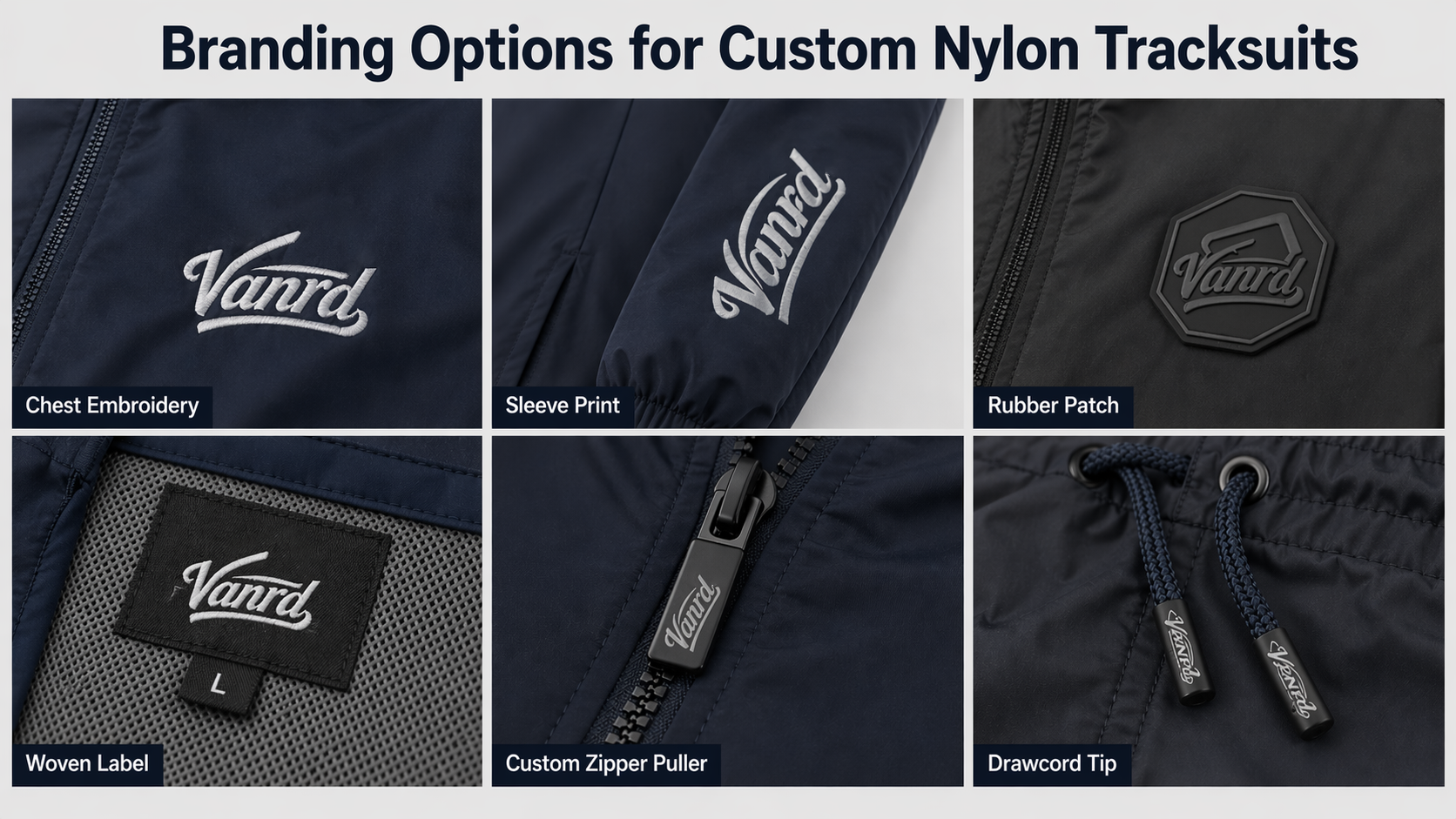
Branding on nylon requires planning because the fabric surface, coating, and heat sensitivity can affect the final result. Not every logo method works equally well on every nylon fabric.
Common Branding Options
Private label brands can consider:
1.Screen printing
2.Heat transfer
3.Embroidery
4.Woven labels
5.Rubber patches
6.Applique
7.Reflective details
8.Custom zipper pullers
9.Branded drawcord tips
10.Inside neck labels or waistband labels
What to Check Before Sampling Branding
The buyer should confirm logo size, placement, color, technique, durability expectation, and whether the logo method affects fabric appearance. For example, embroidery may need backing and can create tension on lightweight nylon. Heat transfer may require testing based on fabric surface and coating. Patches may need careful edge finishing and placement control.
For private label programs, branding should be treated as part of the product engineering process, not just a decoration added at the end.
Step 7: Build a Practical Sample Review Checklist
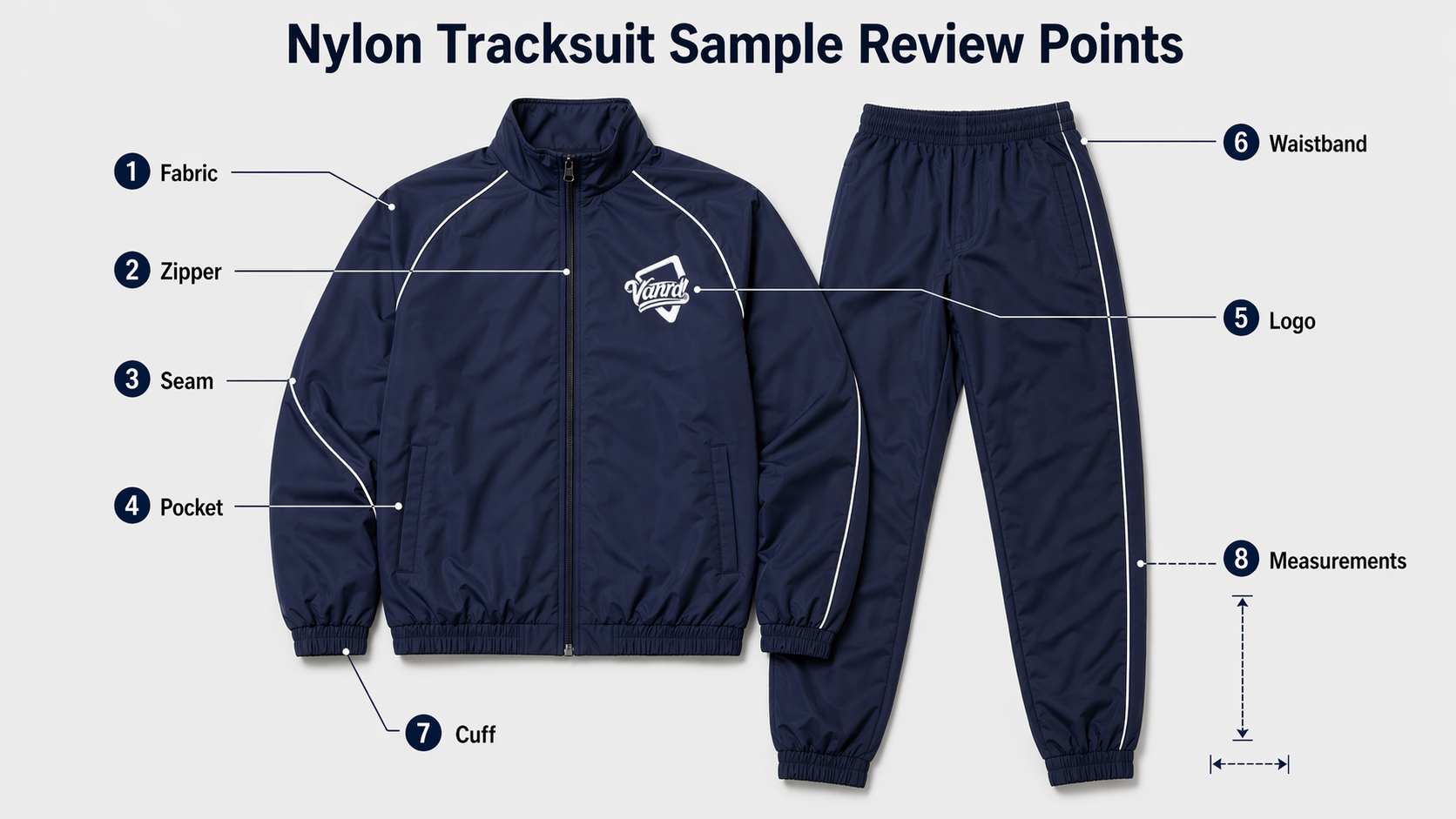
A sample should not be approved only because it looks close to the reference image. For a nylon tracksuit, the review should cover appearance, fit, construction, function, and production feasibility.
Nylon Tracksuit Sample Checklist
Before approving or revising a sample, check:
1.Does the shell fabric match the expected hand feel?
2.Is the color close to the approved standard?
3.Does the jacket fit match the target silhouette?
4.Do the pants match the jacket proportion?
5.Are the zipper, pockets, waistband, and cuffs functional?
6.Is the lining comfortable and suitable for the intended use?
7.Are logos placed correctly?
8.Does the print, embroidery, or patch look stable on nylon?
9.Are seams smooth without major puckering?
10.Are pocket openings symmetrical?
11.Are measurements within the agreed tolerance?
12.Are revision comments clear enough for the next sample?
For quality planning, inspection logic, and production control, buyers can also review Vanrd's Q&C page.
Factory Reality: Why Nylon Tracksuit Samples Can Differ From the First Idea
In real manufacturing, the first nylon tracksuit sample may differ from the buyer's initial idea because fabric availability, trim sourcing, pattern interpretation, logo technique, and construction details all affect the result.
A reference image may show the visual direction, but it usually does not confirm fabric weight, inside construction, measurement specs, or production method. This is why a manufacturer may need to discuss alternatives before sampling. For example, a fabric that looks similar may have a different hand feel. A zipper that matches the reference may not be suitable for the garment weight. A logo method may need testing before bulk approval.
Sampling should be treated as a development step, not just a finished product preview. The first sample helps both sides identify what needs to be changed, confirmed, or simplified before bulk production.
Vanrd is based in Dongguan, Humen, a region with strong garment development and production resources. Buyers who want to understand Vanrd's manufacturing background can visit Factory Strength.
Common Mistakes Before Sampling Nylon Tracksuits
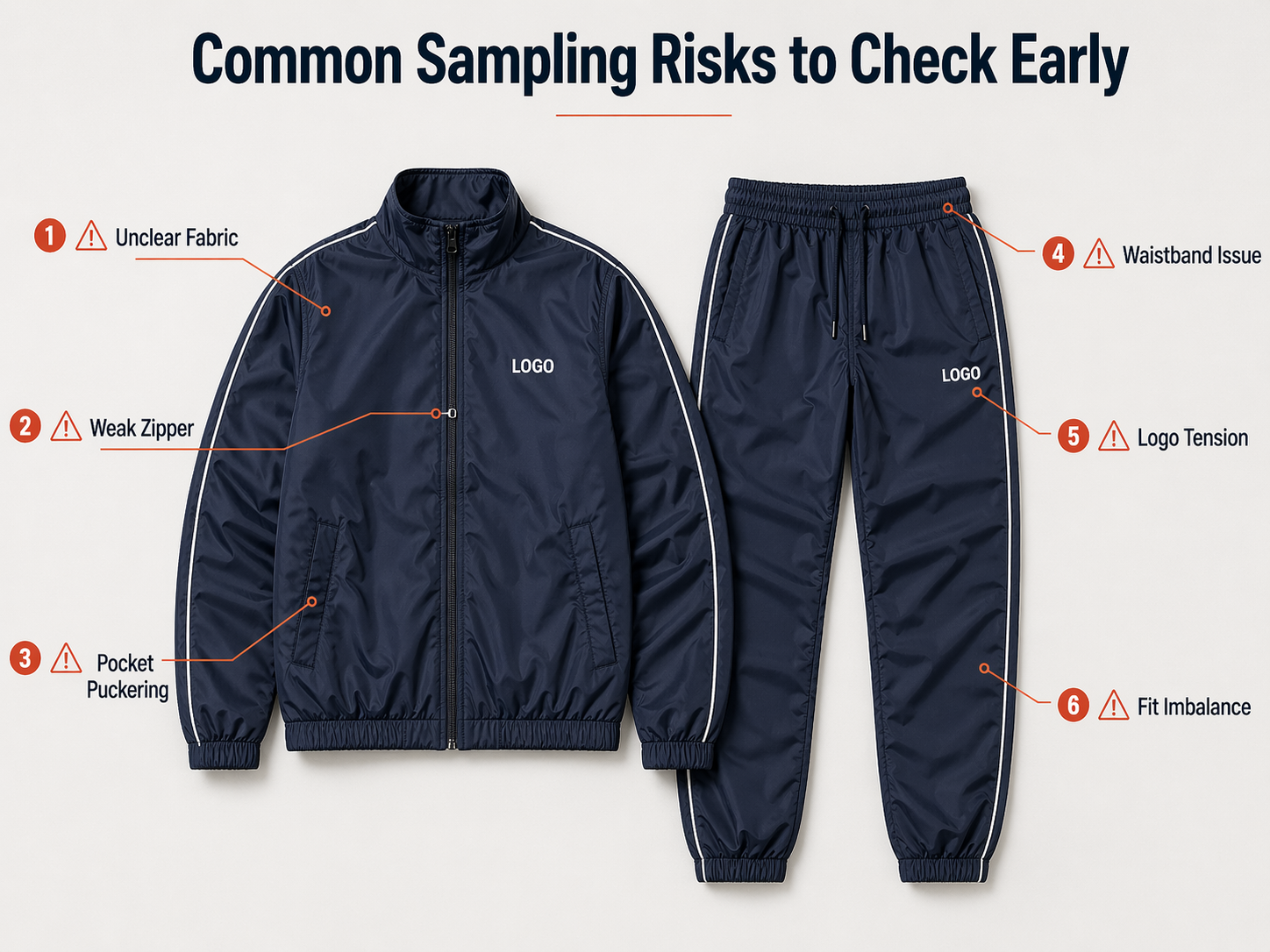
Many sampling problems come from unclear preparation rather than factory execution alone. Private label buyers can reduce risk by avoiding these common mistakes.
Mistake 1: Only Sending Reference Photos
Reference photos are useful, but they do not replace a tech pack or specification sheet. A photo cannot confirm fabric weight, measurements, lining, seam type, or trim quality.
Mistake 2: Treating All Nylon Fabrics as the Same
Nylon fabrics can feel very different. Some are smooth and lightweight. Some are crisp and structured. Some have coating or stretch. Buyers should confirm fabric expectations before sample development.
Mistake 3: Ignoring Pants Fit
Many brands focus heavily on the jacket and forget that the pants control the set's overall balance. Waistband, rise, leg opening, and pocket placement should be reviewed carefully.
Mistake 4: Choosing Branding Without Testing
Logo application on nylon should be checked before bulk production. Embroidery, printing, patches, and heat transfer may behave differently depending on fabric surface and coating.
Mistake 5: Giving Vague Revision Comments
Comments like "make it more premium" or "make the fit better" are not enough. Useful comments should be measurable or specific, such as changing sleeve length, increasing chest width, adjusting pocket position, or replacing zipper quality.
How to Communicate With a Manufacturer Before Sampling
Clear communication helps the factory understand what matters most to the buyer. Before sampling, the brand should explain the target market, intended use, expected price level, design references, fabric direction, and must-have details.
A Useful Sampling Brief Should Include
1.Brand type and buyer role
2.Target customer or sales channel
3.Tracksuit style direction
4.Fabric preference
5.Fit preference
6.Required sizes
7.Logo and label plan
8.Color plan
9.Trim requirements
10.Expected order planning stage
11.Sample deadline if relevant
12.Key concerns or non-negotiable details
This helps the manufacturer decide whether the project needs fabric sourcing, pattern development, logo testing, trim sourcing, or construction discussion before the sample is made.
Next Steps for Private Label Brands
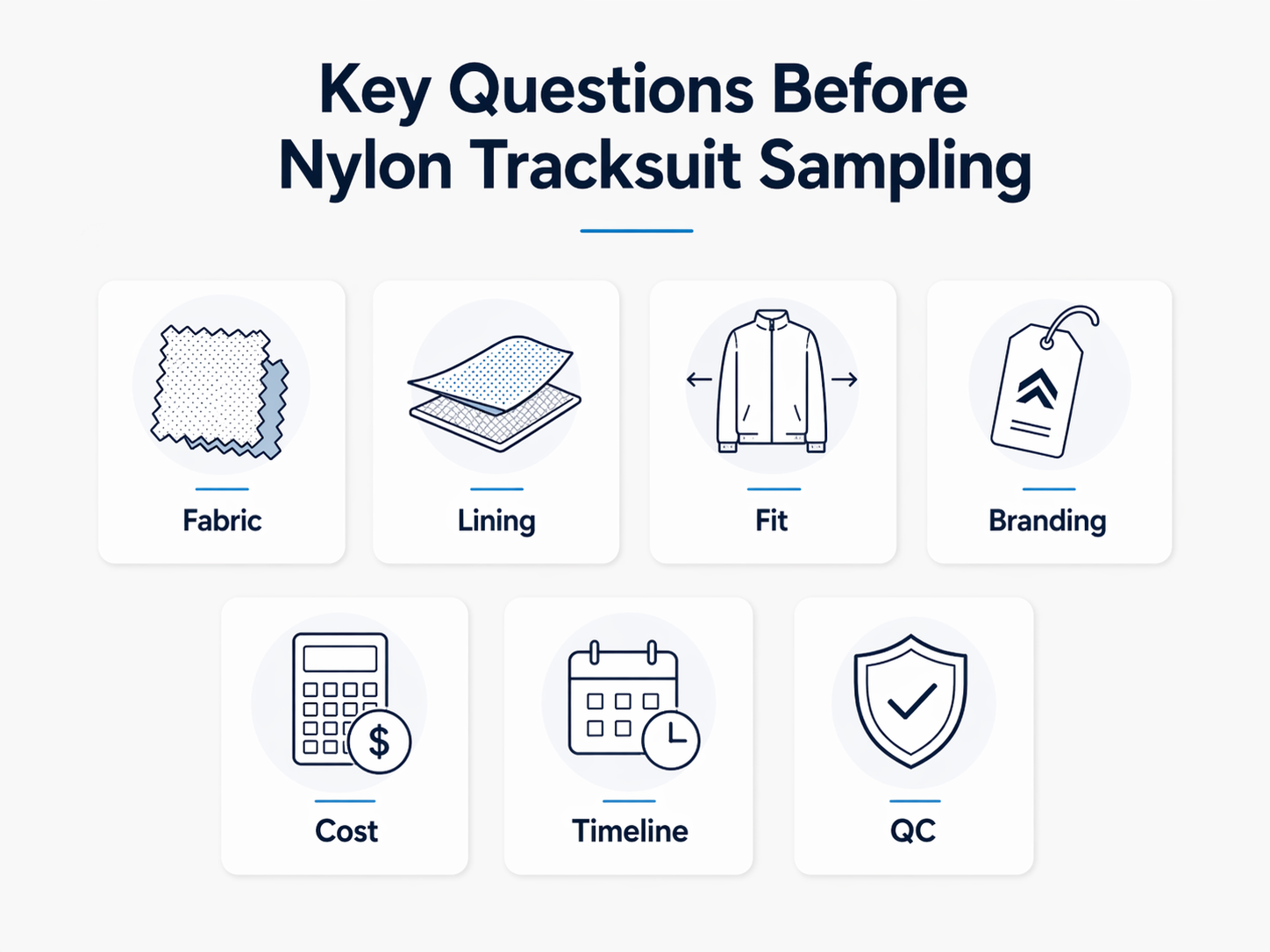
Before starting a nylon tracksuit sample, prepare the basic information that affects fabric, fit, trims, branding, and quality control. The more clearly the project is defined, the easier it is for the manufacturer to provide practical feedback and avoid unnecessary sample revisions.
A strong next step is to send your tech pack, reference images, fabric direction, logo files, size chart, and target order plan to the manufacturer for review. If some details are not ready yet, list the uncertain points clearly so they can be discussed before sampling.
Private label brands planning nylon tracksuit development can contact Vanrd through the Contact Us page to discuss sampling requirements, fabric direction, customization details, and production feasibility.
FAQ
What is the best nylon fabric for tracksuits?
The best nylon fabric depends on the product direction. A lightweight sportswear set may need a smooth and breathable fabric, while a streetwear tracksuit may need more structure, texture, or visual impact. Buyers should confirm hand feel, weight, finish, lining, and intended use before sampling.
Should a nylon tracksuit have lining?
A nylon tracksuit can be lined or unlined depending on comfort, structure, and target use. Mesh lining can improve comfort in many sportswear-inspired products, while a smooth lining can make the garment easier to wear over layers. Unlined styles may be simpler, but inside seam finishing becomes more important.
Can I make a nylon tracksuit without a complete tech pack?
It is possible to start a discussion without a complete tech pack, but sampling is usually more efficient when the buyer provides measurements, reference images, logo artwork, fabric direction, and trim requirements. A complete tech pack reduces misunderstanding and revision risk.
What should I check in the first nylon tracksuit sample?
Check fabric hand feel, color, fit, lining comfort, zipper function, waistband recovery, pocket placement, logo execution, seam smoothness, measurement accuracy, and overall set proportion. The first sample should be reviewed as a development sample, not only as a photo reference.
Is nylon or polyester better for private label tracksuits?
Nylon is often chosen for a smoother, more technical, or lightweight feel, while polyester can offer broader sourcing flexibility and cost options. The better choice depends on the target look, performance needs, price point, and available fabric options.
What affects the cost of a custom nylon tracksuit?
Cost is affected by fabric selection, lining, zipper quality, pocket construction, logo technique, panel complexity, order quantity, size range, packaging requirements, and sample revisions. Buyers should confirm these details before expecting a reliable quotation.
How can brands reduce sampling revisions for nylon tracksuits?
Brands can reduce revisions by sending clear files, confirming fabric expectations, defining fit direction, approving trims early, using specific revision comments, and checking all branding methods before bulk production planning.
Final CTA
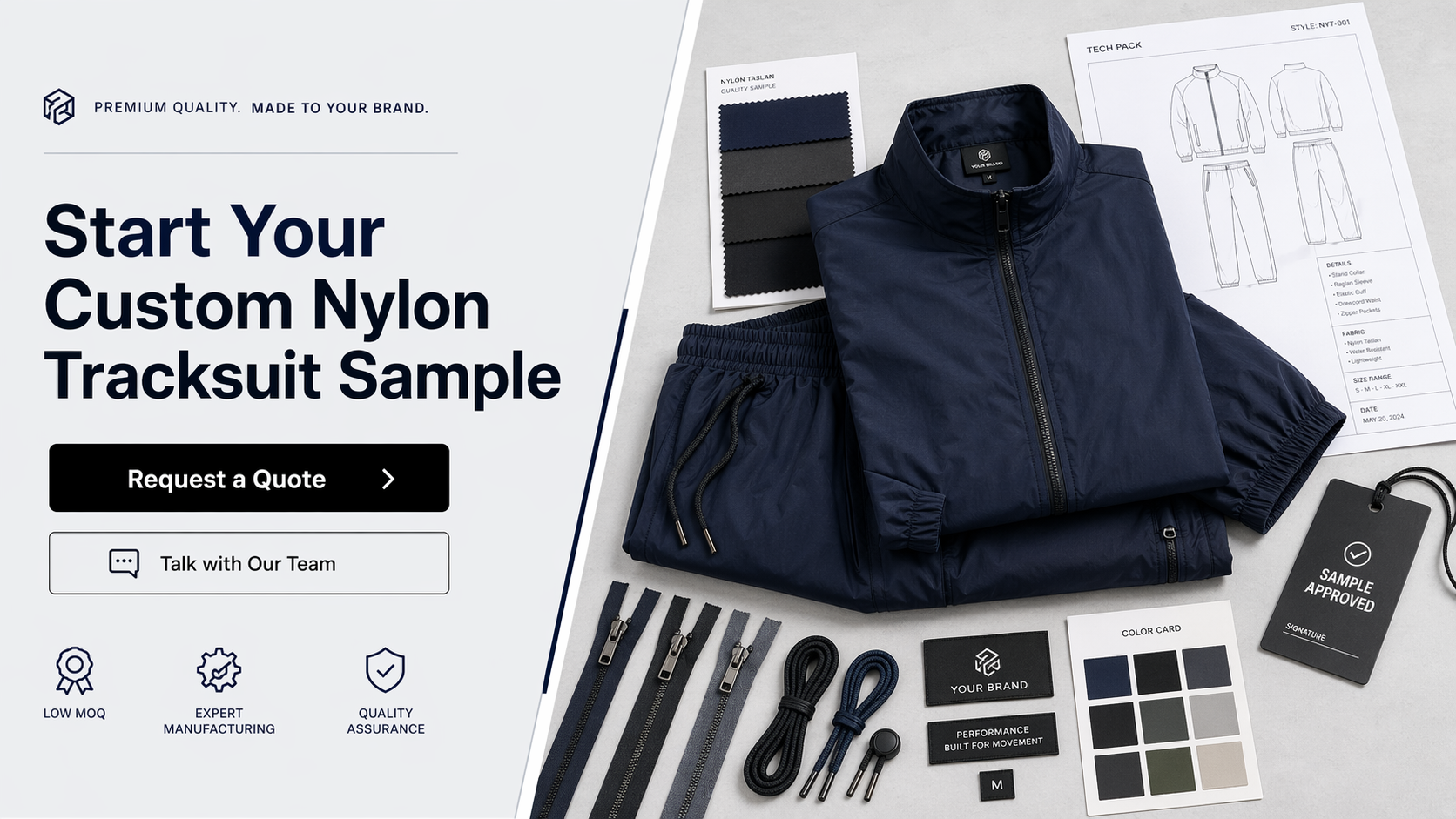
Ready to develop a custom nylon tracksuit sample for your private label collection?
Send Vanrd your tech pack, reference images, fabric direction, logo artwork, trim requirements, and target order plan. Our team can review the project details, discuss sampling feasibility, and help you move from concept to sample approval with clearer production direction.
Contact Vanrd to start your nylon tracksuit sampling request: Contact Us.