Multi-Season Streetwear Production Planning: How Established Brands Control Sampling, Capacity, QC, and Reorders
- Share
- publisher
- Vanrd
- Issue Time
- Jun 4,2026
Summary
Learn how established streetwear brands plan multi-season production across sampling, capacity booking, quality control, and reorders. This guide explains how to build a smarter production calendar, reduce sampling delays, secure factory capacity, control bulk consistency, and use reorder data to keep best-selling streetwear styles in stock without overproducing.
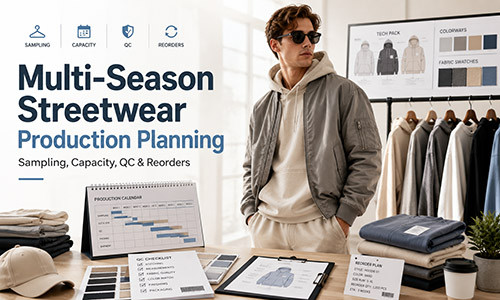
Multi-Season Streetwear Production Planning: How Established Brands Control Sampling, Capacity, QC, and Reorders
Streetwear moves fast on the surface. Behind the scenes, the brands that stay in stock, protect fit consistency, and launch on time are not guessing. They are planning several seasons ahead.
Why Multi-Season Planning Matters for Established Streetwear Brands
Most streetwear brands start with energy. A design goes viral, a hoodie sells out, or a jacket gets attention on social media. That early momentum feels exciting. But once a brand grows, production becomes a different game. You are no longer asking, “Can we make this one style?” You are asking, “Can we keep launching, restocking, improving, and protecting quality across several seasons?”
That is where multi-season streetwear production planning becomes critical. Mature brands do not treat each drop like a separate emergency. They build a production rhythm. Sampling for one season may happen while bulk production for another season is already running. Reorders may be prepared before the current stock fully sells out. Fabric development, trim sourcing, packaging, QC, and shipment windows all need to move like gears inside the same machine.
Think of it like running a restaurant. A beginner cooks one dish at a time. A professional kitchen prepares ingredients, manages stations, controls timing, checks quality, and serves many tables without panic. Streetwear production works the same way. The goal is not just to make garments. The goal is to build a system that can repeat good results.
For established brands, production planning is not paperwork. It is a profit protection system. It helps avoid missed launch dates, inconsistent sizing, fabric delays, rushed QC, and out-of-stock best sellers.
What Is Multi-Season Streetwear Production Planning?
Multi-season production planning means organizing product development, sampling, material sourcing, factory capacity, quality control, delivery, and reorders across more than one sales season at the same time. Instead of planning Spring only after Winter is finished, a mature brand looks at Spring, Summer, Fall, Holiday, and carryover styles as connected parts of the same production pipeline.
This matters because streetwear is usually more complex than blank apparel. A single collection may include heavyweight hoodies, washed T-shirts, embroidered jackets, cargo pants, nylon tracksuits, puff print graphics, custom zippers, woven labels, silicone patches, special packaging, and color-matched drawcords. Each detail adds a decision point. Each decision point can either be controlled early or become a delay later.
Planning Beyond One Drop at a Time
New brands often plan by drop: design, sample, produce, launch, repeat. That can work for small runs. But established brands need a wider view. They need to know which styles are seasonal, which styles are core, which styles deserve a reorder, and which styles should stay as limited capsules.
A strong multi-season plan usually separates products into three groups. First, core styles: the hoodies, jackets, sweatpants, and tracksuits that can sell across multiple months. Second, seasonal capsules: colors, fabrics, and silhouettes designed for a specific release window. Third, experimental styles: lower-quantity products used to test demand before a larger production commitment.
Core Styles, Seasonal Capsules, and Test Products
This product grouping helps the brand decide how much risk to take. A black heavyweight hoodie with proven sell-through may deserve early fabric booking and repeat production. A special washed racing jacket with custom hardware may need more sampling time and a smaller first run. A trend-driven colorway may be tested first, then reordered only if the market responds.
Build a Streetwear Production Calendar Before Sampling Starts
The biggest mistake many brands make is treating sampling as the beginning of planning. In reality, planning should start before the first sample is made. Why? Because every sample decision affects bulk production. Fabric choice affects shrinkage. Artwork placement affects sewing sequence. Washing affects measurements. Packaging affects final inspection and carton planning.
A production calendar gives every team a shared map. Design, sourcing, merchandising, sales, factory, QC, and logistics can all see the same timeline. Without that map, teams rely on memory and messages. That is when small details disappear.
Work Backward From Launch Date
A smart production calendar starts with the selling date and works backward. If a brand wants goods ready for a September launch, the team should not start serious development in August. The calendar must include enough time for design confirmation, fabric sourcing, fit sampling, revision, size set, pre-production sample approval, bulk cutting, sewing, decoration, washing, finishing, inspection, packing, shipping, and warehouse receiving.
The more complex the garment, the more buffer the brand needs. A simple T-shirt may move quickly. A custom varsity jacket with wool body, leather-look sleeves, rib matching, chenille patches, snap buttons, lining, embroidery, and custom labels needs more control. Rushing that kind of product is like trying to build a house while still drawing the blueprint.
Separate Design Freeze, Sample Approval, Bulk Start, and Delivery Windows
Established brands do not only set one deadline. They set gates. A design freeze gate confirms that silhouette, fabric, color, artwork, and trims will not keep changing. A sample approval gate confirms fit and construction. A bulk start gate confirms material readiness and production line booking. A delivery window confirms when goods should arrive for sales, marketing, and fulfillment.
Control Sampling Before It Controls Your Timeline
Sampling is where many production delays are born. Not because factories cannot make samples, but because comments are unclear, decisions keep changing, or the sample purpose is not defined. A sample is not just a garment. It is a decision tool.
For streetwear, sampling must check more than general appearance. The team should review body proportion, shoulder slope, sleeve shape, hood size, rib tension, pocket position, zipper quality, graphic placement, embroidery density, wash effect, hand feel, shrinkage, and size grading logic. If these points are not reviewed early, they may appear again during bulk production, where they are much more expensive to fix.
Fit Sample, Size Set, PP Sample, and TOP Sample
A mature production process uses different samples for different decisions. The fit sample checks silhouette and measurements. The size set checks grading across sizes. The pre-production sample, often called PP sample, confirms the production standard before bulk starts. The TOP sample, or top of production sample, checks whether the first pieces coming off the line match the approved standard.
Skipping these steps may look faster, but it often creates hidden risk. If the fit sample is approved but the decoration is not tested, bulk production can fail at printing or embroidery. If the PP sample is approved but fabric shrinkage is ignored, final measurements may drift after washing. If no TOP sample is checked, the first production issue may be discovered only after hundreds of pieces are already made.
Why Sample Comments Must Be Specific
Vague comments create vague results. “Make it better” does not help a pattern maker. “Reduce sleeve length by 1.5 cm, lower pocket opening by 2 cm, increase rib cuff tension slightly, and keep the approved hood shape” is much more useful. Specific comments protect both the brand and the manufacturer because everyone knows what changed and why.
Book Factory Capacity Before Peak Season Pressure Hits
Capacity is one of the least visible but most important parts of streetwear production planning. A brand may approve a perfect sample, only to discover that the factory line is already booked. During peak months, sewing lines, washing facilities, printing rooms, embroidery machines, dyeing mills, and packaging teams can all become bottlenecks.
Established brands avoid this by discussing capacity early. They share forecasted quantities, product types, expected launch windows, and reorder possibilities before everything is final. This allows the manufacturer to reserve line space, prepare material sourcing, and flag possible conflicts.
How Mature Brands Reserve Production Lines
A mature brand does not need every detail finalized before starting a capacity conversation. The factory mainly needs a realistic direction: product category, estimated quantity, target delivery date, fabric type, decoration complexity, and whether the order may expand into reorders. With that information, the production team can judge whether the timeline is realistic.
This is especially important for jackets, tracksuits, and washed streetwear. These products often require more stations than basic apparel. A jacket may need cutting, shell sewing, lining sewing, zipper setting, snap attachment, embroidery, pressing, inspection, and special packing. A washed hoodie may need dyeing or washing tests before bulk. A nylon tracksuit may need fabric testing, zipper matching, elastic control, and seam consistency checks.
Why Fabric and Trim Capacity Matter Too
Factory capacity is not only about sewing workers. Fabric mills, dye houses, rib suppliers, zipper factories, label suppliers, and packaging vendors all affect the timeline. If the fabric is custom dyed, the color lab dip and bulk dye lot must be controlled. If the garment uses special hardware, trim lead time must be confirmed early. If packaging is custom, the carton, polybag, barcode, hangtag, and sticker setup cannot wait until final inspection.
Use Tech Packs and BOMs as Production Control Tools
A tech pack is not just a file designers send to a factory. It is the control center of the product. A strong tech pack tells the manufacturer what to make, how to make it, what standard to follow, and what details cannot be changed without approval.
For multi-season streetwear production, tech packs become even more important because multiple styles may be developed at the same time. Without clear documents, one hoodie may use the wrong drawcord, one jacket may use an old pocket placement, and one reorder may accidentally change the label position.
Material Specs, Stitching Details, Artwork Files, and Packaging Rules
A complete production file should include fabric composition, GSM or weight, color reference, shrinkage expectations, trims, label position, size chart, construction details, seam type, stitch density, artwork file, decoration method, print size, embroidery placement, wash standard, packing method, carton ratio, barcode rules, and inspection requirements.
The BOM, or bill of materials, is especially useful for reorders. It records all components used in the approved product. When a style sells well and needs to be repeated, the BOM helps the factory source the same fabric, trims, labels, and packaging again. That is how brands protect consistency instead of starting from zero every time.
| Control Document | What It Controls | Why It Matters for Streetwear |
|---|---|---|
| Tech Pack | Measurements, construction, artwork, trims, and production details. | Prevents misunderstanding between design, factory, and QC teams. |
| BOM | Fabric, rib, zipper, buttons, labels, drawcords, patches, and packaging. | Protects material consistency across first orders and reorders. |
| Approved Sample Record | Fit, workmanship, decoration, hand feel, color, and finishing standard. | Gives QC teams a physical and visual benchmark for bulk production. |
| QC Checklist | Defect categories, measurements, packing rules, and inspection points. | Reduces subjective inspection and supports repeatable quality control. |
Plan QC From Day One, Not at the End
Many brands still think quality control happens at the final inspection. That is too late. Final QC can reject a shipment, but it cannot easily save a poorly controlled production run. Real QC starts before bulk production begins.
For streetwear, QC must connect the approved sample with the real production process. The goal is not only to find defects. The goal is to prevent defects from multiplying. If a zipper is misaligned on the first output piece, it can be corrected. If the same issue is found after 1,000 jackets are finished, the cost becomes much higher.
Pre-Production QC
Pre-production QC checks whether all inputs are ready before cutting begins. This includes fabric inspection, shrinkage testing, color matching, trim approval, size chart confirmation, pattern confirmation, artwork placement, and PP sample approval. It is the “measure twice, cut once” stage.
Inline QC
Inline QC happens during production. It checks cutting accuracy, sewing quality, measurement stability, decoration position, seam strength, thread trimming, stain control, zipper setting, pocket symmetry, and workmanship. For complex streetwear, inline QC is one of the strongest tools for reducing bulk risk because it catches problems while production is still adjustable.
Final Inspection and AQL Thinking
Final inspection checks finished goods before shipment. Many brands use AQL-based inspection thinking to define acceptable and unacceptable defect levels. Critical defects should not be accepted. Major defects affect appearance, function, or saleability. Minor defects may be less serious but still need to be controlled. The key is to define these standards before production, not argue about them after packing.
Protect Sample-to-Bulk Consistency Across Multiple Seasons
Consistency is what separates a real brand from a one-time product seller. A customer who buys a hoodie in March expects the reordered version in October to feel familiar. The fabric should not suddenly feel thin. The fit should not become shorter. The rib should not lose recovery. The print should not crack sooner. The label should not move to a strange position.
Sample-to-bulk consistency is difficult because bulk production introduces variables. Fabric lots may vary. Washing can change measurements. Printing may react differently on different fabric surfaces. Embroidery density may affect fabric tension. Even a small pattern adjustment can change the final fit.
Approved Samples, Dye Lots, Shrinkage, Measurements, and Wash Effects
The best way to protect consistency is to keep a clear approval chain. The approved sample should be stored and referenced. Fabric lots should be recorded. Shrinkage should be tested before bulk cutting. Measurements should be checked at sample, PP, inline, and final stages. Wash effects should be compared against approved standards, especially for vintage hoodies, denim jackets, washed T-shirts, and pigment-dyed streetwear.
For reorders, the factory should review the original production records before making the next batch. This includes fabric supplier, color code, trim supplier, pattern version, print settings, embroidery file, washing recipe, QC comments, and previous defect notes. A reorder should not be treated as a brand-new style unless the brand wants intentional changes.
Create a Reorder Strategy for Best-Selling Streetwear Styles
A sellout feels good, but a stockout can also be expensive. If a best-selling hoodie sells out too early and the brand has no reorder plan, demand disappears or moves to competitors. On the other hand, blindly reordering every style can create deadstock. The answer is not to produce more of everything. The answer is to reorder smarter.
Core Reorders vs Seasonal Reorders
Core reorders are for proven styles that can sell repeatedly: black hoodies, relaxed sweatpants, everyday tracksuits, clean work jackets, or signature denim pieces. These products can often justify earlier fabric booking and longer-term supplier coordination.
Seasonal reorders are different. A special color, graphic, wash, or capsule style may sell fast because of timing. Before reordering, the brand should check whether demand is still active or whether the moment has passed. A winter puffer reorder in late season may not make sense if delivery arrives after demand drops.
How to Use Sell-Through Data Before Reordering
Established brands look at sell-through speed, return rate, size performance, color performance, customer feedback, wholesale demand, and margin before making a reorder decision. If size Large and XL sell out first, the reorder ratio should change. If one color has slow sell-through, it should not be repeated at the same quantity. If customers love the fit but complain about zipper quality, the reorder should improve the zipper while keeping the approved silhouette.
Good Reorder Signals
- Fast sell-through in key sizes.
- Low return rate and strong customer feedback.
- Repeat demand from wholesale or retail partners.
- Style fits the brand’s long-term identity.
- Factory can reproduce fabric, trims, and fit consistently.
Reorder Warning Signs
- Sales were driven only by heavy discounting.
- High return rate due to fit or quality complaints.
- Material or trim is no longer available.
- Delivery would arrive after the seasonal demand window.
- The style competes with a stronger upcoming launch.
How Established Brands Reduce Risk Across Seasons
Multi-season production is not about eliminating every problem. Apparel production always has variables. The real goal is to make problems visible early enough to manage them. Mature brands do this with buffers, documentation, approval gates, supplier communication, and data-based reorder decisions.
Capacity Buffer, QC Buffer, Material Buffer, and Logistics Buffer
A capacity buffer protects the production line from last-minute booking pressure. A QC buffer gives the team time to inspect, correct, and approve goods before shipment. A material buffer helps handle fabric delays, trim shortages, dye lot issues, and lab dip revisions. A logistics buffer protects launch timing when freight, customs, or warehouse receiving takes longer than expected.
These buffers may look like extra time, but they actually protect speed. Without buffers, one delay can push the whole launch. With buffers, the brand can absorb small problems without damaging the sales calendar.
| Risk Area | Common Problem | Planning Solution |
|---|---|---|
| Sampling | Too many unclear revision rounds. | Use detailed sample comments, approval gates, and fixed decision dates. |
| Capacity | Factory line unavailable during peak season. | Share forecast early and reserve production windows before final urgency. |
| Materials | Fabric, rib, zipper, or trims delayed. | Confirm BOM early and check material lead times before bulk start. |
| QC | Defects found only at final inspection. | Run pre-production checks, inline QC, TOP sample review, and final inspection. |
| Reorders | Best sellers go out of stock or slow styles get overproduced. | Use sell-through, size ratio, feedback, and margin data before reordering. |
What a Strong Manufacturing Partner Should Help You Control
A good custom streetwear manufacturer does more than sew garments. For established brands, the manufacturer should help control the full production chain: sample development, fabric sourcing, trim matching, fit adjustment, decoration testing, capacity planning, bulk production, quality inspection, packing, and reorder consistency.
This is especially important when a brand manages multiple seasons. The factory should understand which styles are core, which styles are experimental, which styles need a fast reorder path, and which styles require more development time. The more the manufacturer understands the brand’s product system, the better it can support long-term production planning.
For VANRD, this is where custom streetwear production becomes more than order execution. A mature brand needs a partner that can discuss sampling risk, fabric behavior, MOQ planning, capacity windows, QC checkpoints, and repeat production before problems happen. That kind of planning gives buyers more confidence because the process feels controlled, not improvised.
Planning More Than One Streetwear Season?
VANRD supports custom streetwear brands with sampling, OEM/ODM development, bulk production, QC control, and reorder planning across jackets, hoodies, tracksuits, pants, T-shirts, and denim.
Request a Factory QuoteConclusion
Multi-season streetwear production planning is what helps established brands move from reactive production to controlled growth. Instead of chasing every delay, mature teams build calendars, lock decision gates, control sampling, book capacity early, inspect quality during production, and use sales data before reordering.
The brands that win are not always the ones with the loudest graphics or the fastest drops. They are often the ones with the strongest system behind the product. Because in streetwear, creativity gets attention, but consistency builds trust. If your brand wants to scale across multiple seasons, production planning is not optional. It is the backbone of every reliable launch.
Frequently Asked Questions
How early should a streetwear brand start planning multi-season production?
Established streetwear brands should start planning several months before the target launch window, especially for custom jackets, hoodies, tracksuits, denim, or washed garments. The timeline should include design freeze, sample development, revisions, PP sample approval, material sourcing, capacity booking, bulk production, QC, packing, shipping, and warehouse receiving.
Why do streetwear samples take longer than basic apparel samples?
Streetwear often includes custom fit, heavyweight fabric, special washing, embroidery, puff print, appliqué, patches, custom trims, oversized silhouettes, and detailed packaging. Each detail needs testing and approval. A simple blank T-shirt may move quickly, but a custom varsity jacket or washed hoodie needs more sample control before bulk production.
How can brands avoid missing factory capacity during peak season?
Brands should share estimated product categories, quantities, target delivery dates, and reorder possibilities with the manufacturer early. Even if final artwork is not complete, early capacity discussion helps the factory reserve production windows, check material lead times, and warn the brand about possible schedule conflicts.
What QC steps are most important for multi-season streetwear production?
The most important QC steps are pre-production material checks, PP sample approval, inline inspection, TOP sample review, measurement checks, decoration checks, final inspection, and packing review. For reorders, QC should also compare the new batch against the previous approved production standard.
When should a streetwear brand reorder a best-selling style?
A brand should consider reordering when sell-through is strong, return rates are low, customer feedback is positive, and demand still fits the upcoming season. Reorder quantity should be based on size performance, color performance, sales speed, margin, wholesale demand, and whether the original fabric and trims can be reproduced consistently.