Fall/Winter 2026 Streetwear Manufacturing Trends: 7 Product Directions Brands Should Watch
- Share
- publisher
- Vanrd
- Issue Time
- Aug 24,2026
Summary
Explore the key Fall/Winter 2026 streetwear manufacturing trends brands should watch, including refined denim, retro nylon windbreakers, puffer jackets, workwear, sherpa fleece, tracksuits and racing jackets. Learn how to translate seasonal trends into fabric, fit, tech pack, sampling and production decisions for a commercially viable streetwear collection.
Fall/Winter 2026 Streetwear Manufacturing Trends: 7 Product Directions Brands Should Watch
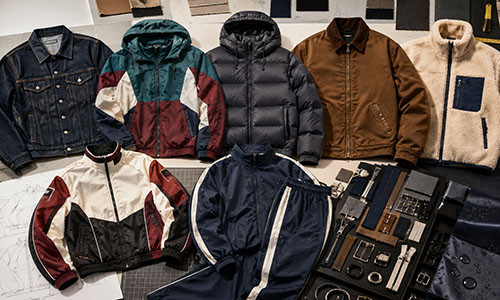
Fall/Winter 2026 streetwear is not being shaped by one viral item. The stronger story is a shift toward outerwear, tactile materials, functional construction, refined denim, retro sports references and garments that feel familiar but more considered. For apparel brands, that makes this season less about chasing a look and more about deciding which product directions can actually become commercially viable collections.
Quick Answer: What Are the Key Fall/Winter 2026 Streetwear Manufacturing Trends?
The strongest Fall/Winter 2026 streetwear product opportunities sit around seven connected directions: refined denim, retro nylon windbreakers, functional puffers, workwear-inspired jackets, sherpa and fleece layers, coordinated tracksuits, and motorsport-influenced racing jackets. The important part for brands is not simply identifying these trends. It is translating them into the right fabric, fit, trim, construction and sampling decisions before production begins.
If you are developing a collection rather than buying finished garments, think like a product developer. Ask: Which silhouette fits our customer? Which material creates the right hand feel? Which details justify the product? Which design can be reproduced consistently in bulk? That is where a trend becomes a product.
Why Fall/Winter 2026 Is an Outerwear-Led Season for Streetwear Brands
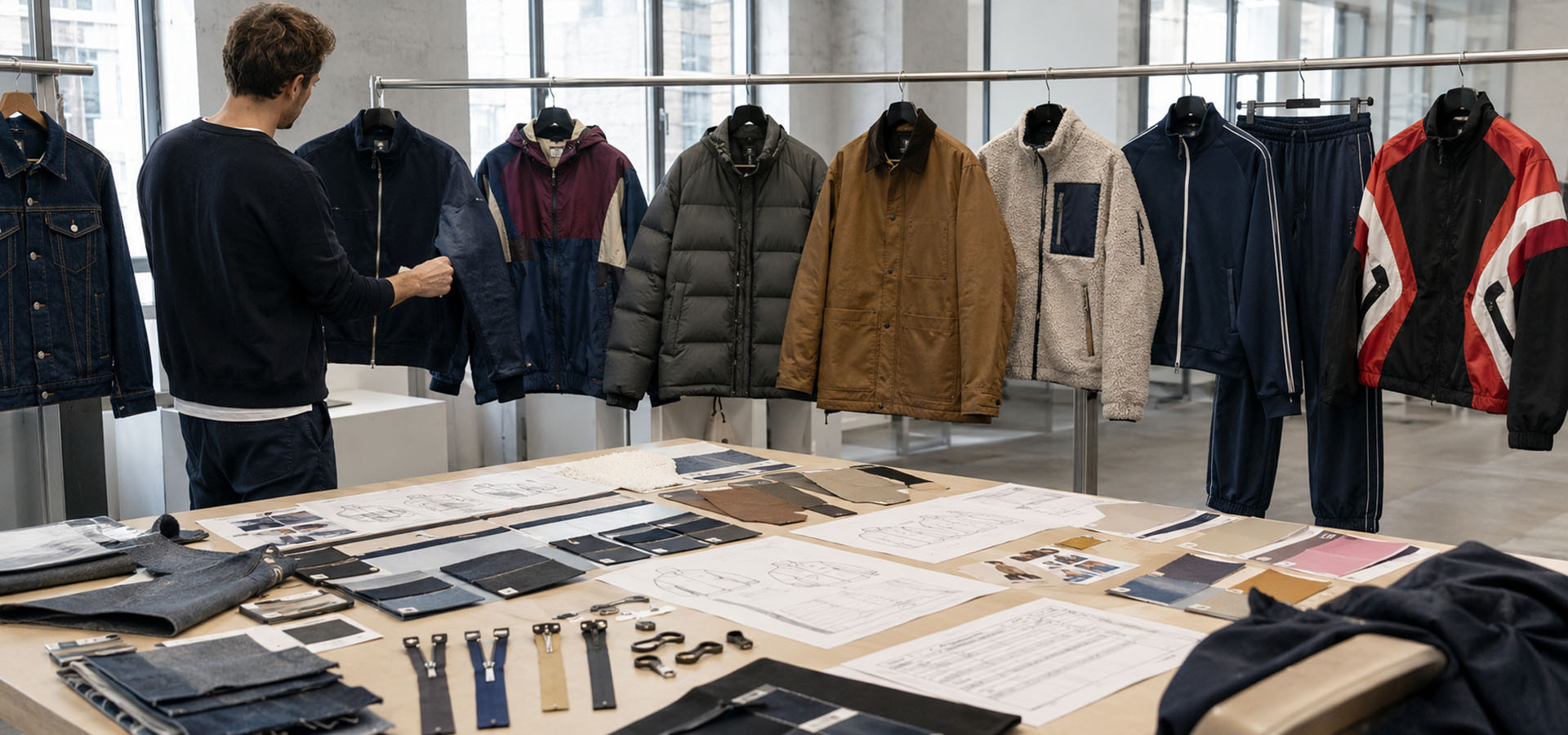
Streetwear has always borrowed from somewhere else. Military clothing gave it bombers. Workwear gave it chore jackets and canvas pants. Sportswear gave it tracksuits. Outdoor clothing gave it fleece, nylon shells and puffers. Motorsports gave it racing graphics, contrast panels and sponsor-style visual language. What makes Fall/Winter 2026 interesting is that many of these references are arriving at the same time.
The result is an outerwear-heavy season where the jacket often carries the identity of the whole collection. A basic tee can support a drop, but a strong jacket can define it. That is one reason brands planning an FW26 program should think carefully about their hero product before developing every supporting style.
From a manufacturing perspective, outerwear is also where design decisions become more meaningful. Shell fabric, lining, insulation, wash, hardware, collar structure, pocket construction, embroidery, patches and finishing can all change the final product dramatically. A jacket is not simply a larger shirt with a zipper. It is a system.
Brands that are building an outerwear-led collection can start by reviewing the broader custom jacket manufacturing options available across denim, workwear, windbreakers, puffers and racing styles. The goal is not to use every category. It is to understand which one best carries your brand language.
01 Refined Denim: Deep Indigo, Washed Finishes and Utility Details
Denim is one of the clearest Fall/Winter 2026 opportunities because it can sit between several aesthetics at once. It can feel vintage, minimal, workwear-inspired or strongly streetwear depending on the wash, fit and construction.
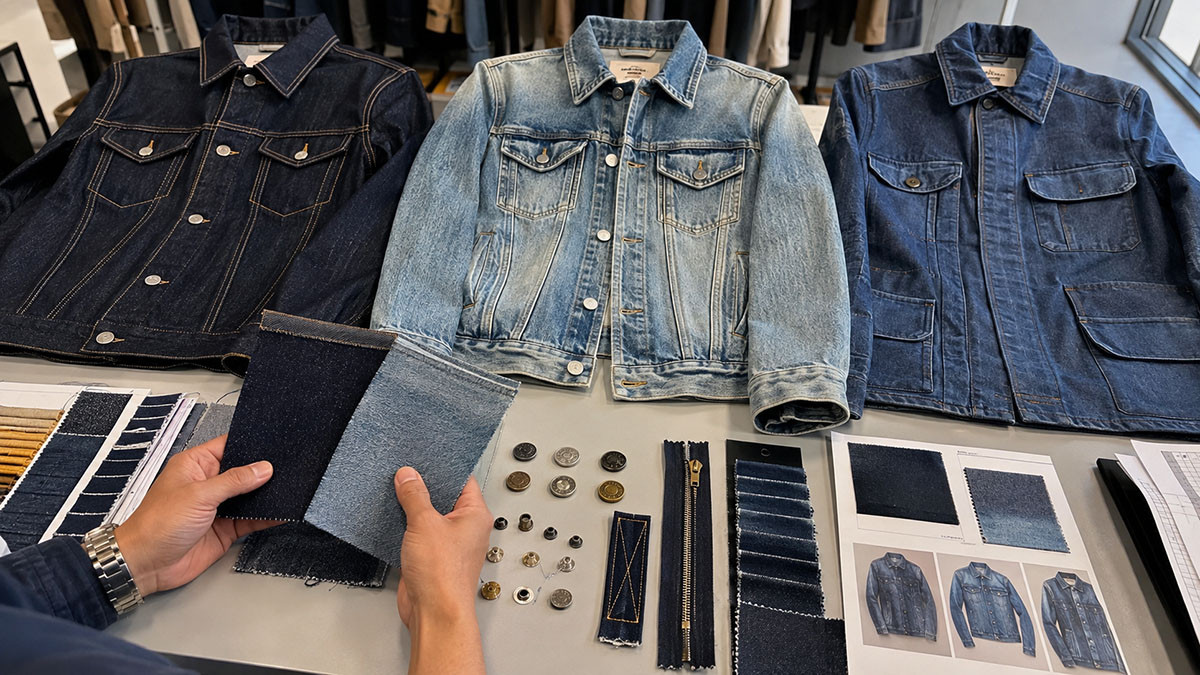
The important shift is that denim does not need to rely on extreme distressing to feel current. Dark rinse finishes, deep indigo, clean true-blue tones, controlled vintage washes and earthy colors can all create visual depth without making the garment look overworked. Utility pockets, contrast stitching, carpenter details and work-jacket references add another layer.
For brands, this creates room to build denim around product quality rather than surface decoration alone. A strong denim jacket may use a boxy or slightly relaxed block, carefully controlled shoulder width, a structured collar and purposeful hardware. Add a rinse wash or subtle fade and the fabric becomes part of the design.
What Should Brands Decide Before Sampling Denim?
Start with the fabric before discussing the wash. Denim weight, yarn character, weave density and composition affect how the garment hangs and how it responds to finishing. A softer denim may create an easy drape, while a more rigid construction can produce a stronger trucker or chore-jacket shape.
Then define the wash target. “Vintage blue” is not a production specification. Is the brand expecting a rinse wash, enzyme treatment, stone effect, garment fade or a more distressed surface? How much contrast should appear at seams? How warm or cool should the final indigo look? A reference garment or approved wash panel is much more useful than a vague adjective.
Finally, review shrinkage and measurement changes after washing. The sample that looks correct before treatment may not be the same garment after finishing. That is why professional denim jacket manufacturing should connect fabric selection, wash development, pattern adjustment and final measurement approval instead of treating them as separate steps.
02 Retro Nylon Windbreakers and Color-Blocked Sportswear
Lightweight technical outerwear is becoming more expressive again. After years of neutral shells dominating casual wardrobes, retro nylon, brighter color combinations, contrast panels and sporty proportions offer brands another way to create a recognizable jacket without adding excessive decoration.
The opportunity is especially interesting because the windbreaker can serve several markets at once. It can read as streetwear, outdoor lifestyle, teamwear or retro sportswear depending on the block and detailing. That flexibility makes it useful for brands that want a transitional outerwear product rather than a heavy winter jacket.
The Fabric Is Doing More Work Than You Think
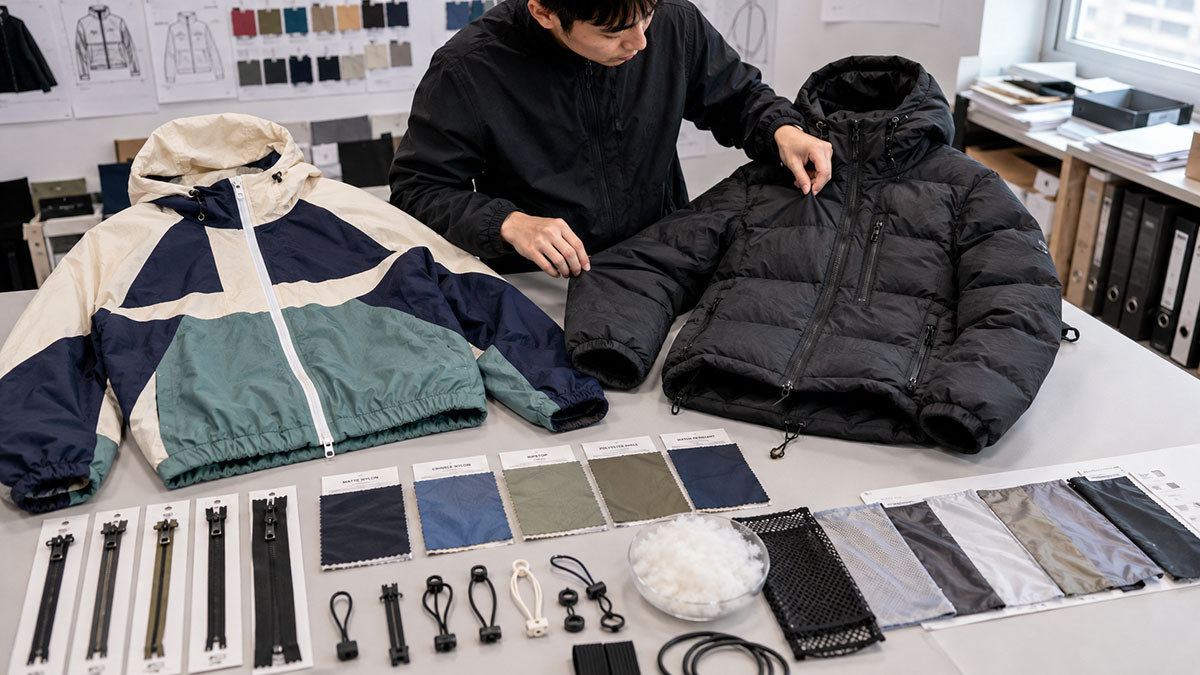
Two windbreakers can share the same sketch and still feel completely different because of the shell. Matte nylon produces one impression. Crinkle nylon produces another. A smooth polyester shell can look cleaner and more commercial, while ripstop introduces a visible technical grid. Coating and water-repellent finishing can alter hand feel again.
Before sampling, specify the desired surface, weight, noise level, drape and performance expectation. Do you want a light packable shell or a more substantial lined jacket? Should it have mesh lining, taffeta lining or no lining? Is the product fashion-led, outdoor-inspired or genuinely intended to perform in wet weather?
Color blocking deserves the same discipline. Instead of adding random contrast panels, use seam architecture intentionally. Shoulder yokes, sleeve inserts, chest panels and piping can visually reshape the body. Think of the pattern pieces as a graphic system.
Brands exploring this direction can review custom windbreaker jacket manufacturing for shell fabrics, lining options, trims, logo techniques and sample-development considerations.
03 Puffer Jackets and Functional Outerwear Become More Product-Led
The puffer remains relevant, but brands should resist treating “puffer jacket” as one fixed product. Insulation volume, baffle spacing, shell material and fit can turn the same category into a compact city jacket, an oversized statement piece, a lightweight layering style or a technical winter garment.
In other words, the trend is not simply puffiness. The opportunity is functional volume.
Start With the Intended Use
A fashion puffer for a streetwear capsule does not require exactly the same specification as outerwear designed for sustained cold-weather exposure. Brands should define climate, customer use and price position before selecting insulation.
Synthetic insulation may make sense for certain fashion programs because it offers predictable loft and straightforward care. Down and other insulation systems introduce different warmth-to-weight characteristics, but also create additional sourcing, construction and compliance considerations.
Baffle design matters too. Wide horizontal channels create a familiar puffer identity. Smaller quilting can reduce visual bulk. Chevron, mixed-scale or panel-specific quilting can transform the body proportion. Heat-bonded constructions create another surface entirely.
Shell fabrics, zippers, hood structure, elastic systems and hem adjustment should all be finalized alongside the insulation strategy. If you are developing a winter hero product, explore custom puffer jacket manufacturing before locking the tech pack.
04 Workwear, Barn Jackets and Utility Construction Keep Moving Into Streetwear
Workwear is powerful because it already has a design logic. Pockets exist for a reason. Reinforcement exists for a reason. Canvas, twill and corduroy were selected because the garments needed to survive use. Streetwear can borrow those codes, but the best versions preserve that sense of purpose.
For Fall/Winter 2026, barn jackets, chore jackets, short utility jackets and Detroit-inspired silhouettes offer brands a strong alternative to traditional bombers. They can feel American, vintage, contemporary or minimalist depending on the fabric and proportion.
Where Workwear Products Win or Lose
Fabric hand feel is critical. A stiff canvas can create an authentic structured body, but it may be too rigid for the intended customer. A washed twill can feel immediately broken in, but aggressive washing may reduce dimensional consistency if the process is not controlled.
Details such as corduroy collars, metal zippers, snap closures, internal pockets, reinforced seams, bar tacks, triple stitching and quilted or flannel linings help communicate the workwear story. Yet more details are not automatically better. Every feature should support the design.
This is also where brands should think about aging. Some of the most compelling workwear improves visually through wear. If that is part of the product concept, fabric, dye and finishing choices should support it from the beginning.
VANRD's work jacket manufacturing page covers chore, barn and utility jacket constructions for brands developing this category.
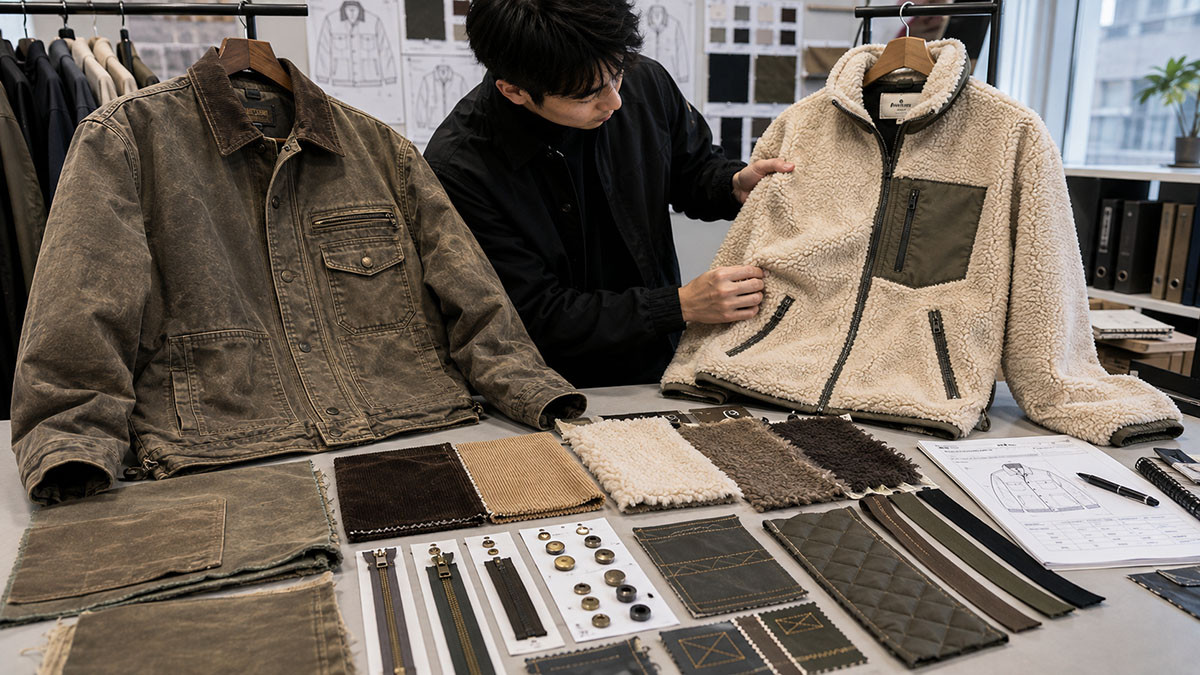
05 Sherpa, Fleece and Tactile Layering Add Warmth Without Traditional Tailoring
Texture is one of the easiest ways to make a Fall/Winter collection feel seasonal before the customer even touches it. Sherpa, pile fleece, brushed surfaces and other tactile materials immediately communicate warmth and softness.
That makes fleece particularly useful for streetwear brands that want outerwear presence without developing a complicated insulated jacket.
Do Not Choose Fleece From a Photo Alone
This category depends heavily on hand feel. Pile length, density, backing, weight, softness and recovery all influence quality perception. A fabric that photographs well may feel thin in person. Another may look simple online but feel premium when handled.
That is why physical swatches matter.
Brands should also review shedding, pilling behavior, seam bulk and how the fabric responds around zippers, pocket openings and binding. Contrast woven panels can help stabilize high-stress zones while adding a more technical outdoor visual language.
Color blocking works especially well here because the material itself is visually strong. A relatively simple stand-collar zip jacket can become distinctive through a two-tone fleece combination, woven yoke or carefully placed embroidery.
For examples of this category, see VANRD's custom sherpa fleece jacket range.
06 Tracksuits and Sport-Prep Influences Create Strong Collection Systems
The tracksuit is useful to manufacturers and brands for one simple reason: it is already a collection system. The jacket and pant are designed to speak to each other. That creates an opportunity to build stronger merchandising with fewer unrelated products.
Fall/Winter 2026 sports references are not limited to performance clothing. They mix with prep, vintage uniforms, warm-up gear, retro club sports and streetwear. That means brands can develop tracksuits in nylon, woven polyester, fleece or even more tactile fabrics without making the product look like traditional gym apparel.
Matching Does Not Have to Mean Identical
A common mistake is making the top and bottom too literal. The same fabric and color may be used throughout, but panel lines, piping, embroidery placement and proportion can vary between the jacket and pant. This makes the set feel designed rather than simply duplicated.
Fit also matters enormously. A cropped zip jacket paired with a wide-leg track pant creates a completely different customer from a regular warm-up jacket and tapered pant. Decide the silhouette system before choosing graphic details.
For fleece-based sets, fabric weight, shrinkage, brushing and rib recovery need careful control. For woven tracksuits, shell drape, lining, static, zipper quality and elastic construction become more important.
Brands developing coordinated sets can review VANRD's custom tracksuit manufacturing capabilities as well as custom sweatpants manufacturing when building matching bottoms.
07 Motorsport and Racing Jackets Bring High-Impact Graphics Back to Outerwear
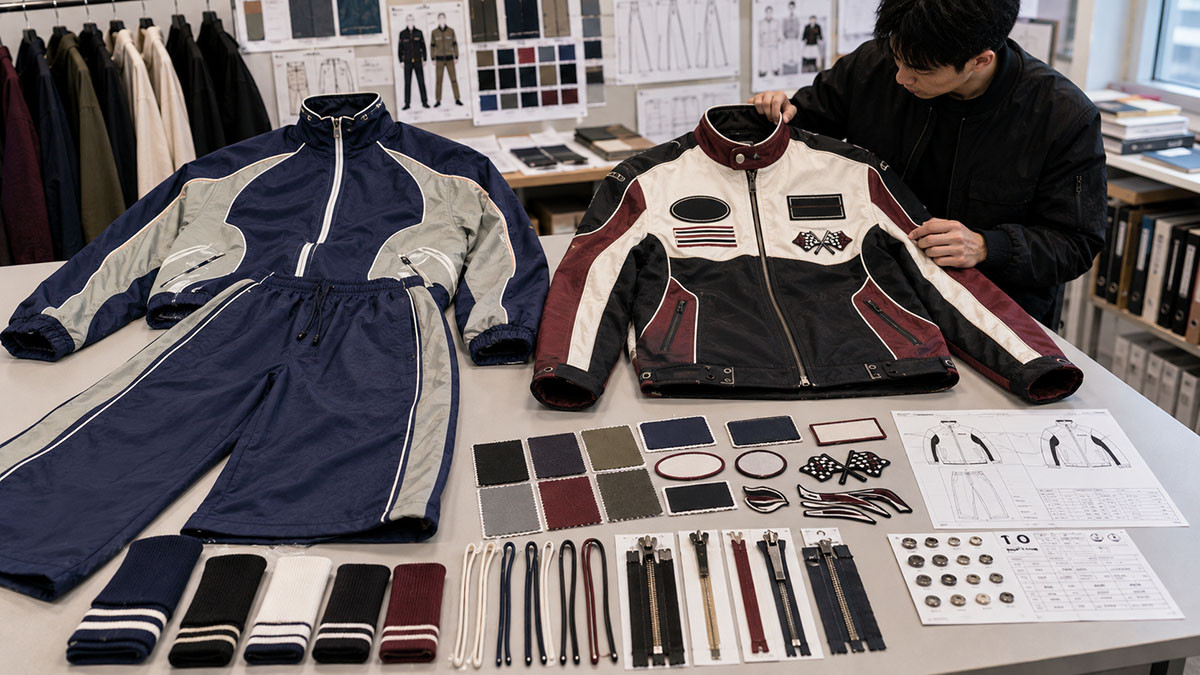
Motorsport has been moving closer to mainstream fashion for several seasons, but the manufacturing opportunity goes beyond placing racing graphics on a jacket. The category offers a recognizable construction language: contrast panels, piping, stand collars, snap fronts, technical shells, patches and dense embroidery.
That makes the racing jacket particularly relevant for brands whose identity depends on graphics and visual storytelling.
The Jacket Should Work Before the Graphics Are Added
A successful racing-inspired product needs a strong silhouette first. If every patch disappeared, would the jacket still look good?
Start with body length, chest volume, shoulder position, collar, sleeve shape and hem structure. Then build the graphic system around the panels. This keeps branding integrated into the garment rather than pasted on top of it.
Patch and embroidery density should be reviewed during sampling because decoration can alter stiffness and drape. Large embroidered areas may require backing or construction adjustments. Fine text may not reproduce correctly at small scale. Multi-color artwork can also change cost and production complexity quickly.
Brands should also avoid copying protected motorsport logos or sponsor identities. Use the visual grammar of racing culture without borrowing someone else's intellectual property. Original badges, numbers, typography and team-style graphics give the product more long-term brand value anyway.
Explore custom racing jacket manufacturing for performance-inspired paneling, patches, embroidery, trims and private label production.
How Brands Should Translate Fall/Winter Trends Into Tech Packs, Sampling and Production Decisions
Trend research is the easy part. Production is where vague ideas are forced to become decisions.
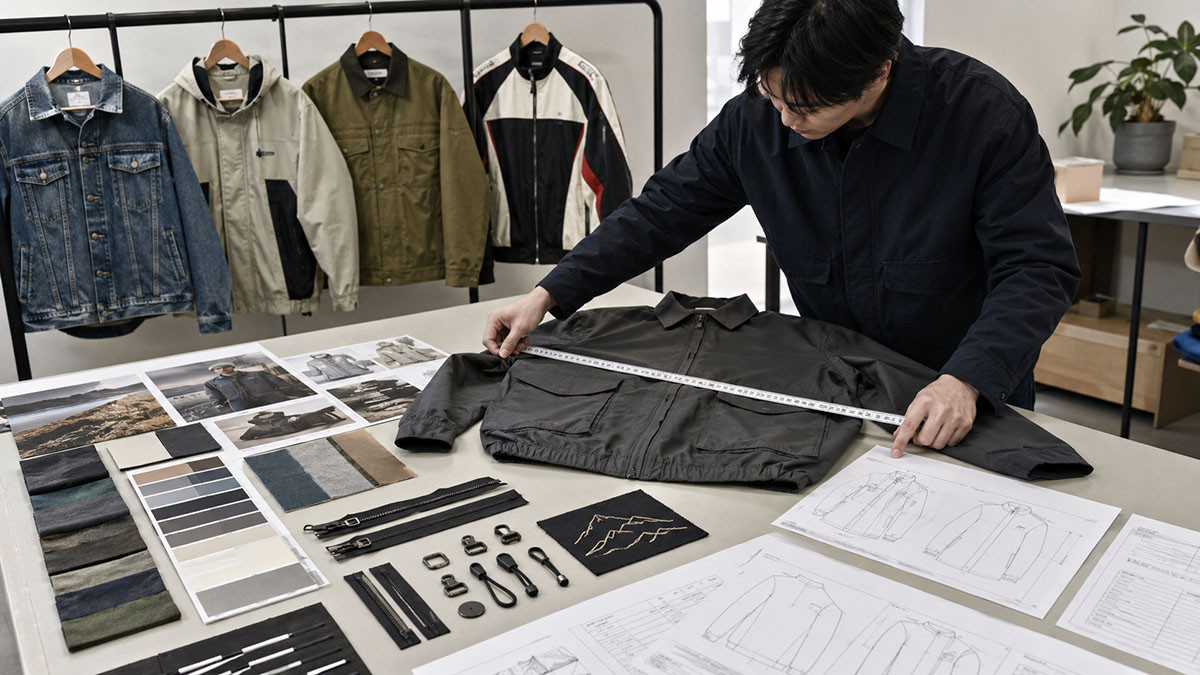
A mood board can say “retro outdoor.” A factory cannot cut retro outdoor. It needs a pattern, measurements, materials, construction, trims and artwork.
Think of a trend as a destination on a map. The tech pack is the route. Without the route, everyone may agree where they want to go while taking different roads.
Step 1: Define the Product Role
Is the style a hero jacket, commercial core item, limited capsule piece or supporting layer? That decision helps control development cost and complexity. Your hero product may justify custom fabric or hardware. A supporting piece may perform better using a strong stock material and distinctive branding.
Step 2: Lock the Silhouette Before Decoration
Designers often spend enormous energy on graphics while leaving fit undefined. In manufacturing, fit is the architecture. Decoration is the interior design.
Establish body length, width, shoulder, sleeve shape, rise, leg opening and intended layering before approving graphic placements. A logo positioned correctly on a first sample may appear too high or too low after the silhouette changes.
Step 3: Build the Material System
List every major fabric and trim. Identify which items are shared across multiple styles. If the work jacket and pants use the same canvas, or the windbreaker and tracksuit share the same nylon, fabric consolidation may simplify development and create visual cohesion.
This principle is explored in more detail in how streetwear brands develop custom collections with manufacturers.
Step 4: Separate Visual Approval From Technical Approval
A sample can look good in a photograph while still being wrong technically. Check measurements, movement, pocket function, zipper performance, lining, seam quality, wash shrinkage, logo position and finishing independently.
If consistency is important to your program, review VANRD's garment quality control guide before moving from approved samples into bulk production.
Step 5: Plan Backward From the Launch Date
Fall/Winter collections involve more than sewing time. Custom fabrics, washing, insulation, embroidery, labels, packaging, revisions and international shipping all consume calendar time.
If a specific launch date matters, build backward from the warehouse-ready date instead of asking a factory for the fastest possible production time. Our guide to the clothing production timeline from sample to bulk manufacturing explains how those stages connect.
How to Build One Cohesive FW26 Collection Instead of Seven Unrelated Trend Products
Seven trends do not mean your brand should make seven products.
In fact, trying to cover every direction usually produces a weaker collection. The smarter approach is to select one primary idea, one secondary idea and a supporting material language.
Imagine a brand built around refined workwear. Its hero could be a washed canvas barn jacket. The second outerwear piece could be a sherpa-lined denim jacket. The bottom could use related utility detailing. A fleece layer introduces texture. Suddenly four products feel connected without being identical.
Another brand may choose retro sports as the central idea. A color-blocked windbreaker, matching woven track pant and racing-inspired jacket could share piping colors, labels and graphic language. Again, the collection feels like a family.
This is where working with an experienced streetwear manufacturer can add value beyond sewing. Development should connect design intent with material sourcing, pattern construction, sampling feasibility and repeatable bulk production.
Fall/Winter 2026 Product Development Checklist for Brands
| Product Direction | Material Focus | Main Development Risk | What to Approve in Sampling |
|---|---|---|---|
| Refined Denim | Denim weight, indigo shade, wash | Wash variation and shrinkage | Fit after wash, color, hardware, seam fading |
| Windbreaker | Nylon, polyester, ripstop, lining | Wrong drape or cheap hand feel | Shell texture, panel lines, zipper, color blocking |
| Puffer | Shell, lining, insulation | Incorrect volume or insulation balance | Baffle shape, warmth, loft, hood and hem structure |
| Work Jacket | Canvas, twill, corduroy, lining | Excessive stiffness or uncontrolled wash | Fit, pocket function, collar, hardware, seam reinforcement |
| Sherpa / Fleece | Pile fleece, sherpa, woven reinforcement | Shedding, pilling and seam bulk | Hand feel, pile density, zipper area and panel stability |
| Tracksuit | Woven nylon, polyester, fleece | Top and bottom not fitting as one system | Proportions, elastic, piping, panel matching and shrinkage |
| Racing Jacket | Nylon, twill, canvas, rib and patches | Decoration overpowering garment construction | Fit, paneling, embroidery density, patch placement and trims |
Before Sending Your FW26 Project to a Manufacturer, Prepare:
- Clear product category and reference images.
- Target customer and market.
- Desired silhouette and fit direction.
- Fabric or hand-feel references.
- Colorways and artwork files.
- Branding placement and logo techniques.
- Hardware, labels and packaging requirements.
- Estimated quantity by style and color.
- Target delivery window.
- Tech pack, measurement chart or reference sample when available.
Common Mistakes Brands Make When Chasing Streetwear Trends
1. Copying a Trending Product Too Literally
A trend should be translated through your own brand language. If everyone is developing a barn jacket, the question is not whether you should copy one. The question is what makes your version recognizable without the logo.
2. Choosing Fabric After the Design Is “Finished”
Fabric is not decoration. It determines silhouette, weight, drape, durability, wash behavior and often cost. It belongs at the center of development.
3. Developing Too Many Complex Styles at Once
A tightly edited collection usually gives your development team more time to improve fit, materials and finishing. Ten average samples rarely beat four products that have been properly resolved.
4. Approving Samples Only From Photos
Photos are useful for communication, but they cannot tell you exactly how fleece feels, how a zipper runs, whether a puffer is comfortable or how a denim wash behaves after wear.
5. Treating the Manufacturer as a Sewing Vendor Instead of a Development Partner
Good manufacturing starts before bulk production. Pattern feasibility, fabric sourcing, trim decisions, decoration methods, sampling and quality standards all affect whether the final product matches the creative idea.
If your project is still at concept or development stage, the VANRD OEM/ODM apparel development process provides a useful overview of how design information moves toward production-ready garments.
What Fall/Winter 2026 Means From a Manufacturer's Perspective
The most interesting thing about Fall/Winter 2026 is not that denim, workwear, fleece or sportswear have suddenly appeared. None of those categories are new.
What is changing is the way they are being recombined.
Denim is getting cleaner while borrowing utility details. Windbreakers are becoming more visual. Workwear is being softened and refined. Fleece is moving beyond pure outdoor clothing. Tracksuits are mixing with prep and vintage sport. Racing culture is influencing graphics and outerwear construction.
For brands, that is good news. You do not need to invent an entirely new category to make a relevant FW26 collection. You need to choose familiar product archetypes and make better decisions about proportion, materials, color, construction and brand identity.
From the factory side, those decisions also make production more predictable. A clearly defined garment is easier to source, sample, cost, approve and reproduce.
Manufacturing principle: the strongest product development happens when creative direction and production reality are solved together rather than handed from one side to the other at the end.
Conclusion: Build the Product, Not Just the Trend
Fall/Winter 2026 gives streetwear brands plenty to work with: refined denim, retro nylon shells, functional puffers, workwear jackets, tactile sherpa, coordinated tracksuits and motorsport-inspired outerwear.
But identifying the direction is only the beginning.
The brands that turn these ideas into successful products will be the ones that make deliberate choices about fit, fabric, trims, construction, sampling and quality control. Think of trend research as the spark. Product development is the engine.
Instead of asking, “What is trending this winter?” ask a more useful question: “Which of these directions fits our customer, and how can we make it unmistakably ours?”
Once that answer is clear, the manufacturing process becomes much more focused.
Planning a Fall/Winter 2026 Streetwear Collection?
Send VANRD your reference images, tech pack, target products, fabric ideas, quantity and delivery plan. Our team can review the project and help translate your creative direction into a practical sampling and manufacturing plan.
Discuss Your FW26 ProjectFrequently Asked Questions About Fall/Winter 2026 Streetwear Manufacturing
1. What are the biggest Fall/Winter 2026 streetwear trends for brands?
The strongest product directions include refined denim, retro nylon windbreakers, functional puffer jackets, workwear and barn jackets, sherpa and fleece layers, coordinated tracksuits, and motorsport-inspired racing jackets. Brands should treat these as product-development directions rather than exact styles to copy.
2. Which FW26 product category is best for a new streetwear collection?
There is no universal best category. A brand with a vintage or utility identity may benefit from denim or work jackets, while a sport-driven label may be better suited to windbreakers, tracksuits or racing jackets. Choose the product that best reflects your existing customer and brand identity before considering trend popularity.
3. When should brands start developing Fall/Winter streetwear products?
Start early enough to allow for fabric sourcing, first samples, fit revisions, wash or decoration approvals, pre-production confirmation, bulk manufacturing, quality control and freight. Complex outerwear typically requires more development decisions than basic knit products, so brands should plan backward from the required warehouse or launch date rather than only from sewing lead time.
4. What information should I send a streetwear manufacturer before sampling?
Ideally provide a tech pack or clear reference images, target silhouette, fabric direction, colors, artwork, branding methods, size range, estimated quantity, target market and required delivery window. If you do not yet have a complete tech pack, a capable manufacturer may help clarify product specifications during the development stage.
5. How can a streetwear brand use trends without making its collection look generic?
Use trends as a framework rather than a template. Keep the category or material direction, then adapt the fit, color palette, hardware, graphics, wash effects, pocket construction and branding to your own identity. A strong product should still feel recognizable as your brand even when the most obvious logo is removed.