Custom Trucker Hats for Brands: Fit, Mesh, Embroidery, and Bulk Production Guide
- Share
- publisher
- Vanrd
- Issue Time
- Jun 8,2026
Summary
Learn how apparel brands choose custom trucker hats by fit, crown height, mesh back, snapback closure, embroidery, patches, private label trims, sample review, quality control, and bulk production requirements before ordering.
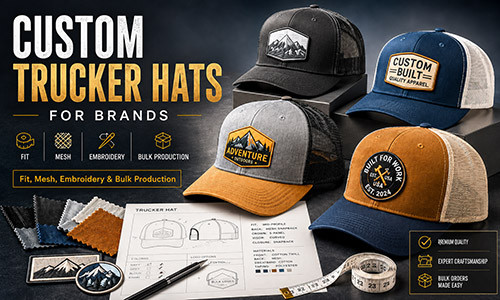
A practical guide for apparel brands, streetwear labels, outdoor brands, event merch teams, and private label buyers that want to develop trucker hats with the right fit, breathable mesh, clean logo execution, and stable bulk production.
Why Trucker Hats Are Back in Brand Collections
Trucker hats are no longer just gas-station caps, farmwear accessories, or old-school promotional giveaways. For modern apparel brands, they have become a small product with a surprisingly big job: they finish the outfit, carry the logo, add seasonal energy, and create one more reason for customers to buy into a brand world.
Think about it. A jacket may define the collection, a hoodie may drive the average order value, and a T-shirt may bring daily wearability. But a good hat? A good hat follows the customer everywhere. It shows up in mirror selfies, weekend trips, gym commutes, music festivals, golf days, fishing weekends, road trips, and casual streetwear looks. It is low weight, easy to style, and highly visible. That is exactly why many brands use custom trucker hats as a bridge between apparel and accessories.
For apparel brands planning to expand into accessories, custom trucker hats can be a practical way to add logo-driven products without developing a full new garment line. You can adjust crown height, front panel structure, mesh color, brim curve, closure type, embroidery style, patch material, inside label, hangtag, and packaging. In other words, it may look like a simple cap, but from a product development angle, it is a compact branding machine.
What Is a Trucker Hat?
A trucker hat is a cap style usually built with a structured or semi-structured front, a breathable mesh back, a curved or slightly curved brim, and an adjustable closure. The classic version has a taller front profile and a snapback closure, but modern trucker hats now come in many variations: low profile, mid profile, foam front, cotton twill front, corduroy front, vintage wash, rope detail, patch front, embroidered front, and performance-inspired versions.
At first glance, it may seem close to a baseball cap. But the biggest difference is the back construction. A baseball cap is often made from fabric panels all around, while a trucker hat usually uses mesh panels on the back half. That mesh is not just for looks. It changes the wearing experience. It makes the hat lighter, cooler, and more casual. For brands selling spring, summer, outdoor, resort, fishing, golf, streetwear, workwear, or event merchandise, that is a serious advantage.
The Front Panel: Where Your Brand Lives
The front panel is the main branding area. This is where the logo sits, where the patch is applied, and where the first impression is made. If the front panel is too soft, embroidery may wrinkle. If it is too stiff, the hat may look too boxy for some audiences. If it is too tall, it may feel overly retro. If it is too low, the logo area may feel limited. That is why front panel structure must be decided before sampling, not after.
The Mesh Back: The Reason People Actually Wear It
The mesh back gives trucker hats their comfort advantage. It allows airflow, reduces heat buildup, and makes the hat feel lighter during warmer seasons. But not all mesh feels the same. Some mesh is firm and holds shape well. Some is soft and more comfortable against the head. Some mesh looks sporty. Some looks vintage. A brand should choose mesh based on the customer, not only the swatch color.
The Snapback Closure: Why It Works for Bulk Orders
The snapback closure is one reason trucker hats work well for brands. It helps one size cover a wider head-size range, which makes inventory easier to manage. For a new brand or growing brand, this matters. You do not want to split a simple accessory into too many sizes too early. Snapback trucker hats keep the buying process simple for customers and the production process simpler for brands.
Trucker Hats vs Trucker Caps: Is There a Real Difference?
In most sourcing and retail situations, “trucker hats” and “trucker caps” refer to the same product category. The difference is mostly language and market habit. In the United States, people often search for “trucker hats.” In supplier catalogs, product listings, and international sourcing conversations, “trucker caps” may appear more often. A buyer may say cap, a consumer may say hat, and a manufacturer may use both.
For SEO and product development, this matters because brands should not limit their content or product pages to only one expression. If your page only says “trucker hats,” you may miss buyers searching for “custom trucker caps.” If your product title only says “trucker caps,” you may miss the larger consumer-driven search demand around “trucker hats.” The strongest content naturally uses both terms without sounding repetitive.
| Term | Common Use | Best SEO Placement |
|---|---|---|
| Trucker hats | Common U.S. search term, consumer-friendly wording, high-volume keyword. | Title, introduction, major headings, FAQ, image alt text. |
| Trucker caps | Common in supplier catalogs, B2B product pages, sourcing conversations. | Comparison section, product detail copy, internal links. |
| Mesh trucker hats | Used when buyers care about breathability and warm-weather comfort. | Material section, seasonal use section, FAQ. |
| Snapback trucker hats | Used when buyers care about adjustable sizing and casual streetwear fit. | Closure comparison, bulk order section, product cards. |
Why Apparel Brands Choose Custom Trucker Hats
Apparel brands usually add trucker hats for one of three reasons. First, they want an accessory that can complete a look. Second, they want a logo product that is easier to sell than a high-ticket garment. Third, they want a seasonal item that can support a collection without requiring a full new product line. A custom trucker hat can do all three.
For streetwear brands, it can sit next to oversized T-shirts, graphic hoodies, cargo pants, varsity jackets, and denim pieces. For outdoor brands, it can support fishing, hiking, camping, and travel stories. For workwear-inspired brands, it pairs well with canvas jackets, chore coats, flannels, and utility pants. For events and corporate merchandise, it provides a wearable branding item that people may actually keep.
For brands that want more than a blank cap with a logo, VANRD provides OEM/ODM headwear development to support fit selection, logo placement, private label trims, sample review, and production planning.
Compared with jackets or tracksuits, hats can be easier to test while still giving brands meaningful customization space.
The front panel is a natural billboard for embroidery, patches, or printed branding.
One trucker hat can support streetwear, outdoor, teamwear, resort, event, or promotional collections.
They Add a Brand Touch Without Rebuilding a Whole Collection
Let’s say your brand already has hoodies, T-shirts, and jackets. You may not need another heavy garment to expand the collection. You may need a smart accessory that makes the existing products feel more complete. A trucker hat can be that missing puzzle piece. It adds a final styling layer without forcing you to redesign your entire range.
They Work Across Streetwear, Outdoor, Workwear, and Teamwear
Few accessories move across categories as easily as trucker hats. A high crown foam trucker can look retro and bold. A cotton twill front with tonal embroidery can feel clean and premium. A rope-detail trucker can lean golf or resort. A vintage-wash mesh cap can fit outdoor lifestyle. The same basic structure can become many different brand stories.
Fit Comes First: How to Choose the Right Trucker Hat Shape
If you only remember one thing from this guide, remember this: fit comes before decoration. A beautiful logo cannot save a hat that feels wrong on the head. Customers may forgive a simple design, but they rarely forgive an awkward fit. The crown height, panel structure, brim curve, and closure all affect whether the hat feels wearable or just looks good on a sample table.
For brands, this is where sampling becomes important. Photos can make almost any hat look acceptable. Real fit tells the truth. Does the hat sit too high? Does the front panel push forward? Does the brim curve naturally? Does the mesh scratch? Does the snapback adjust smoothly? These details decide whether customers wear the hat once or keep it in rotation.
High Crown Trucker Hats
High crown trucker hats have a taller front profile. They are bold, visible, and often associated with retro American styling, vintage trucker culture, motorsport, outdoor merchandise, and streetwear. The advantage is obvious: you get more logo space and stronger shape. A 3D puff embroidery or large patch can stand out beautifully on a high crown front.
However, high crown hats are not for every audience. Some customers love the statement. Others may feel the hat sits too tall. For streetwear labels, festival merchandise, workwear-inspired drops, and bold outdoor branding, high crown can be powerful. For minimalist lifestyle brands, it may feel too loud.
Mid Crown Trucker Hats
Mid crown trucker hats are often the safest starting point for brands. They provide enough front height for embroidery and patches, but they do not feel as dramatic as high crown styles. If a brand wants a trucker hat that can work across different customer groups, a structured mid crown shape is usually a practical first sample.
This is especially useful for brands ordering in bulk. A mid crown fit reduces risk because it is easier for more people to wear. It also photographs well, supports most logo techniques, and can be styled with both casual and more premium looks.
Low Crown Trucker Hats
Low crown trucker hats sit closer to the head. They feel more subtle and less boxy. This can work well for outdoor lifestyle, women’s collections, golf-inspired capsules, running clubs, resort merchandise, and brands that want a cleaner silhouette. The tradeoff is that the logo area may be smaller, and some patch styles may feel cramped.
If your brand aesthetic is refined, minimal, or performance-oriented, low crown can be a strong choice. But if your main goal is large logo impact, you may want to test mid crown first.
Structured vs Unstructured Front Panels
A structured front panel holds its shape. It gives embroidery and patches a cleaner surface and helps the hat look consistent in photos. An unstructured front panel is softer and more relaxed, but it can collapse slightly when worn. Neither is automatically better. The right choice depends on your brand style and logo technique.
For 3D embroidery, woven patches, leather patches, and bold front logos, a structured panel usually performs better. For vintage-wash, outdoorsy, or relaxed lifestyle caps, an unstructured front may look more natural. The key is to match the panel structure to the artwork before approving the sample.
Mesh Options: Breathability, Hand Feel, and Seasonal Use
Mesh is the feature that makes trucker hats more than just another cap. It gives the hat airflow and a lighter wearing experience. But mesh should not be treated as one generic material. The density, stiffness, stretch, shine, and color all affect the final product.
Polyester mesh is common because it is durable, light, and practical for bulk production. Nylon mesh can feel slightly different depending on construction. Soft mesh can feel more comfortable for daily wear, while firmer mesh can help the hat hold its shape. For brands, the question is not “which mesh is best?” The better question is “which mesh matches my customer and use case?”
| Mesh Type | Best For | Brand Consideration |
|---|---|---|
| Firm Polyester Mesh | Classic trucker hats, streetwear, promotional merchandise, outdoor caps. | Holds shape well but should be checked for comfort against the head. |
| Soft Mesh | Lifestyle brands, daily wear, women’s collections, resort or travel capsules. | Feels comfortable but may create a softer silhouette. |
| Color-Matched Mesh | Premium tonal branding and minimalist collections. | Creates a cleaner look but requires good color control in bulk. |
| Contrast Mesh | Vintage, retro, teamwear, outdoor, and bold streetwear styles. | Adds visual energy but should match the full collection palette. |
Seasonality also matters. If you are planning a spring or summer drop, breathable mesh is a selling point. If you are building an outdoor capsule, mesh supports the product story. If you are developing fashion trucker hats for streetwear, mesh color can become part of the design language. In short, mesh is not only a functional material. It is part of the brand signal.
Snapback, Fitted, or Flexfit: Which Closure Should Brands Choose?
Closure type may look like a small detail, but it affects fit, inventory, and customer satisfaction. The most common option for custom trucker hats is snapback. It is adjustable, familiar, and easy for customers to understand. For many brands, especially those testing hats for the first time, snapback is the most practical choice.
Fitted hats can feel more premium, but they create size management challenges. You may need multiple sizes, which increases inventory planning complexity. Flexfit-style closures can offer comfort and a cleaner back look, but they also require careful size range decisions. For most apparel brands starting with bulk trucker hats, adjustable snapback is the lowest-risk option.
| Closure Type | Advantages | Limitations | Recommended For |
|---|---|---|---|
| Snapback | Adjustable, familiar, easy for bulk sales, simple inventory. | Plastic closure may feel less premium for some brands. | Streetwear, promotional, event, outdoor, and first-time hat projects. |
| Fitted | Clean look, premium fit, no visible adjustment strap. | Requires multiple sizes and more careful inventory planning. | Established brands with clear customer sizing data. |
| Flexfit | Comfortable stretch, sporty feel, cleaner back appearance. | Still needs size range planning and sample testing. | Performance, golf, outdoor, and premium casual collections. |
Custom Logo Options for Trucker Hats
This is where a trucker hat becomes a brand product. The same blank hat can look cheap, premium, vintage, sporty, rugged, or fashion-forward depending on the decoration method. Logo execution matters because the front panel is small, curved, and highly visible. A logo that works on a T-shirt may not work perfectly on a hat without adjustment.
Brands can develop custom embroidered trucker hats with flat embroidery, 3D puff embroidery, woven patches, leather patches, rubber patches, or private label trims. Before production, brands should simplify artwork where needed, confirm thread colors or patch colors, test placement, and review the sample under real lighting. A logo that looks clean on a digital mockup can still feel too large, too low, too flat, or too heavy once applied to the hat.
Brands can also review VANRD fabric and decoration techniques when comparing embroidery, patches, printing, labels, mesh materials, and trim options for custom trucker hats.
Embroidery for a Clean Brand Look
Flat embroidery is one of the most common options for custom trucker hats. It works well for clean logos, text marks, small icons, and simple brand graphics. It gives a durable and professional finish without adding separate materials. For brands that want a classic look, flat embroidery is usually a safe choice.
3D puff embroidery creates a raised effect. It is bold, tactile, and highly visible. It works best with simpler artwork because fine details can become unclear when the embroidery is raised. If your brand uses thick letters, strong symbols, or vintage sports-inspired graphics, 3D embroidery can give the hat serious shelf presence.
Patches for Texture and Brand Personality
Patches are popular because they add dimension and personality. A woven patch can handle more detail than embroidery. A leather patch can create a rugged or premium outdoor feel. A rubber or PVC patch can feel modern and performance-driven. A chenille patch can lean varsity, retro, or streetwear. The patch type should match the full collection story.
Tonal embroidery, small woven labels, low-profile patches, and clean color-matched mesh.
3D puff embroidery, oversized front logos, contrast mesh, chenille patches, and vintage color blocking.
Leather patches, rubber patches, earthy tones, breathable mesh, and slightly curved brims.
Simple embroidery, printed logos, adjustable snapback closures, and cost-controlled bulk production.
Print, Sublimation, Labels, and Packaging
Not every design needs embroidery or patches. Some brands use screen printing for bold graphic fronts. Others use sublimation for all-over color effects, especially on polyester panels. Inside woven labels, branded sweatbands, custom tape, hangtags, polybags, and retail packaging can also upgrade the final product. These details may not be visible in a front-view photo, but they shape the customer experience.
Blank, Custom, or Private Label Trucker Hats?
Not every buyer needs the same production route. Some need blank trucker hats for quick decoration. Some need custom trucker hats with a logo. Others need private label headwear that feels fully connected to their apparel collection. Understanding the difference helps brands choose the right supplier and avoid wasting time.
| Type | Best For | Main Advantage | Main Limitation |
|---|---|---|---|
| Blank Trucker Hats | Embroidery shops, quick events, low-budget merch, resale decoration. | Fast, simple, and usually lower cost. | Limited uniqueness and weaker brand differentiation. |
| Custom Trucker Hats | Brands adding logos, patches, colors, and basic custom details. | Good balance of speed, branding, and production control. | Base hat shape may still be selected from existing options. |
| Private Label Trucker Hats | Established brands building a headwear line or full accessory program. | More control over fit, trims, labels, packaging, and collection identity. | Requires clearer development planning, sampling, and bulk approval. |
For serious apparel brands, private label development often creates the strongest long-term value. Why? Because customers can tell when a hat is just a blank with a logo slapped on it. They may not explain it in technical terms, but they feel it. The fit, color, label, patch scale, packaging, and collection styling either work together or they do not.
What Brands Should Check Before Bulk Production
Bulk production is where small sample details become big problems if they are not controlled early. A slightly off-center logo on one sample may look harmless. Multiply that by hundreds or thousands of units, and it becomes a quality issue. A mesh color that is “close enough” in the sample stage may clash with the full collection once packed. A brim curve that varies too much can make product photos look inconsistent.
A clear custom production process helps brands move from design reference and sample approval to bulk production with fewer delays and fewer misunderstandings.
Before ordering bulk trucker hats for brands, buyers should confirm fit, mesh quality, logo placement, color consistency, closure strength, packaging details, and sample-to-bulk consistency. This does not need to be complicated, but it does need to be specific. The goal is to remove guesswork before production starts.
- Confirm crown height and front panel structure.
- Check whether the hat sits comfortably on different head shapes.
- Review embroidery or patch placement from front and side angles.
- Confirm thread colors, patch colors, and mesh colors under natural light.
- Check whether the front panel wrinkles after decoration.
- Test snapback closure strength and adjustment range.
- Review brim curve, brim stitching, and edge finishing.
- Confirm sweatband comfort and inside label placement.
- Compare sample measurements against approved specifications.
- Approve packaging, hangtags, carton labels, and shipment requirements.
For bulk orders, VANRD follows a structured quality control process to check fit, logo placement, stitching, closure strength, packaging, and sample-to-bulk consistency before shipment.
For mature brands, this kind of checklist is normal. For new brands, it may feel overly detailed at first. But it is much cheaper to fix a placement issue before production than to explain inconsistent bulk goods after delivery. A trucker hat may be a small item, but it still deserves serious QC.
How to Build a Trucker Hat Collection Instead of One Random Hat
One mistake brands make is treating hats as an afterthought. They pick a blank, add a logo, choose a color, and hope it sells. Sometimes it does. But if you want a stronger product line, build trucker hats like part of the collection, not a leftover accessory.
Start with your customer. Are they streetwear buyers who like bold logos? Outdoor customers who want breathable comfort? Boutique shoppers who prefer soft colors? Golf or resort customers who want clean styling? Once you know the wearer, the product decisions become easier.
A clean, easy-to-wear style with your main logo. This is the safest first product.
A limited colorway tied to a spring, summer, outdoor, or festival collection.
A bolder design using chenille, leather, woven, or rubber patches for stronger identity.
You can also connect hats to your apparel categories. A canvas work jacket collection can pair with leather patch trucker hats. A varsity-inspired drop can pair with chenille patch hats. A fishing or outdoor collection can pair with breathable mesh hats in earthy colors. A minimal premium basics line can use tonal embroidery and soft mesh. When the hat feels connected to the apparel, customers understand why it exists.
Need Custom Trucker Hats for Your Brand?
Explore VANRD custom trucker hat manufacturing support for fit development, embroidery, patch placement, sample review, private label trims, and bulk production. Whether you are adding headwear to a streetwear line, outdoor capsule, event merch program, or private label collection, the right sample process helps turn a simple cap into a product customers actually wear.
How VANRD Supports Custom Trucker Hat Development
For brands, the hard part is not saying, “We want a trucker hat.” The hard part is turning that idea into a hat that fits well, matches the collection, carries the logo cleanly, and stays consistent in bulk. That is where development support matters.
VANRD helps brands think through the full process: fit direction, crown height, mesh type, front panel structure, decoration method, trim details, sample approval, and bulk production control. Instead of treating the hat as an isolated item, we help connect it to your wider product range. If your brand already develops jackets, hoodies, tracksuits, T-shirts, or workwear pieces, trucker hats can become a natural extension of the collection.
With its factory production strength, VANRD can support brands that need custom headwear development alongside apparel categories such as jackets, hoodies, tracksuits, T-shirts, and workwear pieces.
Brands can also learn more about the VANRD apparel manufacturing team behind the development, sampling, production, and quality control process.
The best projects usually start with clear information: target customer, reference style, logo file, preferred colors, expected order quantity, packaging needs, and launch timing. With those details, the development process becomes much smoother. The sample can answer real questions instead of creating new ones.
Conclusion: A Good Trucker Hat Is Small, but It Carries a Big Brand Message
Custom trucker hats look simple, but the best ones are built through smart decisions. Fit decides whether customers wear the hat. Mesh decides whether it feels comfortable. Logo technique decides whether it looks professional. Bulk control decides whether the final shipment matches the approved sample.
For apparel brands, trucker hats are not just accessories. They are wearable brand signals. They can support a streetwear drop, complete an outdoor capsule, promote an event, or add a retail-ready item to a private label collection. The key is to develop them with the same care you would give to a garment: choose the right shape, test the right materials, approve the right decoration, and control the details before bulk production.
If your brand wants to create custom trucker hats, do not start with the cheapest blank. Start with the customer, the fit, and the brand story. The right hat should feel like it belongs in your collection from day one.
Frequently Asked Questions About Custom Trucker Hats
What are trucker hats good for?
Trucker hats are good for apparel brands, streetwear labels, outdoor brands, event merchandise, teamwear, and promotional collections. They offer a visible front panel for branding and a breathable mesh back for comfort, making them practical for daily wear, warm weather, and lifestyle styling.
What is the difference between trucker hats and trucker caps?
Trucker hats and trucker caps usually refer to the same product category. “Trucker hats” is more common in U.S. search behavior, while “trucker caps” often appears in supplier catalogs and international sourcing. Both terms usually describe caps with a front panel, mesh back, brim, and adjustable closure.
Are trucker hats good for custom embroidery?
Yes, trucker hats can work very well for custom embroidery, especially when the front panel is structured enough to support the stitches. Flat embroidery is good for clean logos, while 3D puff embroidery works best for bold letters or simple graphics. Brands should always review a physical sample before bulk production.
Should brands choose snapback or fitted trucker hats?
Most brands should start with snapback trucker hats because they are adjustable and easier to manage in bulk inventory. Fitted trucker hats can feel more premium, but they require multiple sizes and more careful planning. For first-time hat projects, snapback is usually the lower-risk option.
What should brands check before ordering trucker hats in bulk?
Before ordering bulk trucker hats, brands should check crown height, front panel structure, mesh feel, logo placement, embroidery or patch quality, brim curve, snapback strength, color consistency, inside labels, packaging, and sample-to-bulk consistency. These checks help reduce production mistakes and improve customer satisfaction.
Are trucker hats good for summer collections?
Yes. Trucker hats are suitable for spring and summer collections because the mesh back improves breathability and helps the hat feel lighter in warm weather. Brands can use lightweight front panels, breathable mesh, seasonal colors, and custom logo details to match outdoor, resort, streetwear, or event merchandise collections.
What is the best crown height for custom trucker hats?
For most apparel brands, a mid crown structured trucker hat is the safest starting point because it offers enough logo space while staying wearable for a wider customer group. High crown styles work better for retro, outdoor, or bold streetwear looks, while low crown styles feel more subtle, casual, and close to the head.
Can brands customize trucker hats with patches instead of embroidery?
Yes. Brands can use woven patches, leather patches, rubber patches, chenille patches, or printed patches instead of embroidery. Patches are useful when the artwork has more detail, texture, or brand personality than standard embroidery can clearly show on the front panel.