Custom Pants Manufacturing: Cargo vs Sweatpants vs Denim vs Casual for Streetwear
- Share
- publisher
- Vanrd
- Issue Time
- Jun 29,2026
Summary
Compare cargo pants, sweatpants, denim, and casual pants manufacturing for streetwear brands. Learn about fabric options, MOQ, production timeline, and choosing the right style.
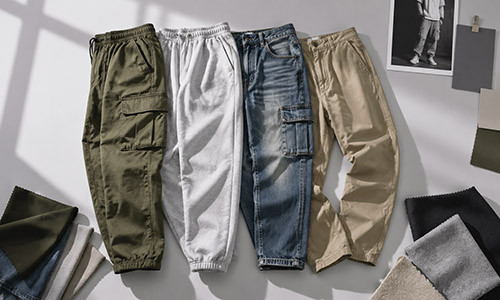
How established streetwear brands evaluate fabric, hardware, wash options, MOQ, sampling, and production timelines across cargo pants, sweatpants, denim jeans, and casual pants.
TL;DR: Custom Pants Manufacturing for Streetwear
- Set requirements first. Each pants category requires different fabric weights, hardware, wash capabilities, and production expertise. Lock these before sampling.
- Match the pants type to your program. Denim for premium heritage, cargo for utility/trend-driven, sweatpants for comfort basics, casual for versatile entry-level.
- Hardware matters as much as fabric. Zippers, buttons, rivets, snaps, and drawcords vary by category and affect both cost and lead time.
- Plan for wash development. Denim has the widest wash range. Cargo and sweatpants are more limited.
- MOQ. Standard MOQ at VANRD is 100 pcs per color per style across all pants categories.
- Lead time. 7–10 days for sampling. 25–35 days bulk production from approved sample to shipment handover, not including international freight.
What Makes a Streetwear Pant Different From Basic Trousers
If you have ever held a mass-market pair of chinos next to a premium streetwear cargo pant, you already know the difference is not subtle. The fabric is heavier. The seams are reinforced. The hardware has weight and finish to it. The pockets are engineered, not just stitched on. Streetwear customers notice these details because they pay for the garment, and they expect it to perform.
The problem most brands run into when developing their first custom pants program is underestimating the technical complexity. A T-shirt is a straightforward garment: front panel, back panel, sleeves, collar. A pair of cargo pants can easily involve 20 separate pattern pieces, six different hardware components, and a wash process that has to be consistent across every pair in the order.
Understanding the differences between the four main pants categories before you start sampling will save you time, money, and frustration. Here is a breakdown of what each category requires, what it costs, and what you should know before sending a tech pack to a manufacturer.
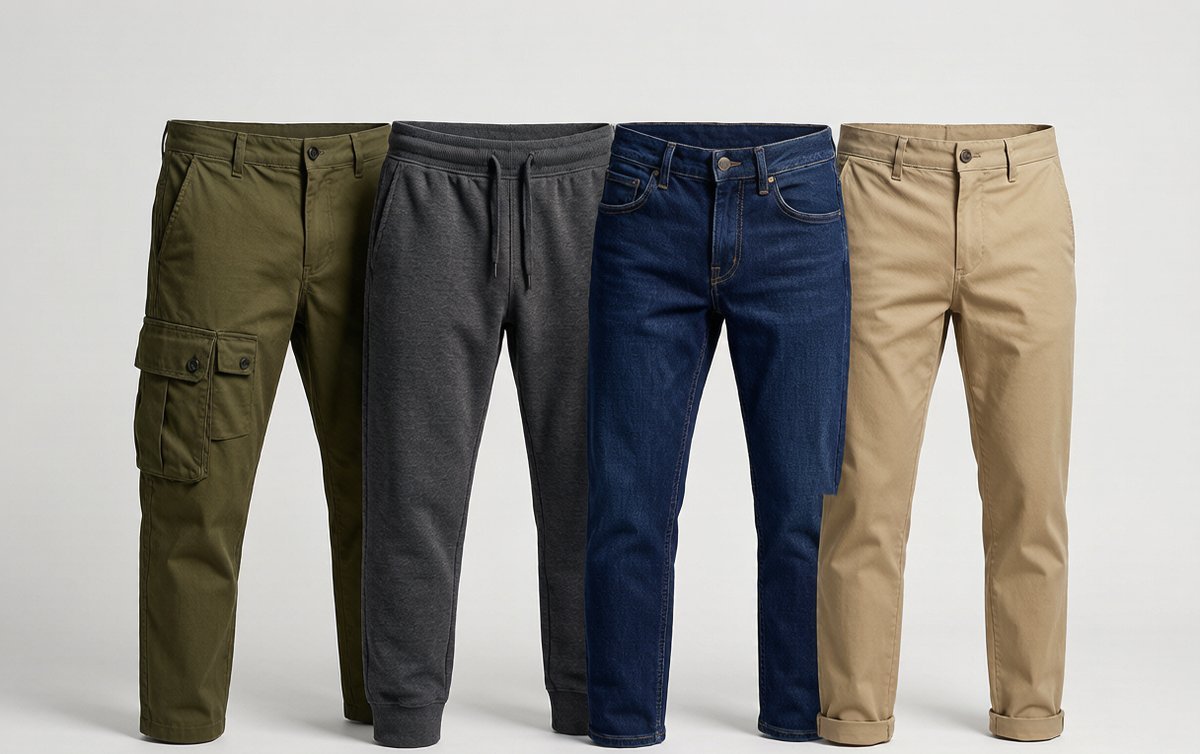
Four custom streetwear pants types side by side: olive cargo pants, charcoal fleece sweatpants, indigo denim jeans, and khaki casual chinos
Denim Jeans: Heritage, Complexity, and Wash Development
Denim is the most technically demanding pants category. It is also the one with the highest perceived value and the widest range of finish options. If you want a premium streetwear brand, denim is probably part of your long-term plan.
Fabric Weight and Structure
Denim fabric weight is measured in ounces per square yard. Lightweight denim (10-11 oz) works for fashion-forward fits but lacks durability for active wear. Mid-weight denim (12-13.5 oz) is the most common range for streetwear jeans, offering a balance of structure and comfort. Heavyweight denim (14 oz and above) holds its shape, develops distinct creases and whiskers, and is the preferred choice for premium raw denim programs.
Stretch denim (typically 1-2 percent elastane blended with cotton) adds comfort without sacrificing the denim look. Most streetwear brands in 2026 are running stretch denim programs because customers expect movement, especially in tapered and slim-straight fits. The tradeoff is that stretch denim has a shorter lifespan than rigid denim and requires careful handling during washing.
Wash and Finish Options
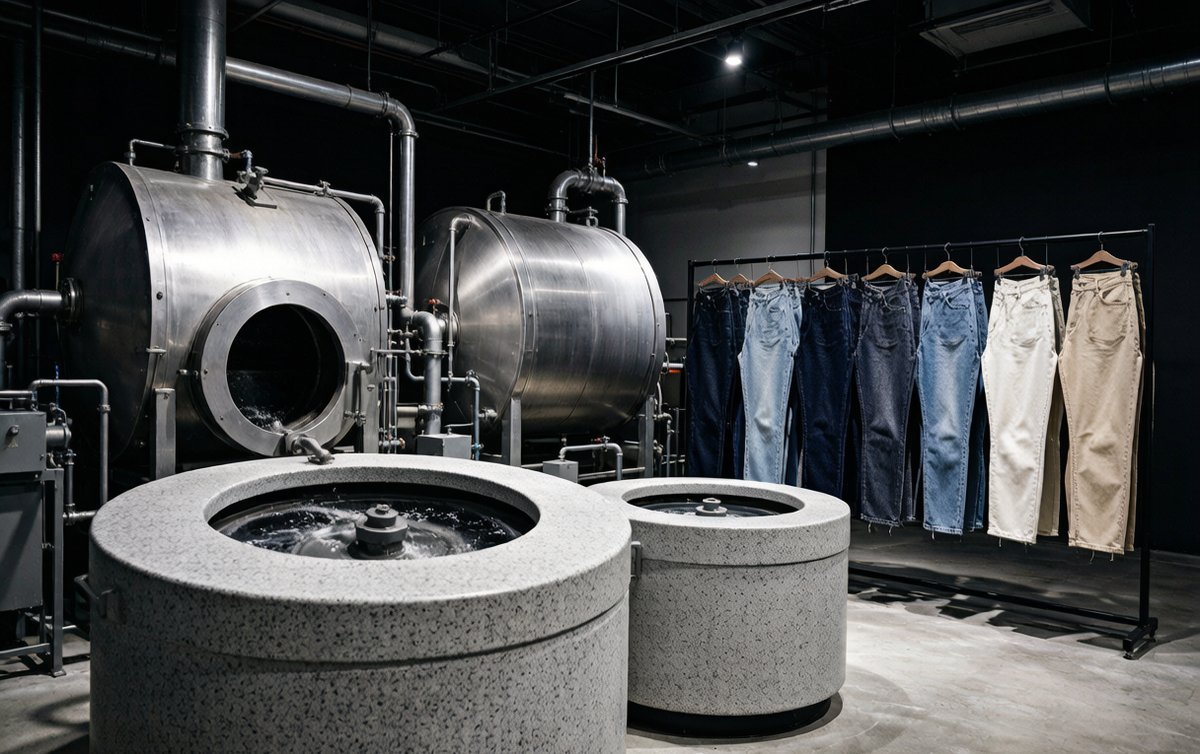
This is where denim separates itself from every other pants category. A good denim manufacturer can offer rinse wash, stone wash, enzyme wash, acid wash, bleach wash, overdye, pigment dye, and laser distressing. Each wash technique produces a different look and feel. Each also requires specific equipment and experience.
Enzyme wash softens the fabric without damaging fibers, making it the standard finish for premium streetwear denim. Stone wash adds abrasion for that vintage 1990s look. Laser distressing precisely replicates whiskers and honeycombs with zero water waste. If your brand wants a signature wash, this is where you invest your development budget.
Hardware: Rivets, Buttons, and Zippers
Denim hardware is part of the design language. Custom engraved buttons, branded rivets, and YKK zippers in custom finishes all contribute to the premium feel. The standard for streetwear denim is YKK or comparable heavy-duty zippers (No. 5 or No. 8 gauge). Button fly construction is traditional, but zipper fly is more common in modern streetwear. Copper or antique brass finishes signal quality. Zinc alloy or plastic hardware signals the opposite.
Custom hardware requires its own minimum order quantity (typically 500-2000 pieces per component) and adds 2-3 weeks to the lead time. If your program is small, use stock hardware in standard finishes and upgrade to custom on the second order.
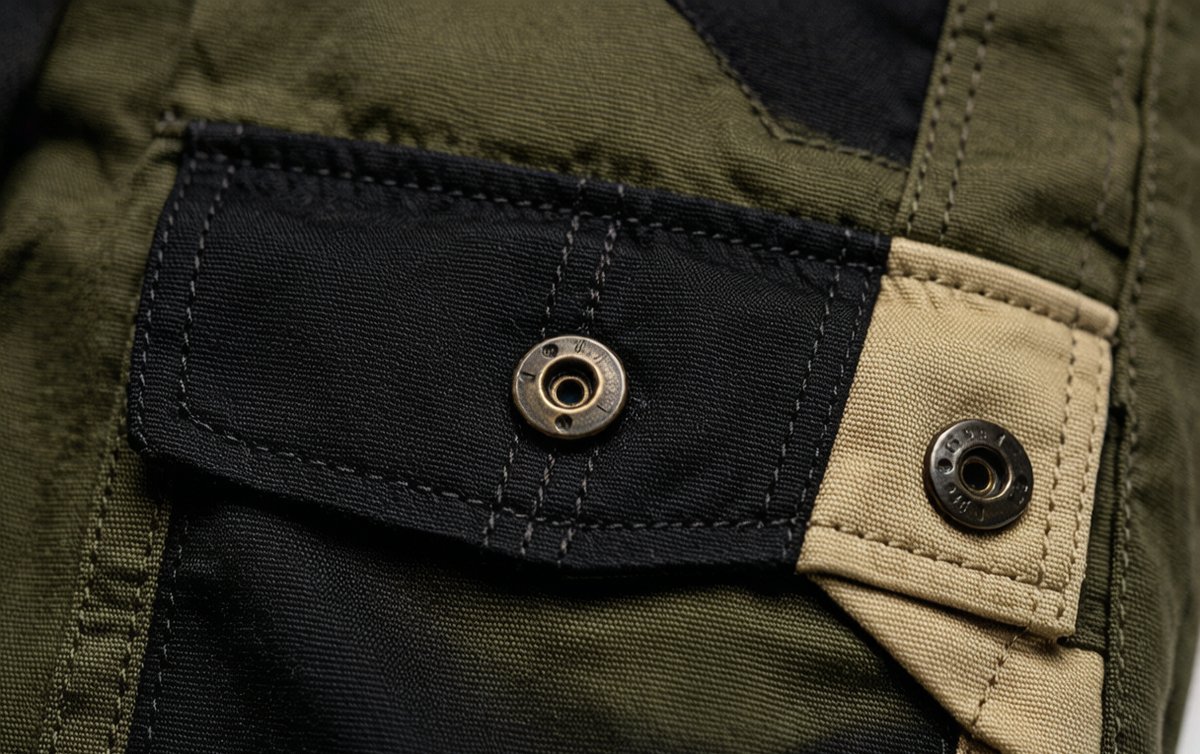
Detailed view of cargo pants pocket engineering: bar-tack stitching, reinforced seams, heavy-duty snap buttons, and multi-panel construction
Cargo Pants: Engineering Pockets, Hardware, and Utility
Cargo pants are the fastest-growing streetwear pants category in 2026, driven by the gorpcore and utility fashion trends. But cargo pants are also the most complex to manufacture correctly. The difference between a premium cargo pant and a cheap one comes down to pocket engineering.
Pocket Construction
A well-made cargo pant uses 3D bellow pockets, which means the pocket is folded and stitched to create volume. Flat patch pockets look cheap and do not hold items well. Bellow pockets require precise pattern making and skilled operators. If your manufacturer cannot demonstrate experience with 3D pocket construction, that is a red flag.
Bar-tack reinforcement at every stress point is non-negotiable for cargo pants. Without bar-tacking at the pocket corners, the pockets will tear under normal use. A good cargo pant has 12 to 20 bar-tack points depending on the design. Confirm this with your manufacturer before production.
Fabric Choices for Cargo
Cotton twill between 280 and 380 GSM is the standard starting point for cargo pants. It is durable, takes dye well, and holds pocket shapes. For a more rugged look, 12 oz canvas or a 70/30 cotton-nylon ripstop blend works well. If your brand runs technical streetwear, CORDURA-style blends offer superior abrasion resistance but come with a higher cost and longer lead time.
Heavier fabrics (340 GSM and above) prevent the pocket sagging problem that cheaper cargo pants have. When a customer fills their cargo pockets with a phone, keys, and wallet, the fabric has to hold the weight without distorting the silhouette. This is the single most common complaint about low-end cargo pants, and it is entirely avoidable with the right fabric weight.
Hardware and Closures
Cargo pants use snap buttons for pocket flaps, zip fly or button fly for the main closure, and drawcords or elastic adjusters for waistbands. Snap buttons should be heavy-duty, preferably metal. Plastic snaps will break in commercial laundry, and that means returns.
Cargo vs. Cargo Denim
An emerging hybrid category worth noting: cargo denim combines the pocket engineering of cargo pants with the wash range and fabric feel of denim. It is a high-complexity garment requiring both denim washing expertise and advanced pocket construction. The cost per unit is noticeably higher, but the retail price point can justify the investment.
Sweatpants and Joggers: Comfort, Fabric Weight, and Elasticity
Sweatpants are the entry point for many streetwear brands because they are structurally simpler than denim or cargo. But simple does not mean easy. The difference between a premium pair of joggers and a basic pair comes down to fabric quality, construction precision, and fit consistency.
Fabric Options
The standard fabric for custom sweatpants is fleece (cotton or cotton-polyester blend), typically 300 to 400 GSM. Heavyweight fleece (380 GSM and above) produces a structured jogger that holds its shape. Lightweight fleece (under 300 GSM) drapes more but may look cheap. French terry is a lighter alternative with a smooth exterior and looped interior, popular for premium joggers.
Cotton-polyester blends give the best balance of comfort, durability, and shrinkage control. Pure cotton fleece shrinks more in the first wash, so pre-shrunk fabric is recommended for consistent sizing.
Cuffs, Drawcords, and Elastic
The hardware on sweatpants is minimal but important. Ribbed cuffs should match the fabric quality and be tested for elasticity retention after multiple washes. Flat drawcords look cleaner than round ones but are harder to tie securely. Elastic waistbands should be at least 2 inches wide for comfort. Covered elastic (elastic encased in the waistband fabric) gives a more premium feel than exposed elastic.
Ribbing and Cuff Quality
The ribbing at the ankle cuffs is the first thing to fail on cheap joggers. If the ribbing loses elasticity after a few washes, the entire garment looks worn out. Use a 1x1 or 2x2 rib knit with at least 5 percent spandex content, and have your manufacturer test the ribbing separately before bulk sewing begins.
Chinese garment factory sewing production line workers manufacturing streetwear pants, organized workstations with rolls of denim and cotton fabric
Casual Pants: Chinos, Relaxed Fit, and Versatile Basics
Casual pants cover everything from chinos and relaxed-fit trousers to five-pocket casual pants. They are structurally the simplest pants category, which makes them the fastest to sample and produce. For brands testing a new market or building a baseline bottoms collection, casual pants are the lowest-risk starting point.
Fabric and Finish
Cotton twill is the standard for casual pants. Stretch twill (98 percent cotton, 2 percent elastane) is preferred by most streetwear customers for the added comfort and mobility. Wash options are more limited than denim: basic garment washes, enzyme washes, and pigment dyes cover most requirements. If your brand needs complex wash effects, those are usually better suited to a denim program.
Fit Considerations
Casual pants fit is where most of the design work happens. Relaxed straight, tapered, wide-leg, and baggy are the main silhouettes in 2026 streetwear. Each requires different pattern measurements. A wide-leg casual pant, for example, may have a 24-inch leg opening, while a tapered pair may have a 14-inch opening. Lock your fit specifications in the tech pack before sampling.
Comparison Table
Here is a side-by-side summary of the four main pants categories. Figures are general ranges based on our experience, not contractual numbers, and will vary by supplier, order volume, and design complexity.
| Factor | Denim Jeans | Cargo Pants | Sweatpants | Casual Pants |
|---|---|---|---|---|
| Fabric Weight | 10-15 oz denim | 280-380 GSM twill | 300-400 GSM fleece | 200-300 GSM twill |
| Wash Options | Widest range | Moderate | Basic | Limited |
| Construction Complexity | High | High | Low-Medium | Low-Medium |
| Hardware Variety | Rivets, buttons, zippers | Snaps, zippers, drawcords | Drawcords, elastic | Buttons, zippers |
| Sampling Time | 7–10 days — the same sampling process applies to all four categories | |||
| MOQ (VANRD) | 100 pcs/color/style | 100 pcs/color/style | 100 pcs/color/style | 100 pcs/color/style |
Production Timeline for Custom Pants Programs
Understanding the timeline helps you plan your drops. Here is how a typical custom pants program runs at VANRD.
Weeks 1-2. Design finalization, fabric sourcing, and hardware selection. If you need custom hardware (branded buttons, custom zipper pulls), this phase includes the hardware MOQ discussion and supplier lead time.
Weeks 2-3. Sample development. Patterns are created or adjusted, fabric is cut for the first sample, and assembly begins. Denim and cargo typically need one to two sample rounds for fit adjustments and wash development.
Weeks 4-8. Bulk production. Fabric is cut, sewn, and finished. In-line QC checks happen at each stage. Final inspection before packing uses AQL 2.5 standards.
Weeks 9-10. Packing and shipping handover. Production time from approved sample to bulk shipment handover at our facility is typically 25–35 days. International air or sea freight is separate and depends on your destination.
Fit Development: The Common Pitfall
The most frequent problem we see with first-time pants programs is the fit sample being different from what the brand expected. Usually the issue is that the tech pack measurements do not translate the same way across different fabric weights. A pair of cargo pants in 280 GSM twill fits differently from the same pattern in 380 GSM twill because the heavier fabric has more body and less drape.
The solution is straightforward: request a fit sample in your target fabric. A prototype in a substitute fabric may show the right silhouette, but it will not show the actual fabric behavior. If your timeline allows, order a fit sample first, then a wash sample (for denim), then a pre-production sample. Three sample rounds is standard for a premium pants program.
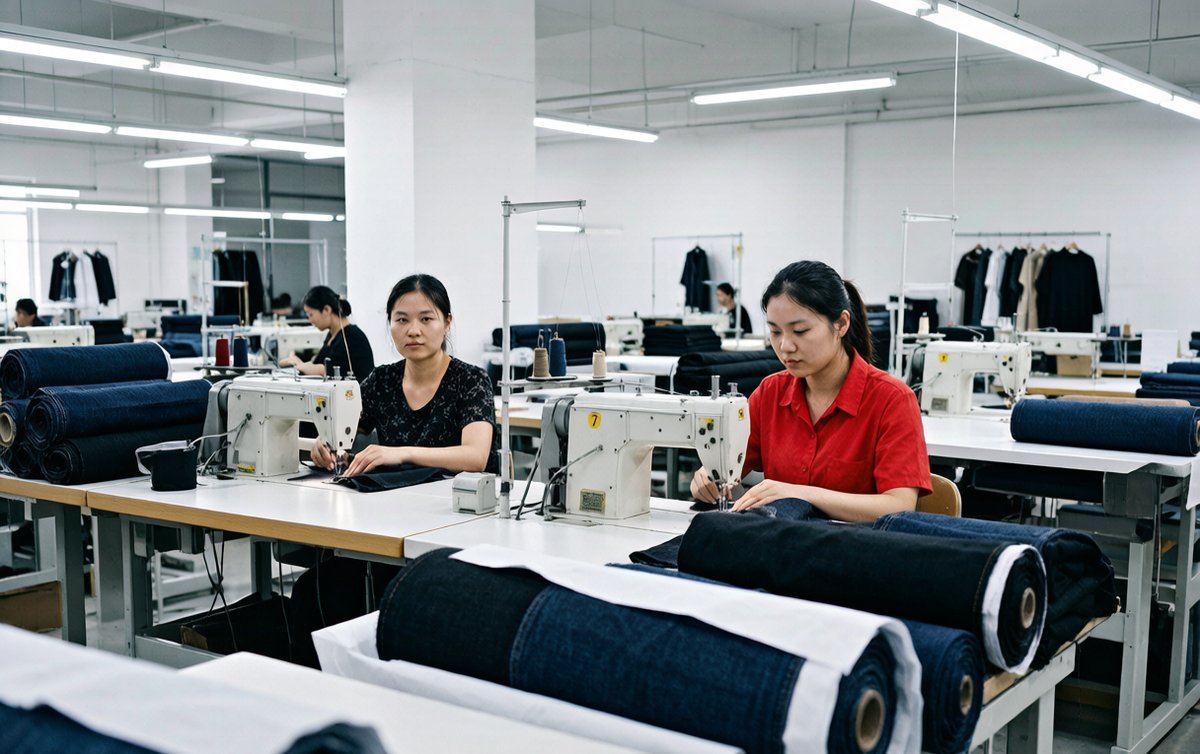
Chinese garment factory production line with workers sewing denim, cargo, and casual pants on industrial sewing machines
How to Avoid Common Pants Manufacturing Issues
Here are the issues that come up most often in pants production, based on our experience running cut-and-sew programs.
Shrinkage. Cotton and cotton-polyester blends shrink in the first wash. Pre-shrunk fabric or pre-washed garment finishing is required for consistent sizing. Ask for shrinkage test results before approving bulk production.
Color variation between batches. This applies especially to denim and pigment-dyed cargo pants. Each dye lot has a different base shade, even with the same recipe. Order enough fabric from the same dye lot for the full production run, and confirm the dye lot number before cutting.
Pocket alignment on cargo. Asymmetrical pockets are a telltale sign of poor manufacturing. The factory should use alignment jigs during pocket sewing. Ask about their jig process during the factory evaluation.
Hardware failure. Zippers that stick, rivets that pop off, snaps that do not stay closed. Hardware is the highest-return category for many streetwear brands. Test every hardware component on the sample before approving bulk. At VANRD, we test zipper cycles and snap retention as part of our QC process.
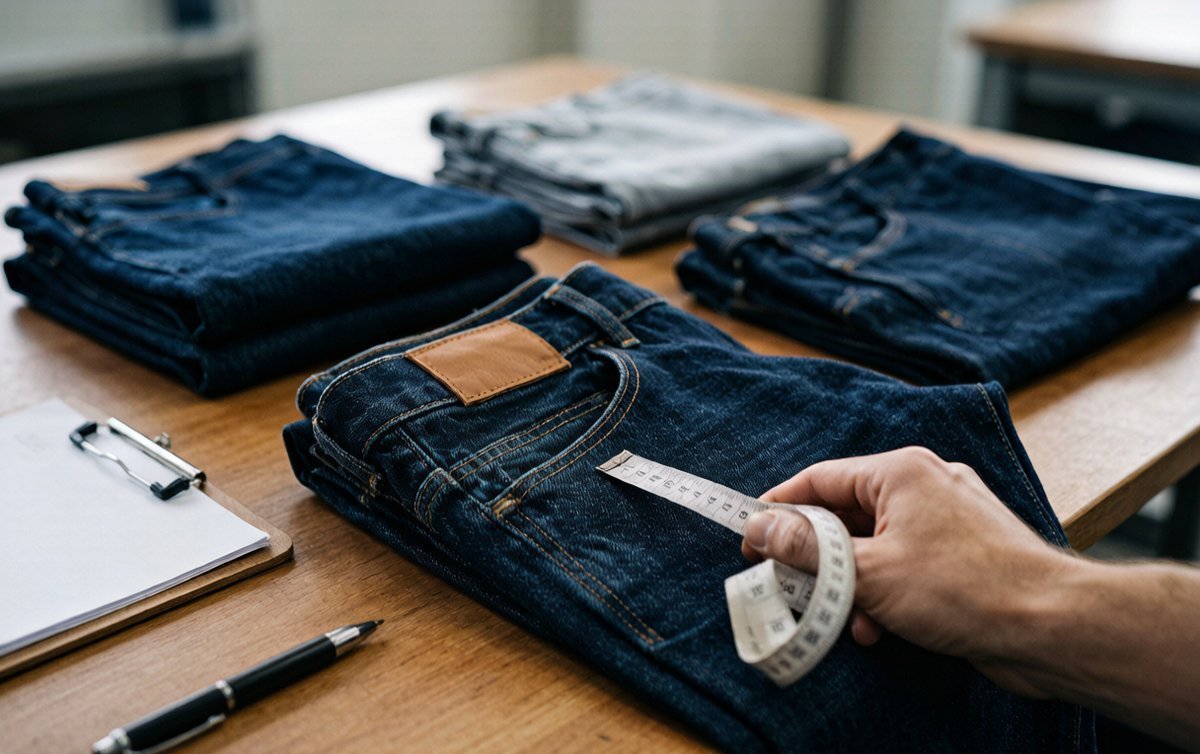
Pants quality control inspection close-up: measuring inseam length on finished denim jeans
How VANRD Supports Custom Pants Programs
What we do in-house
Pattern making, sample development, cutting, sewing, and quality control are managed by VANRD. Specialist processes such as denim washing, custom hardware manufacturing, and embroidery-heavy items are coordinated through approved production partners.
Fabric options
Our fabric library includes denim (10-15 oz in various washes), cotton twill, fleece, French terry, canvas, ripstop, and stretch blends. OEKO-TEX-certified and GOTS-certified options are available on request, subject to material, color, and supplier specifics.
Certifications
GOTS-certified organic cotton options can be sourced through qualified upstream mills. OEKO-TEX STANDARD 100-certified fabric and trim options are available upon request, and BSCI social compliance documentation can be provided for our facility.
Standard MOQ at VANRD is 100 pcs per color per style for all pants categories. Lead time from approved sample to bulk shipment handover is typically 25–35 days, not including international freight.
Buyer Checklist
- Have I defined the pants category and fabric weight?
- Have I confirmed hardware specifications (zipper gauge, button type, rivet finish)?
- Have I approved wash and finish requirements?
- Have I requested a fit sample in the target fabric?
- Have I confirmed MOQ per color per style?
- Have I accounted for shrinkage in size specifications?
- Have I verified the manufacturer's experience with 3D pocket construction (for cargo)?
- Have I tested hardware durability on the sample?
- Have I confirmed the dye lot for the full production run?
- Have I accounted for 25–35 days production plus international freight?
Conclusion
Developing a custom pants program is a different process from making hoodies or T-shirts. The fabric is heavier, the hardware is more varied, the wash options are more complex, and the fit tolerance is tighter. But the payoff is also higher. A well-made pair of pants carries a higher retail price, generates stronger customer loyalty, and separates your brand from the hundreds of streetwear labels selling the same hoodie in different colors.
Start with one category. Get the fit right. Lock your fabric and hardware specs. Then scale. The brands that succeed with pants programs are not the ones that try to do everything at once. They are the ones that respect the complexity, plan the timeline, and work with a manufacturer that actually understands the category.
Related Articles and Resources
Continue your streetwear manufacturing research with these VANRD guides:
- Custom Outerwear Manufacturing Guide
- Apparel MOQ Guide for Streetwear Brands
- Custom Tracksuit Fabrics Guide
- Sustainable Apparel Manufacturing Guide
- Apparel Color Consistency Guide
- Custom Cargo Pants Guide
- Custom Hats Manufacturing Guide
- Custom Knitwear vs Cut-and-Sew Sweaters
- Custom Jackets Collection
- Custom Tracksuits Collection
- Custom Hoodies Collection
- Custom T-Shirts Collection
- Custom Hats Collection
- Contact VANRD for a Quote
- About VANRD Manufacturing
Frequently Asked Questions
Casual pants or sweatpants are the best starting point for new brands. They require simpler construction, lower hardware complexity, and faster sampling cycles. Once your baseline fit and quality are established, you can expand into cargo or denim programs.
Standard MOQ is 100 pcs per color per style across all pants categories. For denim programs with custom washes, the wash development cost may affect the effective minimum, and we will discuss this at the quoting stage.
For a standard pants program, expect two to three sample rounds. Round one is the fit sample. Round two is the wash sample (for denim) or construction refinement. Round three is the pre-production sample for final approval before bulk.
For denim, 12-13.5 oz is the most versatile range. For cargo pants, 300-380 GSM cotton twill. For sweatpants, 350-400 GSM fleece. For casual pants, 220-280 GSM stretch twill. These ranges give you the best balance of structure, comfort, and durability.
Wash development typically adds 5-10 days to the sampling process. Each new wash recipe requires a lab dip, a wash test on the target fabric, and approval before production. If your program involves multiple washes (light stone, dark rinse, vintage enzyme), plan for additional development time.
Planning a custom pants program? VANRD is a custom clothing manufacturer with in-house pattern making, cutting, and sewing, plus a vetted network of denim wash houses and hardware suppliers. Tell us about your program and we will send back a fabric, hardware, and timeline breakdown specific to your project.
Request a Pants Sourcing Brief