Custom Knitwear vs Cut-and-Sew Sweaters: Which Manufacturing Process Fits Your Brand?
- Share
- publisher
- Vanrd
- Issue Time
- Jun 19,2026
Summary
Compare custom knitwear and cut-and-sew sweater manufacturing. Understand jacquard, cable knit, intarsia processes, cost differences, MOQ, and which method fits your streetwear brand.
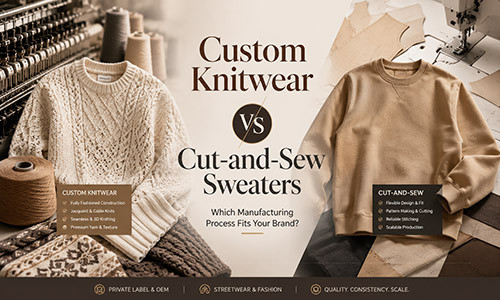
Custom Knitwear vs Cut-and-Sew Sweaters: The Complete Manufacturing Guide for Streetwear Brands
Adding sweaters to your streetwear collection? Here is a truth you need to hear before you contact a manufacturer: the method you choose — fully fashioned knitwear or cut-and-sew — determines your cost, timeline, design freedom, and even how your sweaters fit after the first wash. This guide breaks down both methods so you can pick the right one for your brand from day one.
Fully Fashioned vs Cut-and-Sew: Why the Difference Matters
Here is a question that trips up most first-time sweater buyers: what is the actual difference between knitwear and cut-and-sew? The short answer is that knitwear creates garment panels in their final shape on a knitting machine, while cut-and-sew starts with a roll of knitted fabric that gets cut into pieces and sewn together. The long answer is that every single decision downstream — from pattern complexity to fabric waste to per-unit cost — traces back to this one choice.
Think of it like this: knitwear is like 3D printing. The machine places each stitch exactly where it needs to go. Cut-and-sew is like baking a sheet cake and cutting it into slices. Both produce a dessert, but the process, the waste, and the level of detail are completely different.
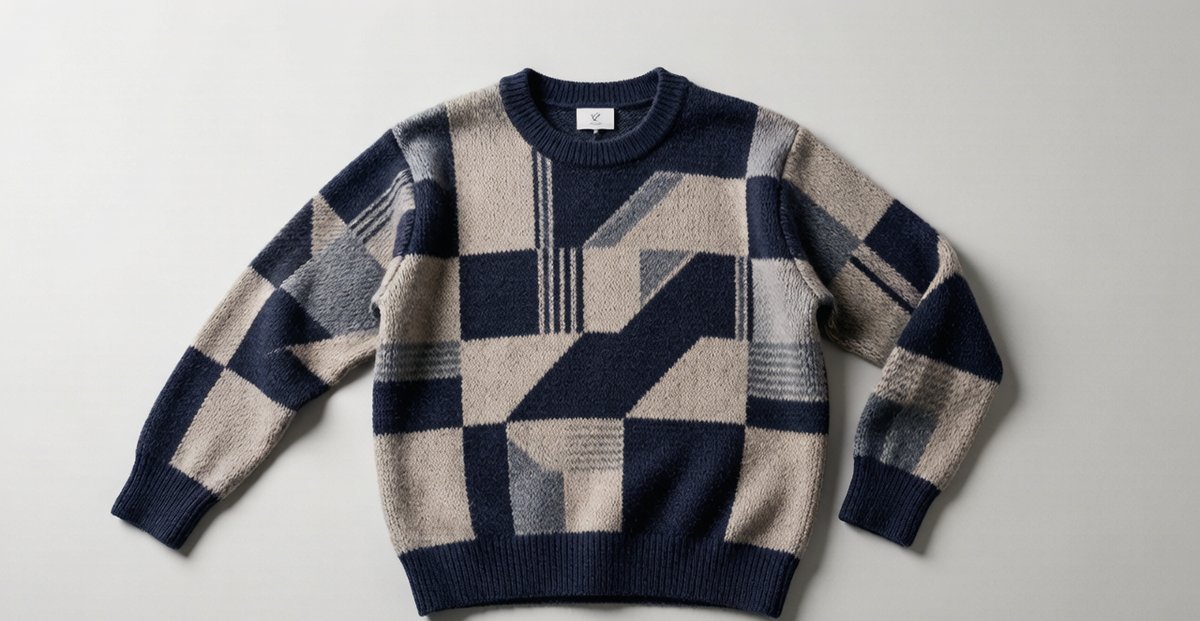
Premium custom knitwear sweater with jacquard pattern — fully fashioned production at a professional knitwear factory
What Is Fully Fashioned Knitwear?
Fully fashioned knitwear is the gold standard for premium sweaters. The garment panels are knitted to shape on computerized flatbed machines, meaning each front panel, back panel, and sleeve is shaped during the knitting process rather than cut from fabric after. This is the method behind the intricately patterned sweaters you see from high-end streetwear brands like Fear of God, Stone Island, and Kith.
How It Works
Computer-controlled knitting machines use individual needles to create loops of yarn in a specific pattern. The machine can increase or decrease the width of the panel as it knits, creating armholes, necklines, and shoulder slopes without any cutting. The panels are then joined together using a linking process — each stitch on the panel edge is matched to a corresponding stitch on the adjacent panel, creating a seam that feels nearly invisible and retains the fabric's natural stretch.
The Three Pillars of Knitwear Construction
Jacquard knitting uses multiple colored yarns to create patterns across the fabric surface. The unused yarn floats across the back, creating a dense, warm fabric. The design goes all the way through — it will never peel, crack, or fade. This is ideal for all-over graphic patterns and brand logos knit directly into the garment.
Intarsia is the technique of choice when you want large color blocks with clean edges. Each color section uses its own yarn bobbin, and the yarns interlock at color boundaries, so there are no loose threads on the back. This makes intarsia ideal for bold, simple logos or geometric patterns on the front of a sweater.
Cable knitting crosses stitches to create three-dimensional rope-like twists across the fabric surface. Cable knits are slower to produce and use more yarn than plain knitting, but the handcrafted, textural look commands higher retail prices. Cable knit sweaters are a fall and winter streetwear staple.
Fabric Waste
Fully fashioned knitwear produces only 2 to 5 percent fabric waste. Because the panels are knitted to shape, there is minimal trimming. This makes knitwear more sustainable — and more cost-effective at the fabric level — than cut-and-sew methods.
What Is Cut-and-Sew Knitwear?
Cut-and-sew starts with rolls of knitted fabric produced on circular knitting machines. The fabric is laid flat, pattern pieces are cut from it using a die cutter or CNC cutting machine, and the pieces are sewn together using overlocking (serging) machines. This is the method used for most mass-market sweaters, sweatshirts, and t-shirts.
How It Works
Circular knitting machines produce fabric much faster than flatbed machines — think of a fire hose versus a garden hose. The fabric rolls are then spread across a cutting table, and pattern pieces are arranged to maximize fabric utilization. The cut pieces are fed through overlock machines that trim and sew the edges simultaneously, creating a finished seam. The process is fast, well-understood, and highly scalable.
Key Advantages
Cut-and-sew is faster to sample and typically has lower per-unit costs for simple, solid-color designs. MOQ starts at 100 pieces per style per color, making it accessible for smaller brands testing a new category. It is also more flexible for combining different fabrics — you can use a cotton body with ribbed nylon sleeves, for example, which is difficult to achieve in fully fashioned knitting.
The Trade-Offs
Fabric waste is significantly higher — 15 to 30 percent of the fabric ends up as scrap. The seams are bulkier than knitwear's linked seams, and the garment may not drape as naturally. Cut-and-sew also cannot replicate the intricate stitch patterns of jacquard or cable knit — anything complex must be added through printing, embroidery, or applique after construction.
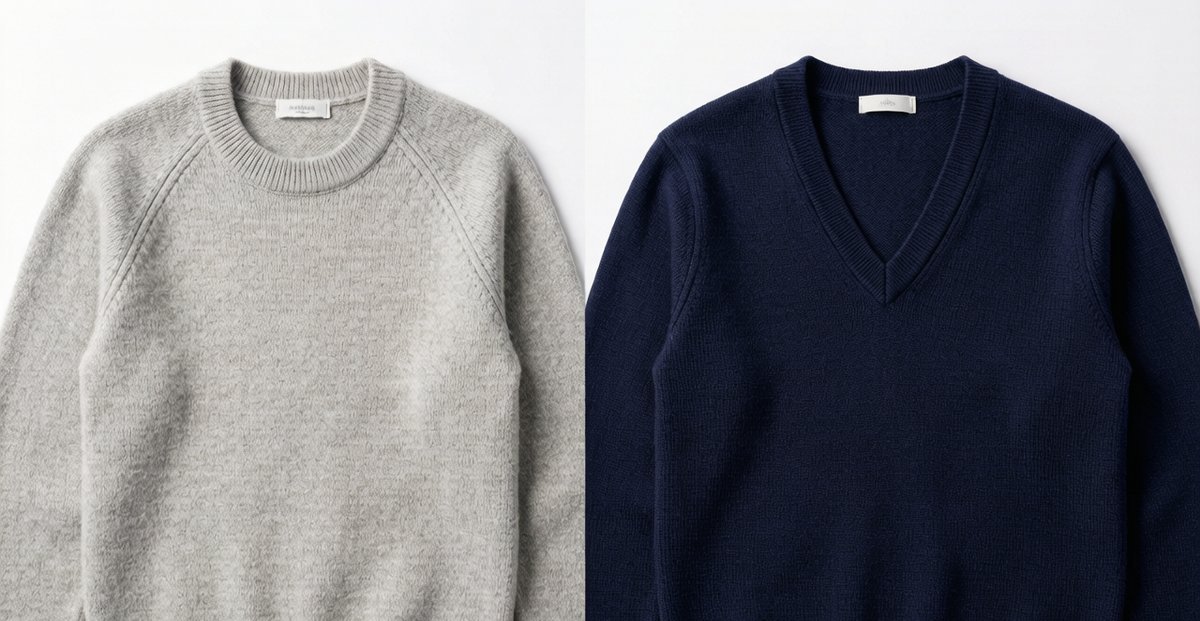
Side-by-side comparison: fully fashioned knitwear (left) produces shaped panels with minimal waste, while cut-and-sew (right) requires cutting from fabric rolls
Complete Comparison Table: Fully Fashioned vs Cut-and-Sew
| Factor | Fully Fashioned Knitwear | Cut-and-Sew |
|---|---|---|
| Pattern Complexity | Unlimited (jacquard, intarsia, cable, textures) | Limited (prints, embroidery, patches) |
| Fabric Waste | 2-5% | 15-30% |
| Seam Quality | Linking seams, nearly invisible, stretch-retaining | Overlock seams, visible, bulkier |
| Drape and Movement | Excellent — panels shaped to body contours | Good — limited by cut and seam placement |
| Sampling Time | 7–10 days | |
| Bulk Production | 25–35 days | |
| MOQ | 150-300 pcs per style/color | 100 pcs per style/color |
| Design Flexibility | Limited by machine gauge and yarn type | Limited by fabric roll and cutting |
| Sustainability | Higher (less waste, durable construction) | Lower (more scrap, disposable feel) |
Yarn Selection: Choosing the Right Material
The yarn you choose determines the look, feel, durability, and care instructions of your sweaters. Here is how the most common options compare for streetwear collections.
Merino Wool
Merino is the premium choice for streetwear knitwear. It is soft against the skin, naturally temperature-regulating, and resists odors. Merino requires dry cleaning or hand washing, which affects customer care expectations. Use it for luxury pieces — think $120+ retail sweaters with minimalist branding.
Cotton
Cotton is the most versatile sweater material for streetwear. It is machine washable, affordable, and available in a wide range of weights and textures. Cotton sweaters work for all seasons and price points. The main trade-off is that cotton shrinks 3 to 5 percent in the first wash. A good manufacturer accounts for this in the pattern.
Acrylic and Blends
Acrylic is the budget-friendly option. It is lightweight, machine washable, and holds color well, but it does not breathe like natural fibers. Cotton-acrylic blends offer a middle ground: the softness and breathability of cotton with the affordability and washability of acrylic. This is the most common material for entry-level streetwear sweaters.
Production Timeline: From Design to Delivery
Understanding the timeline helps you plan your collection launch. Here is what a typical sweater order looks like from first contact to delivery.
Weeks 1-2: Design finalization, yarn sourcing, and tech pack approval. Knitwear may take slightly longer because the stitch pattern must be programmed into the machine.
Weeks 3-4: Sample development — knitting and finishing for knitwear, cutting and sewing for cut-and-sew. Expect one to two rounds of revisions.
Weeks 5-10: Bulk production after sample approval. Knitwear machines run fast once programmed, but the linking process is labor-intensive. Cut-and-sew is more evenly paced through cutting and sewing.
Weeks 11-14: Final QC, packing, and shipping. Sea freight to the US or Europe adds 20-35 days. Air freight can cut this to 5-7 days for urgent orders.
MOQ and Cost Factors
Knitwear MOQ starts at 150-300 pieces per style per color, driven by machine programming setup costs and yarn minimums. Cut-and-sew starts at 100 pieces thanks to lower setup barriers. Here is what drives the final cost for either method.
Yarn or fabric quality is the largest cost driver. Merino wool costs two to three times more than standard acrylic. Pattern complexity adds machine programming time for knitwear and post-production finishing for cut-and-sew. Gauge selection affects both material usage and production speed — finer gauges (12GG through 16GG) take longer to knit than chunky gauges (3GG through 5GG).
Common Sweater Manufacturing Mistakes
If your design features intricate all-over patterns, knitwear with jacquard or intarsia is the only way to achieve the look cleanly. If it is a solid color with a printed graphic, cut-and-sew is faster and more affordable. Let the design drive the method, not the other way around.
Cotton and wool shrink. If the pattern does not account for shrinkage, your size M sweaters will fit like size S after the customer washes them. Always request shrinkage test results before approving bulk and confirm the pattern is pre-shrunk or oversized accordingly.
A chunky cable sweater needs 3-5 gauge. A fine knit base layer needs 12 gauge or higher. Using the wrong gauge affects the weight, drape, and cost of the finished garment. Match the gauge to the design intent, not just the budget.
Yarn quality varies enormously between mills. Without certification or a pre-production wash test, your yarn may pill after two wears or bleed color in the first wash. Request a yarn test report from your supplier before committing to bulk.
Real Factory Experience: What VANRD Has Learned
After producing both knitwear and cut-and-sew sweaters for streetwear brands across the US, UK, and Europe, here is what we have seen separate successful launches from costly mistakes.
The brands that get the best results start with a clear tech pack. A tech pack with a flat sketch, yarn specifications, Pantone colors, measurement chart, and stitch detail saves time and prevents miscommunication. A two-page brief is not enough — it leads to back-and-forth that could have been avoided.
Second, most brands benefit from starting with one construction method. If your collection relies on bold patterns, start with fully fashioned knitwear. If it is about clean silhouettes and printed graphics, start with cut-and-sew. Try to master one before adding the other to your lineup.
Third, the gauge decision warrants careful consideration. A medium gauge (7GG to 10GG) is the safest starting point for a first sweater collection — it provides enough structure for design detail without the expense and slowness of fine gauge knitting.
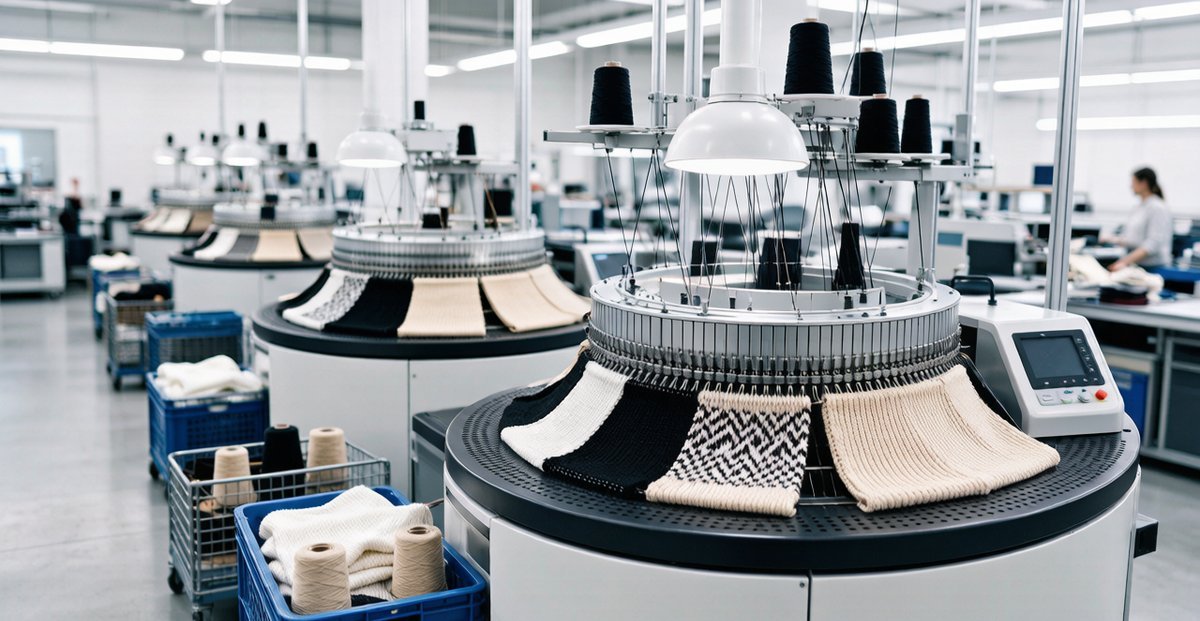
Computerized flatbed knitting machine — fully fashioned sweaters are knitted to shape, reducing waste and enabling complex patterns
Quality Control Checklist
Before approving your bulk sweater production, verify the following: stitch tension consistency across all panels, yarn color accuracy against Pantone references, shrinkage test results (length and width after wash), seam strength and appearance, measurement compliance across sizes, and any pilling or surface defect checks. VANRD follows AQL 2.5 standards with in-line inspection during production and final inspection before shipping.
Ready to develop your custom sweater line? Browse VANRD custom sweater collection or explore our full range of custom hoodies and jackets.
Conclusion
Choosing between fully fashioned knitwear and cut-and-sew is one of the most consequential decisions you will make when adding sweaters to your streetwear line. Knitwear gives you unmatched pattern complexity, minimal waste, and premium seams — but requires higher MOQs and longer setup. Cut-and-sew is faster, more affordable, and easier to sample — but cannot replicate the structural patterns and clean finishes of fully fashioned knitting.
The right choice depends on your design, your target price point, and your production volume. A clear tech pack, the right gauge, and a manufacturer who asks good questions about your collection will get you there faster than rushing into a decision based on cost alone.
Frequently Asked Questions
If your design has complex patterns or textures, start with fully fashioned knitwear — the pattern is built into the knitting process and will not peel or fade. If your design is a simple solid color with a printed or embroidered logo, cut-and-sew is faster, cheaper, and easier to sample. The answer depends on your design, not the MOQ.
Every natural fiber shrinks. Cotton shrinks 3-5 percent; wool can shrink 5-10 percent if not pre-treated. Always request a shrinkage test on your sample before approving bulk production. A good manufacturer pre-shrinks the yarn or builds shrinkage allowance into the pattern.
Medium gauge (7GG to 10GG) is the safest starting point. It offers enough structure for cable or jacquard patterns without the slowness and expense of fine gauge knitting. Chunky gauge (3-5GG) works for statement pieces. Fine gauge (12GG+) works for base layers but takes longer to knit.
Yes, and many streetwear brands do exactly that. Use fully fashioned knitwear for hero pieces — the jacquard cardigan or cable knit pullover that anchors the collection. Use cut-and-sew for basics and layering pieces — the solid color crewneck or zip-up that fills out the range.
Ask to see samples of both knitwear and cut-and-sew work. Check the seam quality — knitwear should have linked seams, not overlocked ones. Ask about shrinkage testing protocols, yarn sourcing partners, and gauge capabilities. A manufacturer who asks about your end market, retail price, and launch timeline before quoting is thinking like a partner, not just a producer.
Ready to manufacture your custom sweaters? VANRD offers end-to-end support for both knitwear and cut-and-sew production.
Start Your Sweater Project