10 oz vs 12 oz vs 14 oz Denim: Choosing Fabric Weight for Jeans
- Share
- publisher
- Vanrd
- Issue Time
- Oct 12,2026
Summary
Is 14 oz denim always better than 10 oz or 12 oz? Not for every pair of jeans. Compare fabric weight, drape, first-wear feel, silhouette and wash effects to see which option makes sense for your collection. This guide helps apparel brands choose denim weight without confusing heavier fabric with guaranteed durability—and explains what to confirm before sampling.
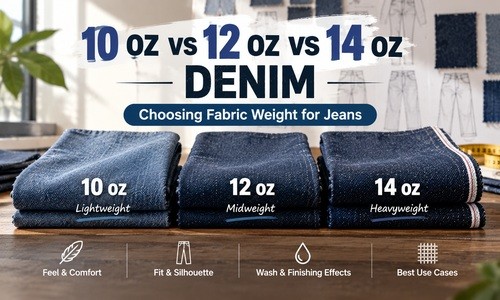
VANRD / Denim Fabric Selection for Apparel Brands
A fabric card arrives on your desk with three options: 10 oz, 12 oz and 14 oz denim. They are all indigo. They may even share the same fiber content. Yet when you drape them over your hand, each seems to suggest a different pair of jeans. One moves easily, one feels balanced, and one wants to hold its shape. So which belongs in your next collection?
It's tempting to treat denim weight as a simple quality ranking: bigger number, better jeans. But that's the wrong question for a brand developing a wearable, repeatable product. Your real decision is about how the fabric works with your intended silhouette, target season, finishing process and customer expectations.
This guide compares 10 oz vs 12 oz vs 14 oz denim from a product-development perspective. You'll see what the numbers mean, how each weight can influence the first fitting, why washing can change the result, and what to confirm before you approve a fabric for bulk jeans. If you are still defining the product itself, VANRD's custom denim jeans manufacturing page explains the broader fit and private-label options.
What Does Denim Weight Mean?
Denim weight describes the mass of a fabric per unit area, normally in ounces per square yard (oz/yd²). A 12 oz denim fabric weighs 12 ounces for a square yard of cloth. That doesn't mean a finished pair of jeans weighs 12 ounces; a full garment uses more than one square yard, and its total weight depends on size, pattern, pocketing, hardware and other components.
You'll also see fabric weight expressed as GSM, or grams per square meter. Brands working with international suppliers often need both units in their specifications. The conversion is straightforward, but an important detail remains: you should compare weights measured at the same stage of finishing. A greige or loom-state claim, a finished roll specification and a garment after washing are not automatically interchangeable.
| Denim label | Approximate GSM | Useful way to think about it |
|---|---|---|
| 10 oz/yd² | 339 g/m² | Lighter starting point for everyday or more fluid jeans |
| 12 oz/yd² | 407 g/m² | Versatile middle ground for many denim collections |
| 14 oz/yd² | 475 g/m² | More substantial starting point for structured or heritage looks |
These are approximate unit conversions, not three universal performance grades. A 10 oz fabric isn't automatically thin or weak; a 14 oz fabric isn't automatically hard, durable or premium. Weave density, yarn size, fiber composition, finishing and tension in the construction all shape what the buyer ultimately feels. CottonWorks' denim construction guide explains why different weave designs and yarn arrangements can yield different denim behaviors.
Why Two 12 oz Fabrics Can Feel Completely Different
Imagine holding two 12 oz swatches. One is rigid 100% cotton with a compact, crisp surface. The other contains a small amount of elastane, has been softened and moves more comfortably under tension. They carry the same nominal weight, yet their fit performance and recovery can be very different. One may produce strong, angular folds; the other may relax around the knee during wear.
Another example is a loosely constructed, textured denim beside a tightly woven, smooth denim of the same weight. They can have different thickness, drape and perceived softness. That's why a fabric label should begin your selection process, not end it. To confirm weight rather than relying on a sales description, mills and laboratories can use recognized mass-per-area testing methods such as ASTM D3776/D3776M.
10 oz vs 12 oz vs 14 oz Denim: Quick Comparison
Quick answer: Start with 10 oz when you want a lighter, easier-moving jean; 12 oz when you need a balanced everyday fabric; and 14 oz when your concept calls for a fuller, more structured denim character. These are development directions, not guaranteed comfort, durability or shrinkage results.
| Comparison point | 10 oz denim | 12 oz denim | 14 oz denim |
|---|---|---|---|
| Starting feel | Often lighter and easier to move | Balanced body and flexibility | Often firmer and more substantial |
| Typical drape | Can fall into softer folds | Can balance drape and shape | Can hold stronger folds and edges |
| Good design direction | Fluid relaxed jeans, lighter capsules | Core straight, relaxed and everyday jeans | Structured straight, workwear or heritage jeans |
| First-wear experience | Potentially more approachable | Middle-ground feel | May need more break-in if rigid/raw |
| Wash development | Review shape retention and puckering | Balance softness and finished measurements | Review seam bulk, abrasion and wash intensity |
| Main fitting question | Does the leg collapse more than intended? | Does it achieve the desired balance? | Does the fabric restrict the intended movement? |
| Important qualifier | Fiber blend, weave, finishing, shrinkage and actual sample performance may change these tendencies. | ||
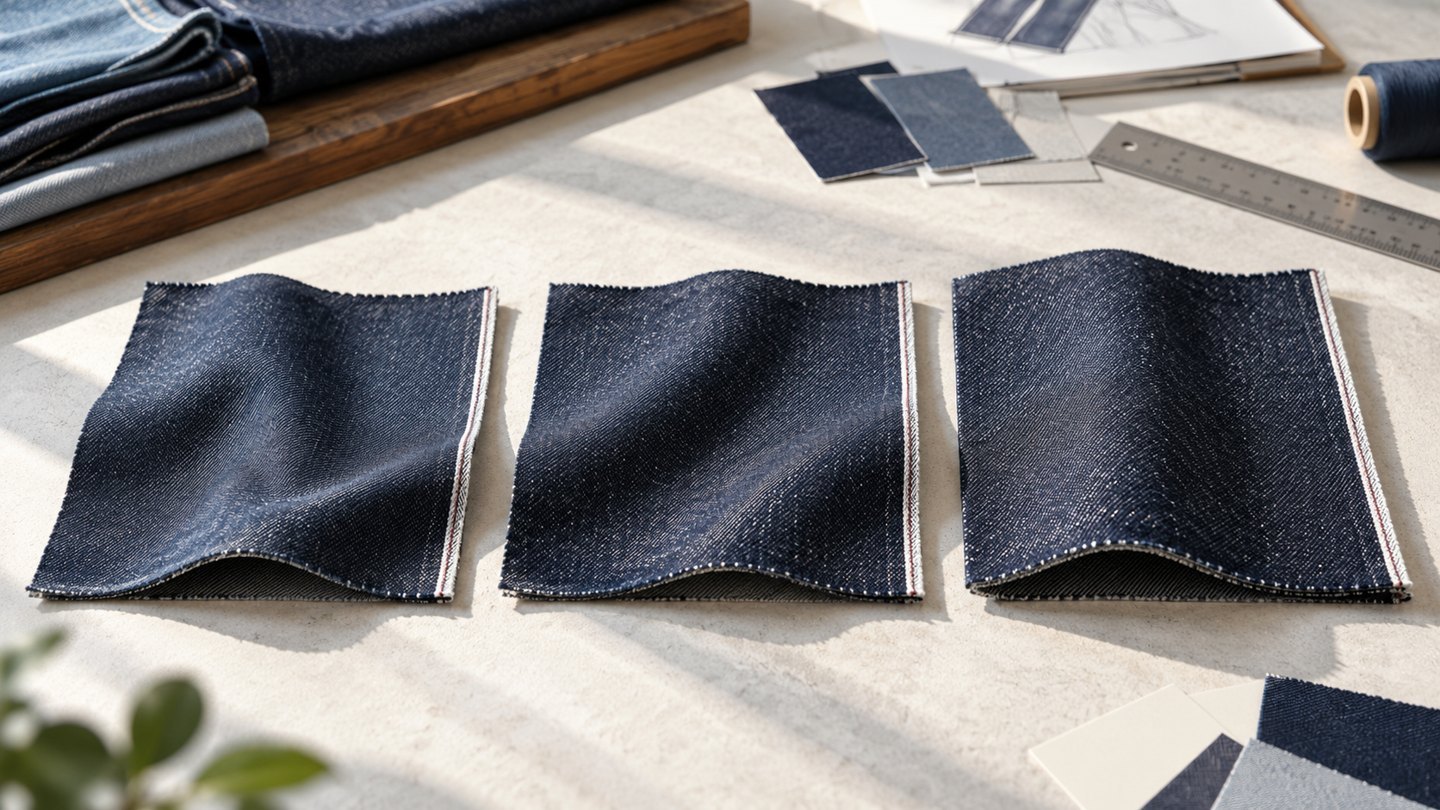
10 oz Denim: A Lighter, More Flexible Starting Point
For an easygoing everyday line, 10 oz denim is worth sampling early. It can work well when you want a relaxed jean with a softer fall rather than a stiff tube around the leg. Think casual spring collections, lighter travel wardrobes and streetwear pieces that move comfortably through the day.
That doesn't mean every 10 oz fabric is appropriate for a wide-leg design. Some lighter denims are relatively crisp, while others drape more like heavier shirting. Check the waistband, knee, thigh and hem on a real sample. If your oversized jean is meant to look sculptural, a very soft 10 oz construction may not create enough volume without pattern adjustments.
A brand aiming for a premium light-denim product should also check fabric opacity, seam appearance and abrasion performance rather than assuming the number itself says enough about quality. The best lighter denim feels intentional, not simply less substantial.
12 oz Denim: A Versatile Middle Ground
At 12 oz, denim can deliver a familiar jeans feel without pushing too far toward either extreme. For many collections, it's a sensible first sampling point because it can serve straight fits, relaxed five-pocket styles and commercial everyday ranges. It's also useful when your team hasn't yet decided how much rigidity the customer should feel on day one.
But don't mistake versatility for a guaranteed result. A 12 oz rigid indigo twill can still feel quite firm before washing. A 12 oz comfort-stretch fabric may behave more softly, especially under movement. If your brand's signature product is a relaxed straight jean, test the selected 12 oz fabric in the approved pattern and wash, not just as a hand-held swatch.
That attention to the finished garment is particularly valuable for repeat-order programs. The goal isn't to find the mythical perfect ounce number. It's to establish a fabric and fit combination that customers recognize every time they reorder.
14 oz Denim: Substantial, Structured and Deliberate
Fourteen-ounce denim often appeals to heritage, raw denim and workwear-inspired labels. A compact rigid construction may create pronounced folds at the knee, a strong straight-leg line and a substantial first impression. In the right collection, that weight is a visual signature rather than an inconvenience.
There are trade-offs. More mass can introduce bulk in multi-layer seams and around the waistband, fly and pocket opening. A stiff unwashed construction may also feel less forgiving at the first fitting. These are reasons to evaluate the garment carefully, not reasons to avoid 14 oz altogether.
Also be cautious with claims such as “14 oz is twice as durable as 10 oz.” The number tells you fabric mass per area, not service life. A poor-quality heavier denim can fail a durability requirement that a well-engineered lighter fabric passes. If durability matters to your marketing promise, request the relevant test results for your exact finished material.
Weight and Jeans Fit: How the Fabric Shapes the Silhouette
Changing fabric weight without reconsidering the pattern is like switching from sketch paper to cardboard while keeping the same fold lines. The drawing may be identical, but the three-dimensional result isn't. Denim behaves the same way. It is why a brand can love a reference photo yet dislike its first sample when the chosen weight changes the way the leg falls.
Relaxed and Baggy Jeans
A relaxed or baggy jean needs room, but it also needs a deliberate outline. With a lighter 10 oz fabric, the extra width may fold closer to the body and move fluidly. That can suit casual, softly draped streetwear. With a dense 14 oz fabric, the same pattern may stand further from the leg, develop sharper break lines and create a heavier-looking hem. A 12 oz option often makes a useful comparison point between those visual directions.
For baggy styles, look carefully at the rise, crotch shape, knee width and leg opening. The difference is rarely solved by fabric weight alone. A soft, wide jean and a structured, wide jean may need separate pattern refinements to look equally intentional.
Straight and Regular Jeans
Straight jeans are a good testing ground because subtle changes in the fabric become easy to see. The leg is neither narrow enough to rely on stretch nor wide enough to hide all its behavior. A 10 oz fabric can create a lighter, more relaxed look; 12 oz may keep a classic silhouette without excessive stiffness; 14 oz may emphasize a clean, solid column of denim.
Brands designing a core straight jean should compare standing, sitting and walking—not just a front-view product photo. Check whether the knee bags out, the waistband stays comfortable and the hem falls at the intended length. These observations often reveal more than a fabric card ever could.
Tapered, Slim and Structured Workwear Fits
A tapered or slim jean adds another consideration: movement. A heavier rigid fabric can look sharp while standing but feel restrictive during sitting, bending or cycling. A lighter rigid denim might improve mobility, while a suitable stretch construction can change the equation again. Don't choose 14 oz merely because you want an expensive-looking product.
For workwear-inspired jeans, weight can help communicate utility, but pocket reinforcements, thread, seams, hardware and the quality of the finished cloth matter just as much. If a design uses layered cargo pockets or heavy panel seams, your sample should be checked for unwanted bulk at those exact construction points.
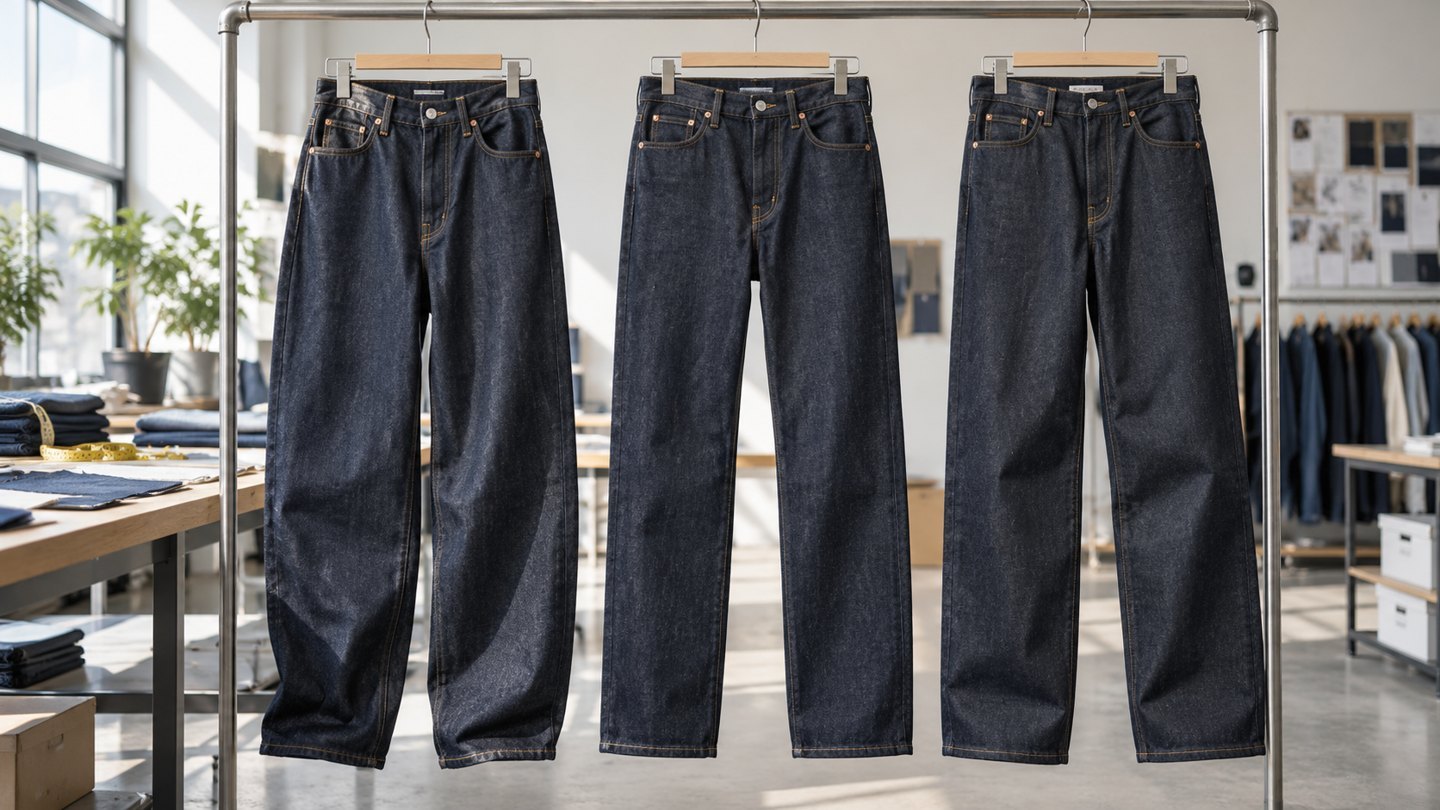
When discussing fit with a manufacturer, it helps to send your target silhouette, measurement chart and visual references together. VANRD's OEM/ODM development service can support that conversation, while the Denim Jeans Manufacturer page covers the available jeans categories and fit directions.
Wash and Finishing Effects: What Changes After the Fabric Is Selected?
A number printed on a mill card is not the final hand feel of your jeans. Washing and finishing can soften the cloth, change its surface appearance, relax the construction or alter the dimensions of the completed garment. The result depends on the exact fabric, chemistry, machinery and processing conditions. That's why the wash should be chosen alongside the denim weight, not after the design is already locked.
Raw, Rinsed and Washed Denim at the Same Nominal Weight
Start with a single denim construction. The raw version may feel crisp and display an even deep indigo. A controlled rinse can reduce some initial stiffness and help the garment settle. More developed wash treatments may produce a softer or visibly worn surface. Those are different product experiences even when the fabric began with the same stated oz value.
Crucially, raw doesn't necessarily mean the cloth has received no mill finishing. Fabric can be sanforized, for example, while the assembled jeans have not been garment-washed. If your team is still deciding between raw and washed aesthetics, see VANRD's Raw vs Washed Denim Jeans guide for that separate design decision.
Why Finished Weight and Hand Feel Need Separate Approval
A wash may remove residual sizing, alter moisture content or change fabric dimensions. Consequently, the cloth can feel markedly softer after processing even if the nominal weight category hasn't changed in a way that supports a simple before-and-after comparison. Some processes change mass per area because the fabric shrinks or material is removed. Those effects depend on the actual fabric and process; they cannot be predicted from 10, 12 or 14 oz alone.
When approving a material, ask the mill or manufacturer which stage its quoted weight describes. Is it a finished roll measurement? A greige specification? A measurement taken after a designated treatment? Then examine the actual jeans after the intended wash. If the fit approval was made before garment washing, the measurements could be wrong for the product customers eventually receive.
Shrinkage and Fit: Don't Substitute a Generic Percentage
You'll find charts online claiming that a particular denim weight shrinks by a certain percentage. That isn't a reliable universal rule. Dimensional change depends on mill pretreatment, fiber blend, construction, finishing, washing conditions and drying. An unsanforized 14 oz denim and a sanforized 14 oz denim may behave very differently, while two 12 oz denim fabrics from different mills may not share the same shrinkage profile.
Brands should instead define acceptable finished measurements and request evidence for the specific cloth and wash process. AATCC TM135 concerns the dimensional changes of fabrics after home laundering, while TM150 addresses garments. These are references to recognized methods, not claims that every VANRD fabric has already passed a particular test.
Practical approval rule: Review the finished sample after the intended wash. Record waist, hip, thigh, knee, inseam, outseam and leg opening, with agreed measurement tolerances. If one fabric weight is substituted for another, check the fitting again rather than carrying over the old approval automatically.
How to Choose Denim Weight for Your Collection
So how should you make the final decision? Begin with the customer experience you want, then use the ounce figure to narrow your sampling. A strong brand specification connects the way jeans look, move and age with a fabric supplier that can reproduce the result—not just a number in a product title.
Choose 10 oz first
For a lighter, easy-moving silhouette, warm-season concept or relaxed jean intended to feel less substantial. Verify that the structure and seams still suit your design.
Choose 12 oz first
For a versatile core jean where you want to balance body, daily comfort and broad styling possibilities. Compare rigid and stretch constructions before deciding.
Choose 14 oz first
For a more substantial heritage, raw or utility-inspired look that benefits from structure. Evaluate movement, seam thickness and break-in expectations.
Three Collection Scenarios Worth Sampling
Scenario 1 — A summer-focused relaxed jeans line: Start with a suitable 10 oz denim in the target wash and compare it with a softened 12 oz alternative. The winner should be the one whose leg movement, coverage and wash effect fit the customer—not automatically the lightest swatch.
Scenario 2 — A repeatable everyday straight jean: Begin with a well-specified 12 oz construction. Then compare a 10 oz or 14 oz option only if the first sample is too fluid or too rigid for the desired fit. Keep the decision grounded in the actual waist, thigh, knee and hem behavior.
Scenario 3 — A heritage or workwear-inspired capsule: Sample a rigid 14 oz denim first, then a 12 oz option with similar indigo and finish. Some brands will prefer the deeper structure of 14 oz; others may find 12 oz easier for their target customer to wear consistently.
What to Request Before Approving a Denim Fabric
Even a small denim range benefits from a precise, short fabric brief. Don't overload your first email with a full factory audit. Ask for the information that will help your design team compare real alternatives:
- Finished fabric weight: oz/yd² and GSM, including the measurement stage and acceptable tolerance.
- Fiber composition: rigid cotton or a specified stretch blend, together with any performance requirements.
- Weave and surface: twill type, yarn character, indigo shade, visible slub and hand-feel target.
- Mill treatment: whether the material is sanforized, softened or otherwise pretreated.
- Wash reference: approved shade, finishing method and expectations for hand feel after garment treatment.
- Fit sample: the actual jeans pattern and measurement sheet to be used for the comparison.
- Production information: fabric availability, mill lot, minimum order conditions and how a reorder will be matched.
These checks help prevent a familiar problem: the bulk order technically meets a stated ounce weight but doesn't feel like the sample the brand approved. For deeper customization, VANRD's Fabrics & Techniques page explains its material and finishing directions.
Keep Reorders Consistent Without Over-Specifying the Fabric
When a style sells, your next priority is repeatability. Keep the approved fabric reference, color standard, finished wash appearance, measurements, hardware and sample records together. Reordering “12 oz dark indigo” without the original construction, supplier reference and wash information is not a reliable way to recreate the first run.
If the same denim is unavailable, request a new comparison sample instead of treating an approximate weight match as an equivalent. Agree which differences are acceptable before the revised material moves into cutting. A fabric change may affect fit or appearance, and it is cheaper to resolve that question on one sample than across a completed order.
This is also where quality requirements should remain focused. You do not need a laboratory report for every aesthetic preference, but you should test performance claims that matter: for example, dimensional stability, colorfastness, seam strength or abrasion behavior when relevant to your product. VANRD's quality-control information outlines how the company approaches consistency through product development and production.
Conclusion: Which Denim Weight Fits Your Jeans?
For a lighter, more fluid jean, 10 oz is a strong first sample. For an adaptable everyday product, 12 oz gives you a useful middle ground. For a more substantial heritage or utility-inspired silhouette, 14 oz deserves a closer look. But none of these numbers can replace the finished sample: your ideal fabric weight is the one that produces the intended drape, comfort, wash result and repeatable fit for your customers.
Choosing Denim Weight for Your Next Collection?
Share your jeans silhouette, target season, preferred hand feel and reference wash. VANRD can help you review suitable denim fabric directions and identify the key details to confirm during sampling.
Discuss Your Denim Jeans ProjectFrequently Asked Questions
1. Is 12 oz denim too heavy for everyday jeans?
No. Twelve-ounce denim is often used as a versatile middle-weight option, especially in everyday straight and relaxed styles. Whether it feels comfortable depends on the actual weave, cotton or stretch blend, finishing and fit. Sample a finished jean before judging it by the ounce figure alone.
2. Can a brand use the same jeans pattern for 10 oz and 14 oz denim?
You can begin with the same design block, but you should not assume the fit will stay identical. The lighter and heavier fabrics may drape differently, affect movement and respond differently to washing. Review key points of measure and the appearance of the finished sample for each fabric.
3. Does 14 oz denim always last longer than 10 oz denim?
No. A higher ounce weight indicates more mass per unit area, not a guaranteed durability advantage. Fiber strength, yarn, weave, finishing, seam construction and actual use all contribute. If long-term wear is a selling point, evaluate the relevant performance tests on the finished material.
4. Will a 10 oz or 12 oz denim shrink less than 14 oz?
Not necessarily. Shrinkage is not determined by ounce weight alone. A sanforized 14 oz fabric may behave differently from an untreated 10 oz fabric. Ask your supplier about mill pretreatment and review the measurements after the intended wash and home-care conditions.
5. Can we combine different denim weights in one private label collection?
Yes. Brands sometimes develop a lighter jean for warmer months, an everyday core style and a more structured heritage option. Treat each weight as its own material and fit approval, even if the styles share branding and general design language. You should also confirm fabric supply and order conditions separately for each selected construction.
Technical note: The photographs are illustrative design references rather than certified weighted swatches. Fabric performance and final ounce weight should be confirmed from the intended supplier's specifications and, where relevant, testing.